

SOCIAL AND RELATIONSHIP CAPITAL: AT A GLANCE
Deepened Customer Partnerships in the Evolving Power Market.
First Gen in 2025 served 245 contestable customers and 165 GEOP end users, reflecting a 23 percent and a 129 percent increase compared to the previous year, respectively
Enabled Inclusive Economic Growth in Host Communities.
We helped host communities earn a total of PHP490 million through contracts, services, and enterprise partnerships with cooperatives, farmers’ associations, and local suppliers
Invested in Long-Term Community Capability Building.
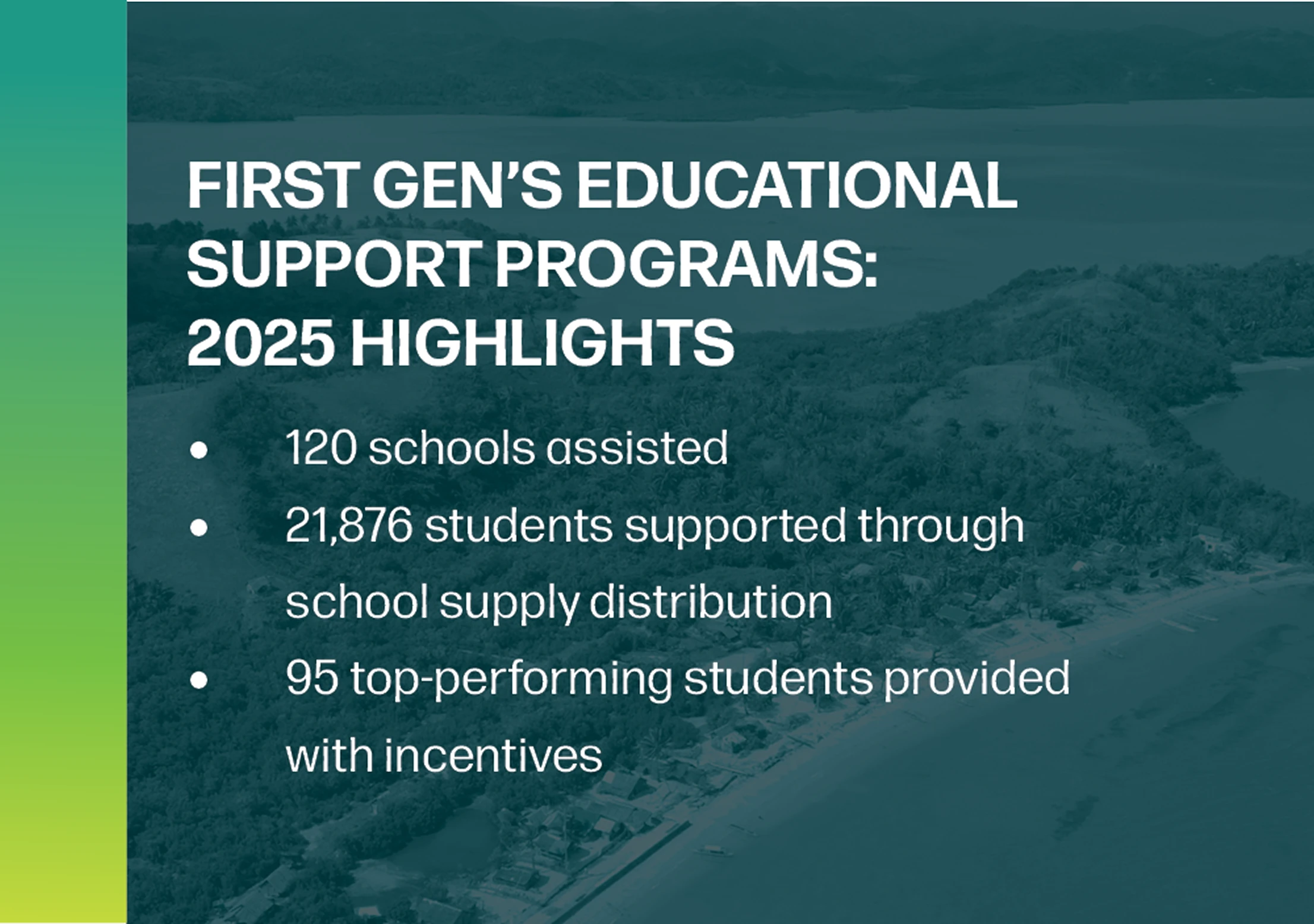
In 2025, First Gen supported 120 schools and 21,876 students and teachers through scholarships, education programs, and technical-vocational training that strengthened local human capital
Strengthened Community Health Systems.
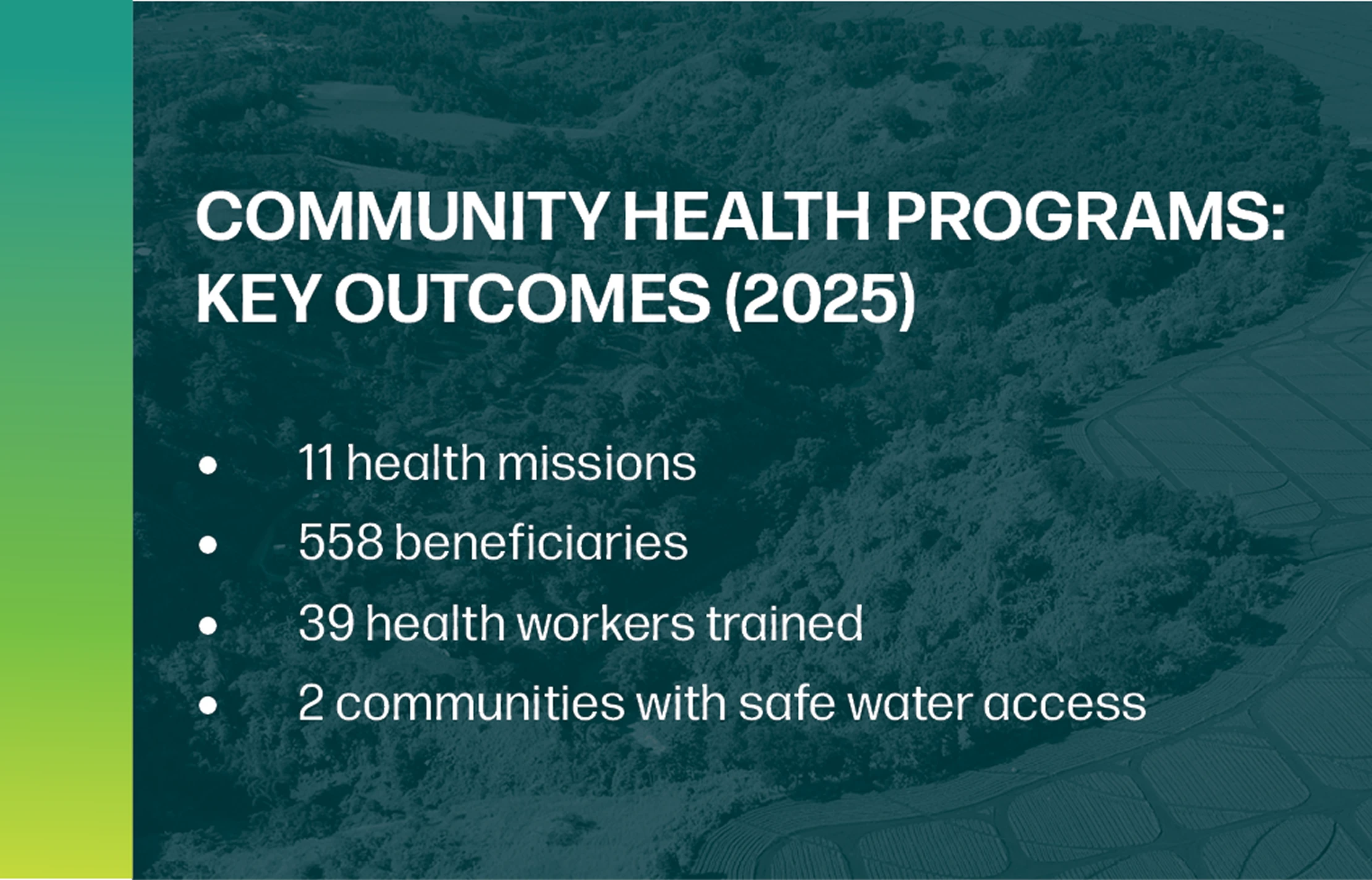
Across its host municipalities, First Gen conducted 11 health missions benefiting 558 individuals, while building the capacity of local health workers and community health teams
Advanced Responsible Supply Chain Practices.
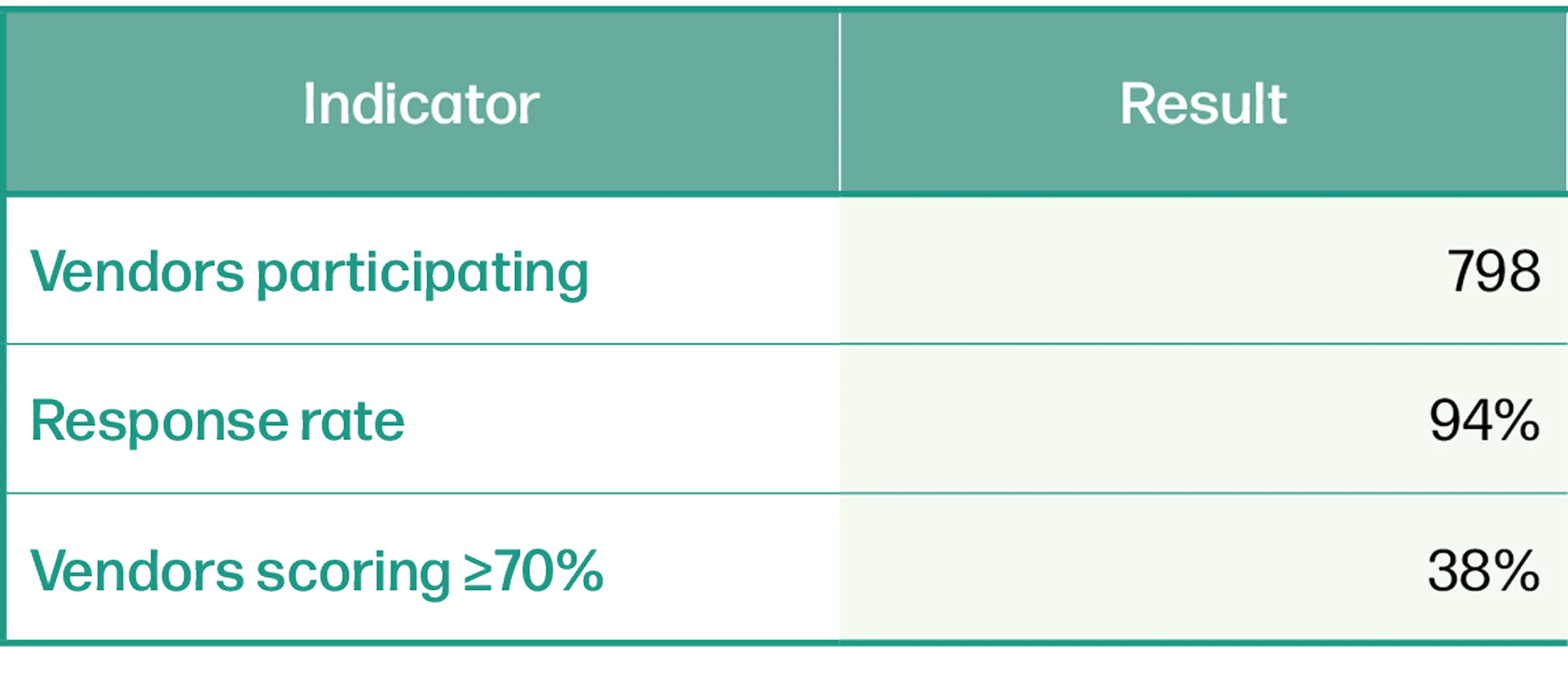
The Company engaged 798 vendors and contractors in an ESG assessment, establishing a baseline for sustainability performance across First Gen’s partner network
Social and Relationship Capital as the Foundation of Trust
First Gen prioritizes strong stakeholder relationships built on trust, cooperation, and shared success. By engaging with our stakeholders—customers, employees, partners, and the communities where we operate—the Company is driven to support both its operational goals and broader social and economic development, in line with its strategic choices.
First Gen operates within interconnected communities, supply chains, and energy markets, and we recognize that trust and collaboration are essential to expand and sustain operations responsibly and to enable our customers to transition toward lower-carbon energy solutions. Through structured engagement and open communication channels, the Company identifies and responds to stakeholder concerns while strengthening partner relationships. In this way, First Gen’s approach reflects a core principle of its strategy: that good choices, made consistently and in partnership with others, build trust and compound into lasting value.
Our Partnership Ecosystem
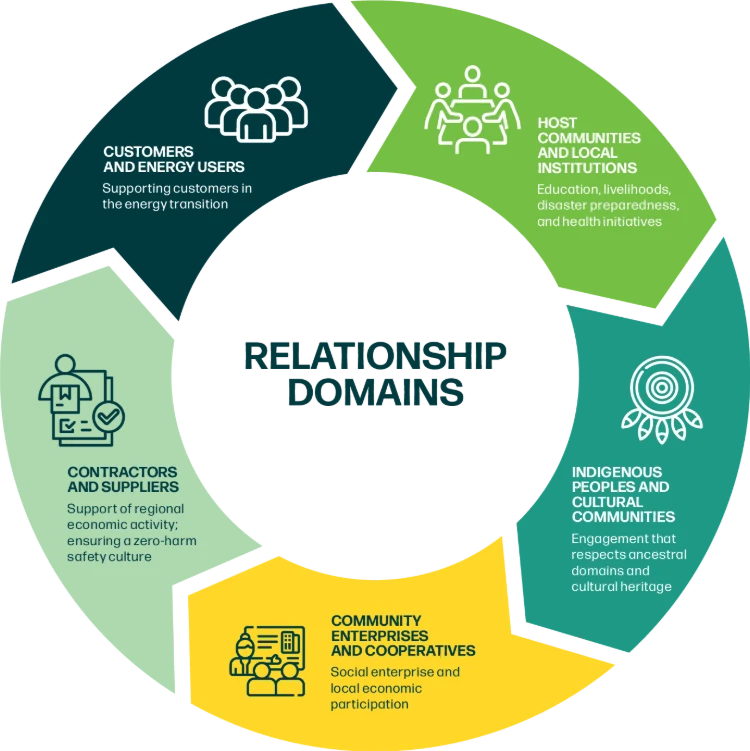
First Gen’s operations are embedded within a network of stakeholders that form the Company’s partnership ecosystem, enabling collaboration across the energy value chain and the communities where it operates. By maintaining consistent engagement with these stakeholders, First Gen strengthens the relationships that support both operational continuity and community resilience.
FIRST GEN’S PARTNERSHIP ECOSYSTEM
Stakeholder Engagement Framework
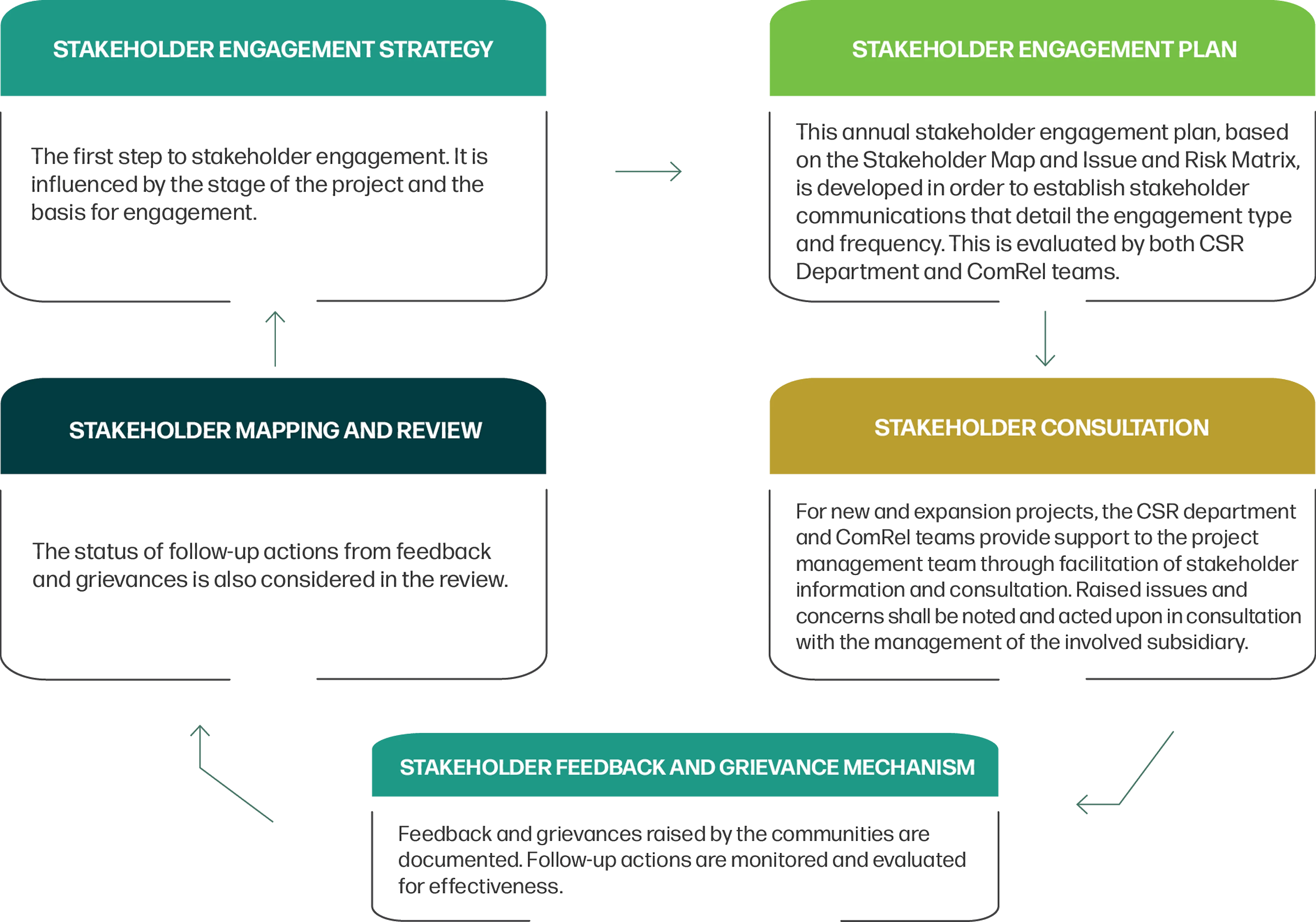
First Gen manages consistent dialogue with its stakeholders through an Annual Stakeholder Engagement Plan. The plan guides how the Company maps its key stakeholders, understands their priorities, and determines appropriate engagement platforms across its operations. Through regular consultations, meetings, digital communications, and feedback channels, First Gen seeks to maintain open and constructive relationships with the groups that influence and are affected by its activities.
The engagement framework follows a continuous cycle that begins with defining the strategy and developing the engagement plan for the year. This is followed by consultations and dialogue, which allow the Company to gather insights on emerging concerns and expectations. These are then assessed through stakeholder mapping and review, enabling the Company to refine its responses and approach. Feedback and grievance mechanisms also provide additional channels for stakeholders to raise concerns or seek clarification, ensuring that the company remains accountable.
Stakeholder Engagement Summary Table
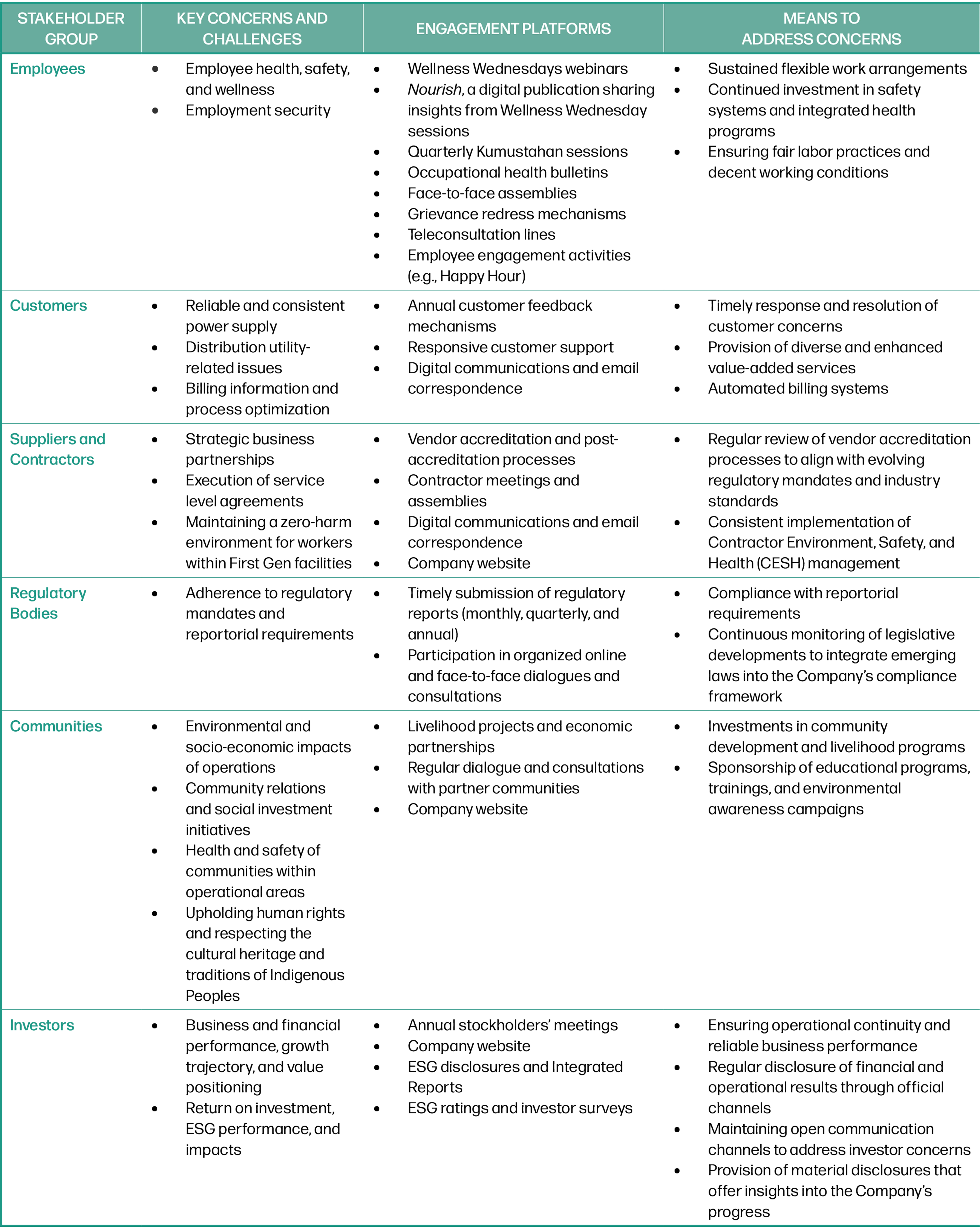
The table below summarizes First Gen’s key stakeholder groups, their primary concerns, the platforms used for engagement, and the actions taken by the company to address these concerns.
Partnering with Customers for the Energy Transition
First Gen is dedicated to providing integrated solutions that evolve alongside its customers’ needs to foster shared success. By leveraging the RCOA and the GEOP, the Company provides customers with streamlined access to renewable energy and competitive electricity supply options. Through Pi Energy, First Gen also delivers advanced solutions—including Remote Energy Monitoring Systems, energy audits, and solar photovoltaic (PV) systems—designed to help customers manage energy use more efficiently, lower operational costs, and reduce carbon emissions.
As the Philippine retail electricity market develops under RCOA, more customers become eligible to choose their electricity suppliers. The charts below provide an overview of contestable customers by phase and the composition of retail electricity suppliers in the market, illustrating the broader environment in which First Gen engages its customers and delivers energy solutions.
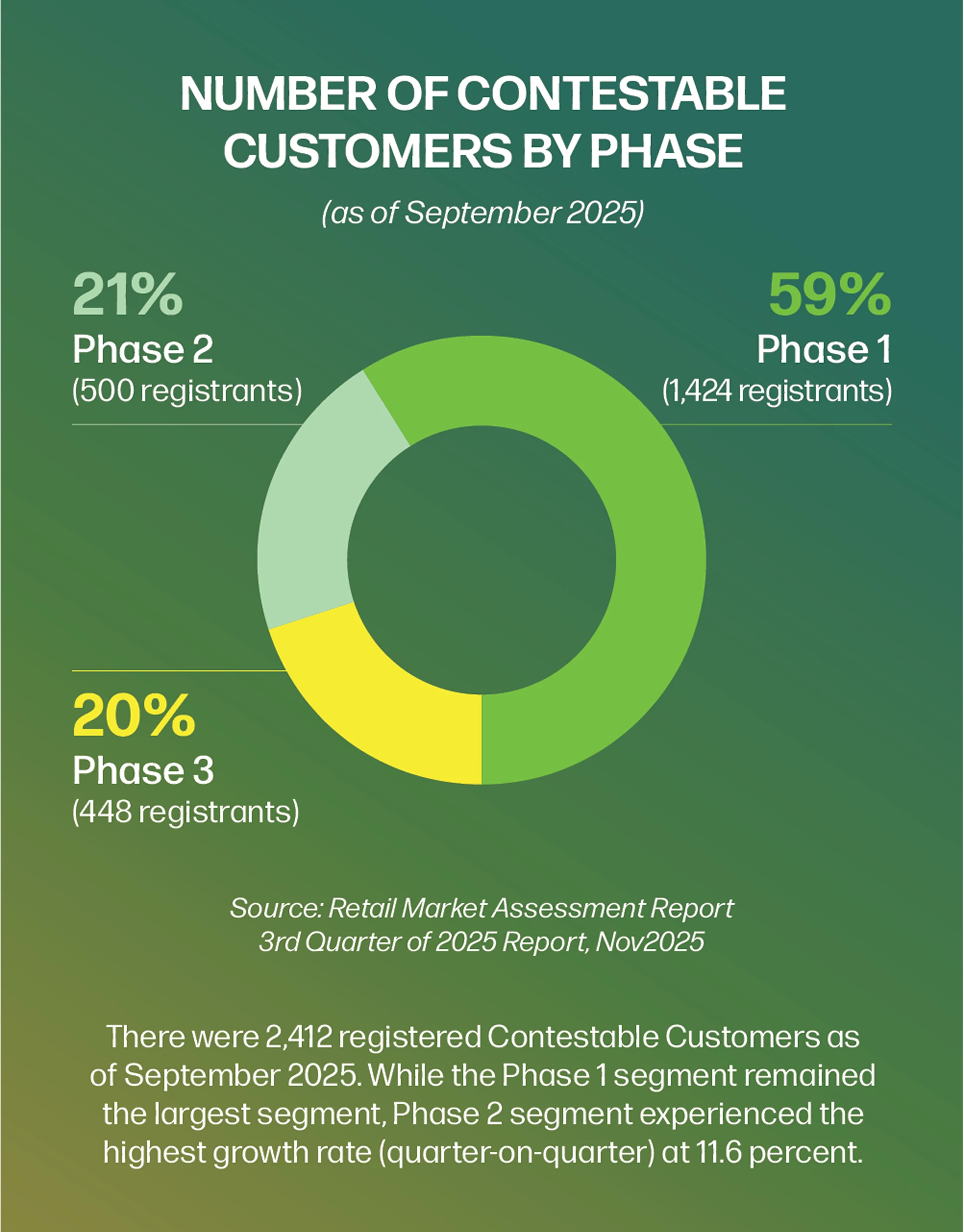
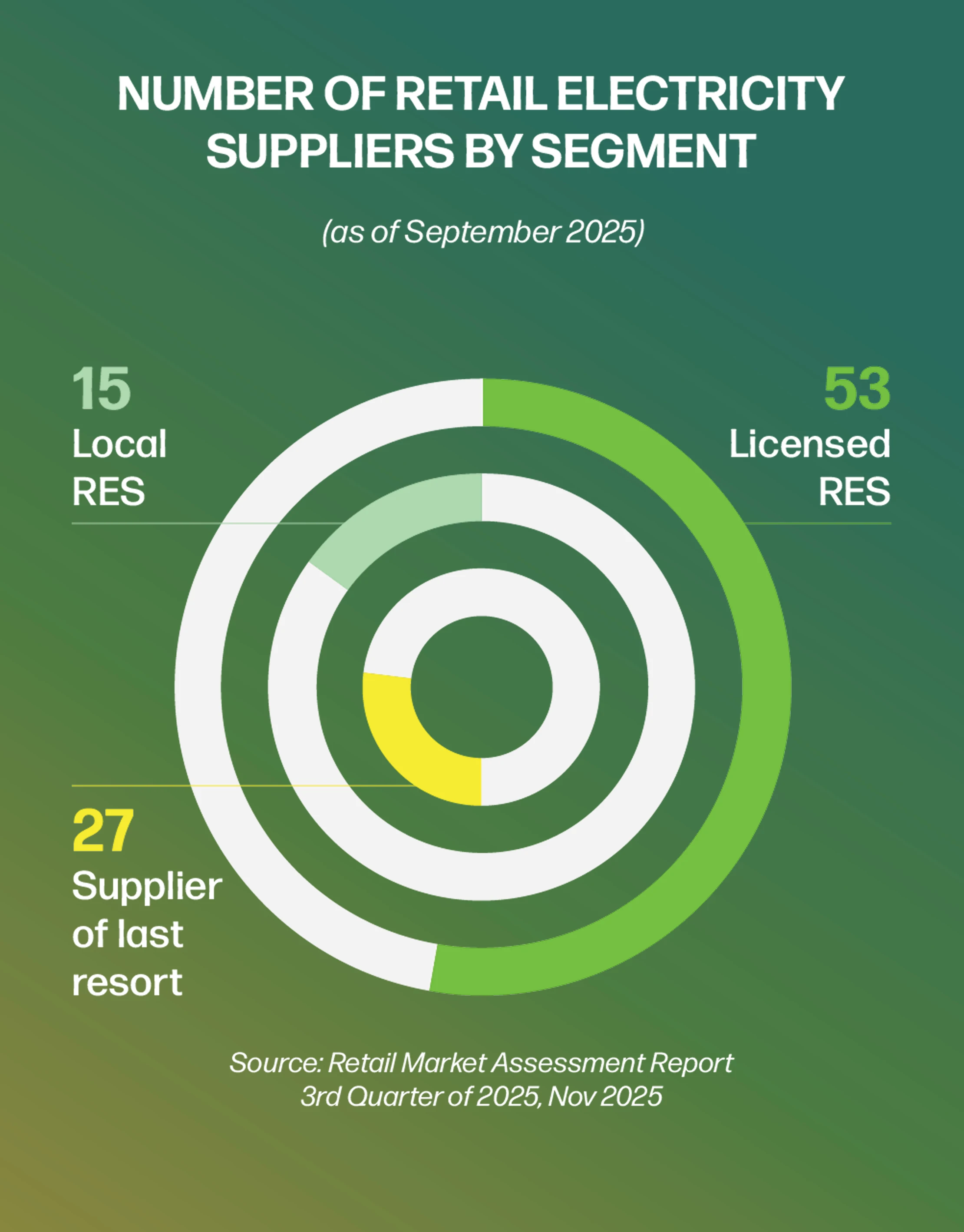
Within this evolving market landscape, First Gen continues to expand its customer partnerships. The succeeding table presents the Company’s customer distribution from 2023 to 2025 as the retail electricity market evolved.
FIRST GEN CUSTOMER PORTFOLIO BY SEGMENT (2023–2025)
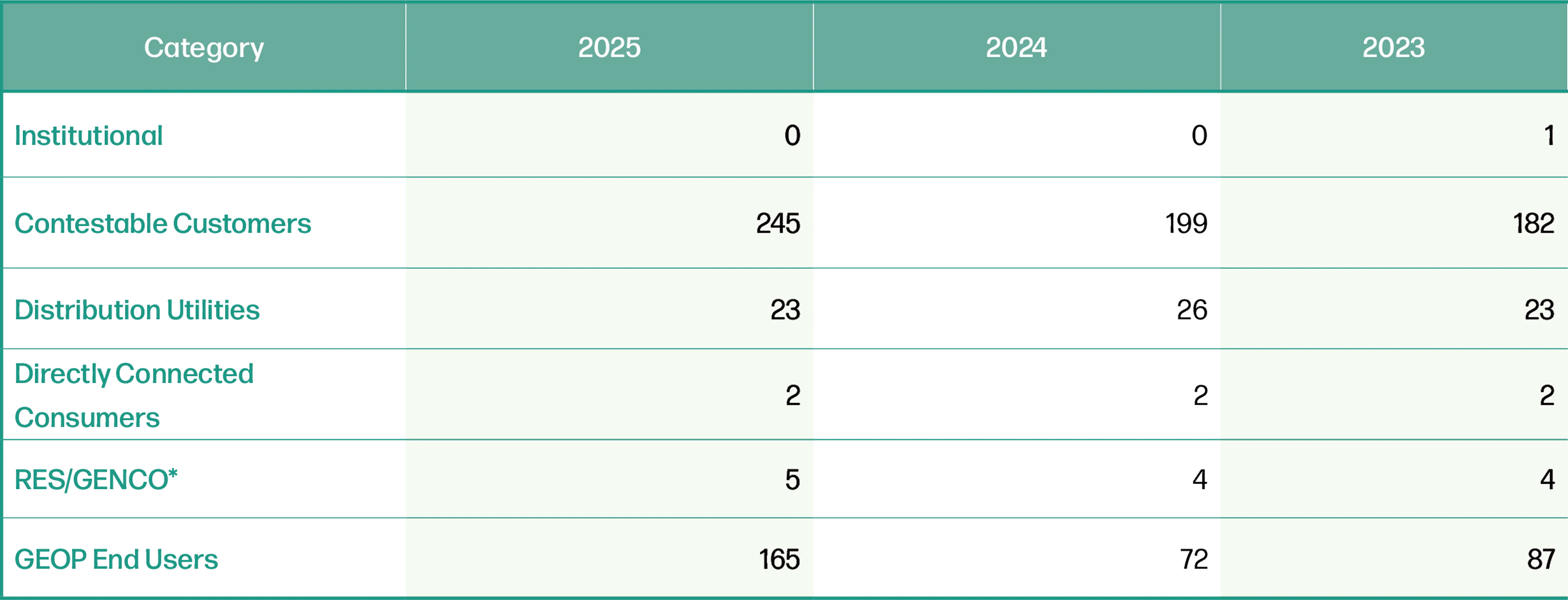
*RES = Retail Electricity Supplier; GENCO = Generation Company
As shown in the table above, the number of contestable customers increased from 182 in 2023 to 245 in 2025, reflecting growing participation in competitive electricity supply arrangements. The number of GEOP end users also rose in 2025, reaching 165, indicating stronger uptake of renewable energy supply options during the year. Meanwhile, the number of distribution utilities served remained broadly stable, while directly connected consumers remained unchanged, indicating continuity in these customer segments. The increase in the number of customers can be attributed to the following initiatives.
- Retail Aggregation Program (RAP): New Market Segment served through the successful RAP Pilot. Internal teams strengthened their systems and processes in order to capture and serve more RAP customers.
- Renewable Energy Certificates/Energy Attribute Certificates (RECs/EACs): Marketing of RECs/EACs was ramped up through continued engagement of interested EAC customers and engagement of mandated REC participants, enabling a new revenue channel.
- Telesales: Establishment of telesales capabilities, for both inbound and outbound voice services, by engaging an external provider that complements the in-house team in customer management and reach.
- Expanded Settlement Options: Enabled bills payment of power customers through additional payment channels, such as BDO and BPI bills payments, giving customers more convenient and flexible payment choices.
To support a culture of continuous learning and collaboration with its customers, First Gen sustained several engagement initiatives throughout the year. The PowerEd Webinar Series serves as an online platform that shares industry insights and best practices on energy efficiency and energy management. Complementing this effort is The Green Shift, a series of face-to-face engagements with industry sectors such as cold storage, hospitals, feed manufacturers, data centers, and semiconductor companies. These sessions provide updates on developments in the power industry and promote practical approaches to improving energy efficiency and sustainability performance.
First Gen also conducts an annual Customer Satisfaction (CSAT) survey to assess the quality of its services and identify areas for improvement. While the results of the 2025 survey are still pending, the 2024 survey rated First Gen as “Very Satisfactory” as a retail electricity supplier under a four-point scale ranging from “Not Satisfied at All” to “Very Satisfied.” Customers cited the ease of communication with marketing officers and the efficient issuance of billing statements and receipts as key strengths. Feedback also highlighted opportunities to further enhance billing templates by including WESM charges and standardizing billing procedures for clients with multiple facilities—areas that the Company has since addressed.
Empowering Employees and Promoting Youth Advocacy
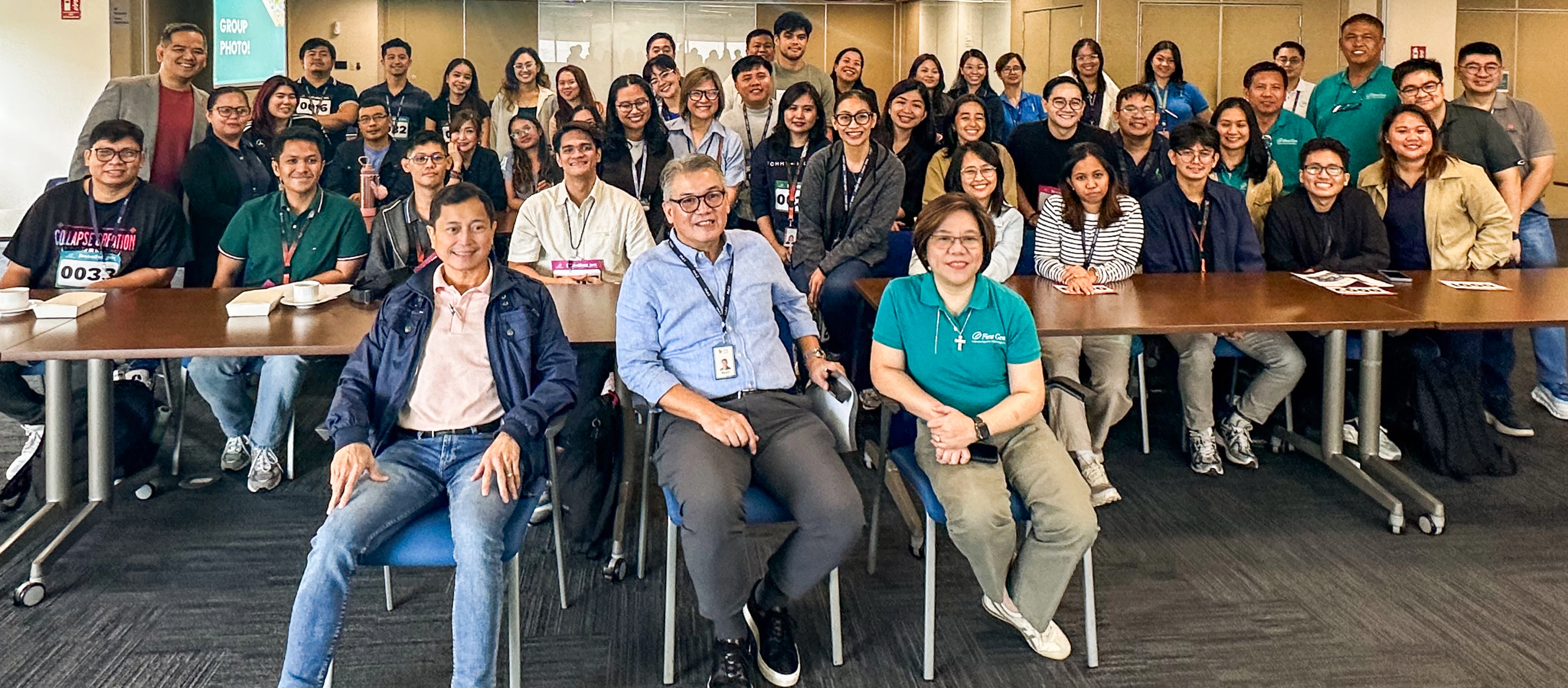
As part of onboarding new employees into the Company’s mission of decarbonization and regeneration, the CSR team organized a team-building activity featuring games and an adventure-style learning experience on climate action, net zero, biodiversity, and the B.E.S.T. culture. Thirty new employees across the First Gen Group participated in the activity.
In June 2025, First Gen launched the Youth for Climate and Energy Leadership Summit. Sixty-two high school students and youth leaders gathered for the inaugural Youth for Climate and Energy Leadership Summit (YCELS) during the Lopez Envi Festival—engaging in climate science, energy transition, and systems thinking across two sites in Nueva Ecija and Batangas. Selected student projects received seed funding and mentoring, aimed at investing towards locally grounded climate changemakers.
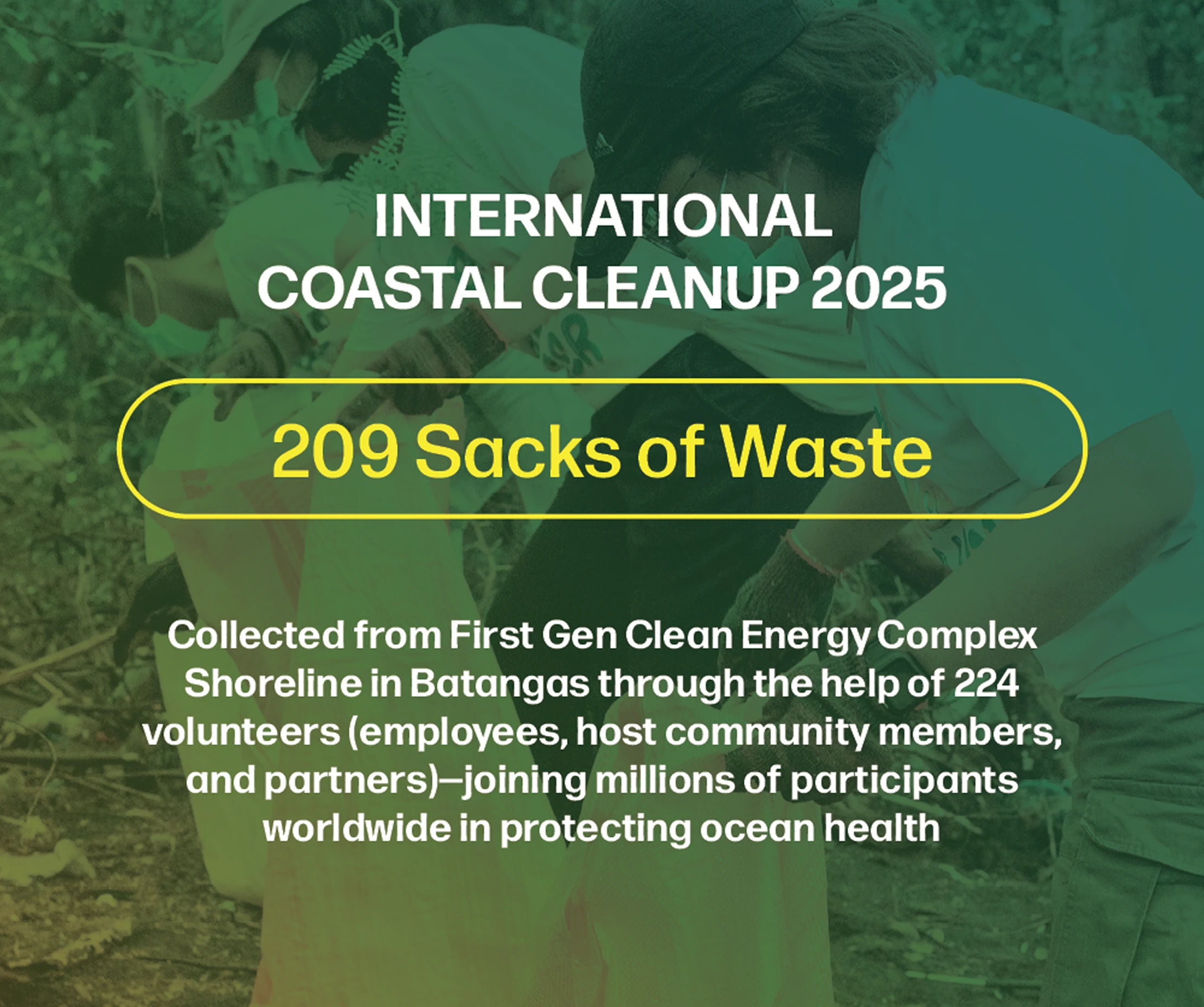
Building Community Resilience Through Partnership
First Gen’s community programs align with the Company’s broader strategic priorities: maintaining resilient and valuable assets, securing policies and value for clean energy, and building a mission-driven, results-oriented organization. Through initiatives in education, health, and livelihood development, the Company works with its host communities to support local well-being while fostering stable and constructive partnerships in areas where it operates.
FIRST GEN COMMUNITY INVESTMENT (2023–2025)
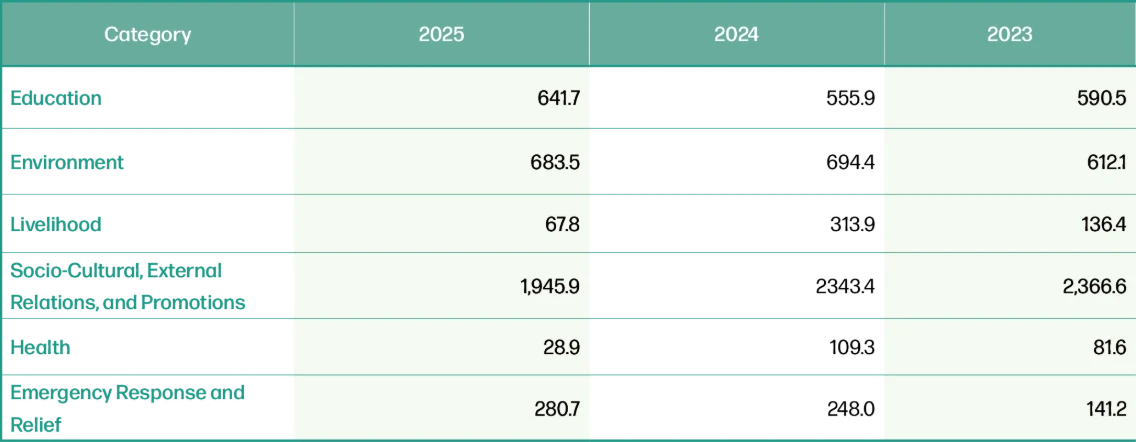
Values are in USD, Thousands
The table above summarizes First Gen’s community investments across key focus areas, including education, environment, livelihood, health, emergency response, and socio-cultural programs. The 2025 First Gen investments include CSR programs and initiatives executed in our geothermal, hydro, wind, and solar operating sites. These initiatives are implemented in partnership with local stakeholders and are supported by continuous consultation throughout the project lifecycle—from planning and implementation to monitoring and evaluation. Regular engagement with community partners helps ensure that programs remain responsive to local needs and that resources are used effectively, while ongoing coordination enables the sustained implementation of community initiatives.
Education and Youth Development
First Gen works with schools and local partners to expand access to education and skills development in its host communities through scholarships, school improvement programs, mentoring, and technical-vocational training. These initiatives help strengthen local capabilities while reinforcing long-term partnerships with communities where the Company operates.
Programs and initiatives include Brigada Eskwela, the First Gen Scholarship Program, and the SIKAT Program, which supports marginalized but deserving youth from EDC’s host communities nationwide.
Through Brigada Eskwela and support for the Department of Education’s Adopt-a-School Program, First Gen assists partner schools by providing learning materials and school infrastructure support. Contributions include school supplies, bags, raincoats, laptops, and classroom furniture.
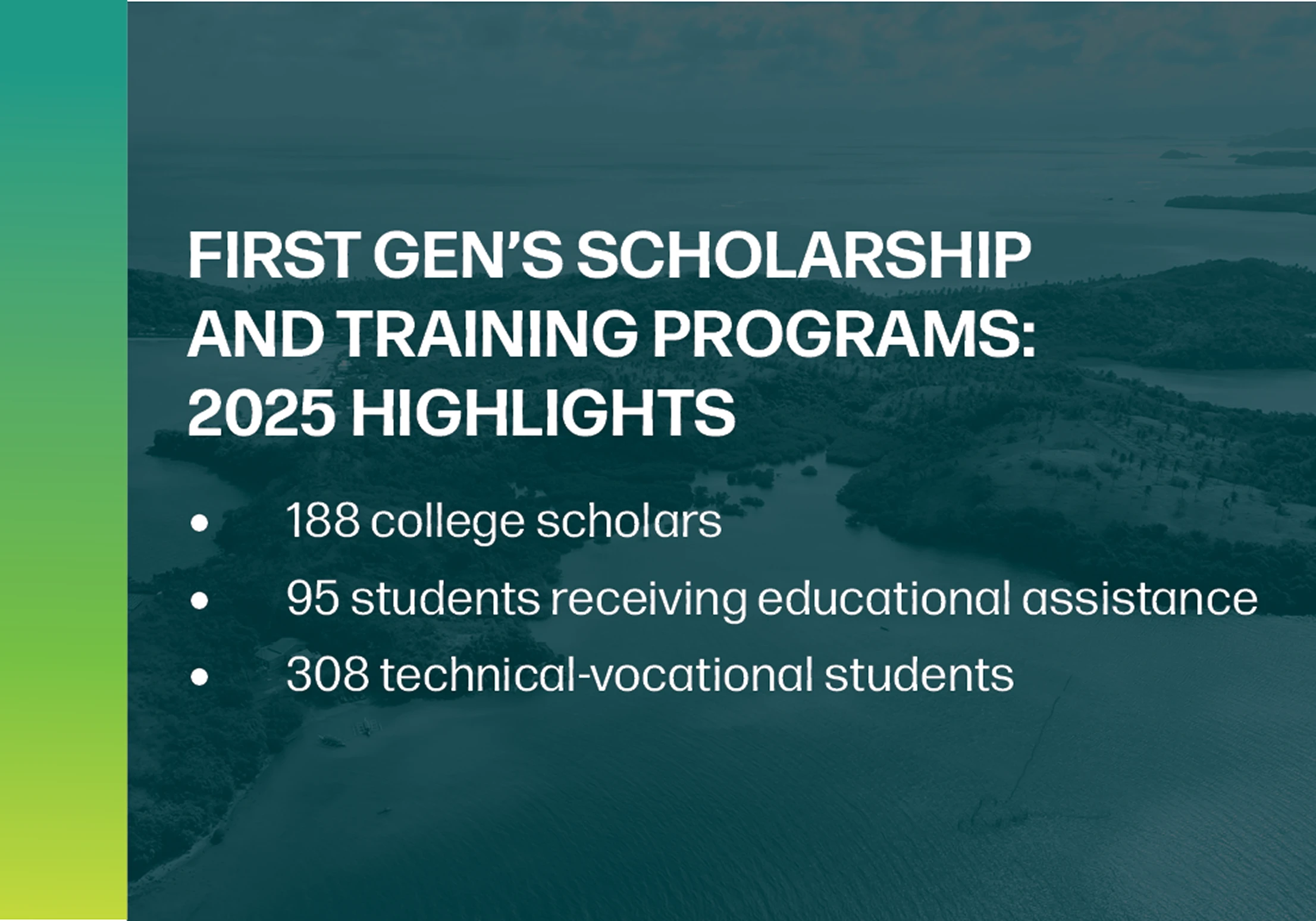
In Batangas City, First Gen provides scholarships to senior high school and college students in partnership with the Lopez Group Foundation Inc. (LGFI), which administers stipends and tuition payments to scholars and partner academic institutions. Due to the transition of First Gen’s gas business to Prime Infra in November 2025, Prime will take over and continue the implementation of these scholarship programs moving forward.
The SIKAT Program
The SIKAT Program is EDC’s flagship education initiative. In 2025, EDC invested PHP44 million in the program to support scholarship grants, mentoring activities, scholars’ engagement initiatives, career placement assistance after graduation, and partnerships with the Mt. Apo Foundation Inc. (MAFI) and the Kananga–EDC Institute of Technology (KEITECH) Educational Foundation, Inc.
The scholarship package includes financial assistance, mentoring support, laptops, portable internet modems, and monthly internet allowances. The Educational Assistance Program provides partial scholarships through semestral stipends to students in EDC project sites and expansion areas.
In 2025, the program produced 11 graduates, including a graduate from the Obo Manobo Indigenous community in Mindanao. The cohort included one magna cum laude and four cum laude awardees.
KEITECH marked a milestone on November 14, 2025, with the graduation of 92 scholars from its Year 16 Regular Training Program.
On August 11, 2025, First Gen held a send-off ceremony for 25 graduates from host barangays in Batangas City who completed TESDA-accredited skills training in partnership with the Concept Institute for Career Enhancement, Inc. All graduates obtained National Certificate II qualifications in Electrical Installation and Maintenance and Instrumentation and Control Servicing.
Recognition of the SIKAT Program
The SIKAT Program received several recognitions in 2025.
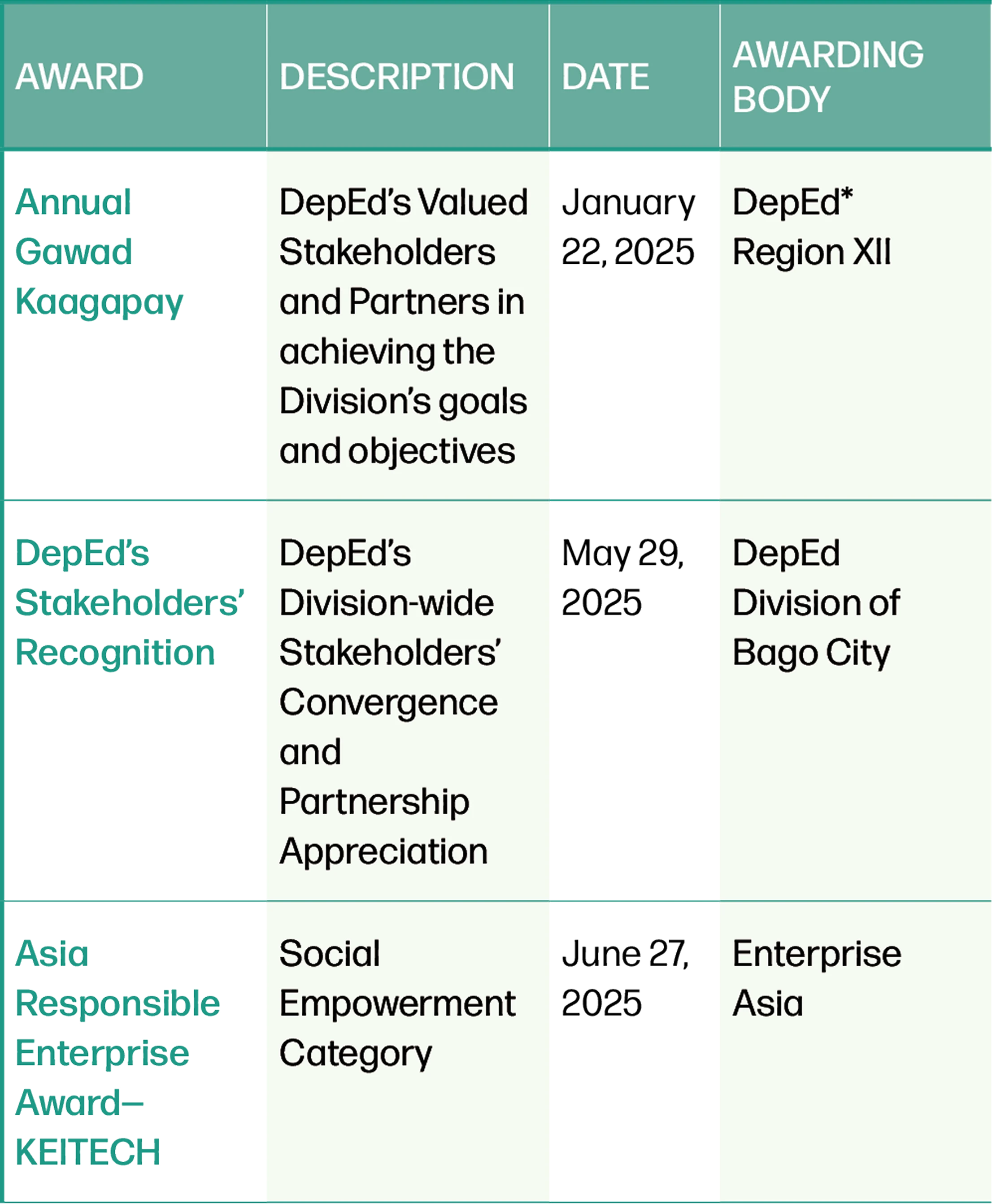
*DepEd = Department of Education
Mentorship and Scholar Engagement
The SIKAT Program also provides mentoring and personal development opportunities. In July 2025, more than 90 scholars attended the two-day SIKAT solidarity building and enrichment boot camp in Sorsogon City, Bicol, themed “Making Ways for the Youth to Lead a Regenerative Future.”
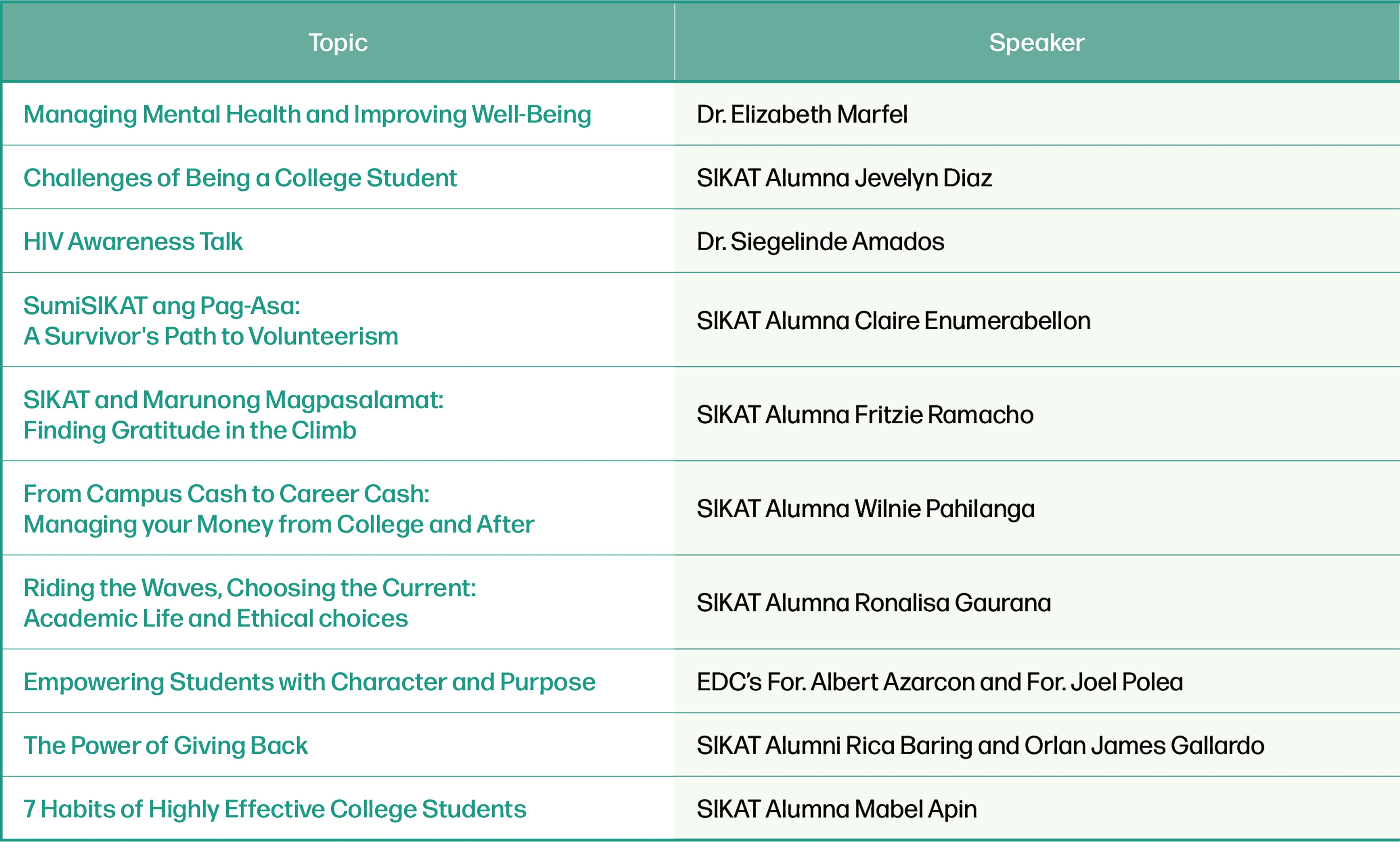
The program continued the SIKATalks series, where EDC employees, SIKAT alumni, and volunteers shared lessons and guidance with scholars. In 2025, nine SIKATalks sessions were conducted across project sites, with an average of 20 participants per session.
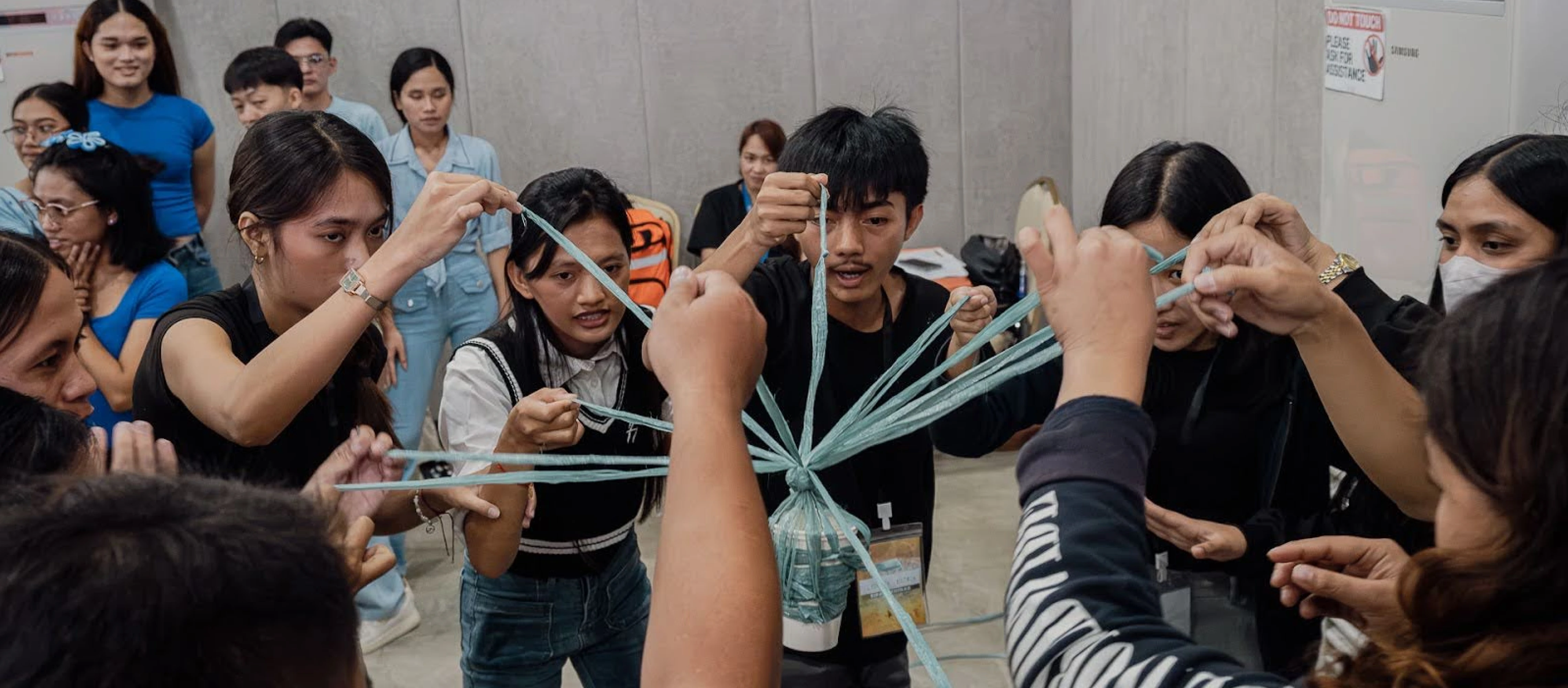
SIKATALKS 2025 SERIES
Scholars also receive guidance through quarterly Kumustahan (check-in) sessions, where they discuss academic challenges, well-being, and career aspirations.
As part of the program’s give-back component, scholars participate in volunteer activities such as onboarding new scholars, distributing school supplies, facilitating SIKATalks sessions, and tutoring Alternative Learning System (ALS) learners. In Burgos, Ilocos Norte, scholars also served as tutors for the SIKAT-Runungan Reading Pabasa Project, implemented with the Sangguniang Kabataan of Burgos to support students needing assistance with reading.
Education Partnership Initiatives
First Gen also collaborates with private businesses and professional organizations to support education initiatives.
One example is the Inang Maharang School Rebuilding Project in Barangay Nagotgot, Municipality of Manito, Albay. Implemented by EDC and First Balfour, the project supported the relocation of the Inang Maharang Elementary School after the Mines and Geosciences Bureau declared the original site “no man’s land.” For some time, the school had lacked any permanent structure, operating out of makeshift classrooms. The new classroom building, inaugurated in October 2025, is the first permanent structure at the relocated site. Additional contributions—including classroom armchairs—were provided by partners such as the Asian Forest Cooperation Organization (AFOCO) and local contractors.
Another initiative was the Paskong SIKAT Christmas outreach program, implemented with the Philippine Society of Mechanical Engineers—Palinpinon Chapter, which distributed 206 food packs to learners and school personnel of Dobdob Elementary School in Valencia, Negros Oriental.
In December 2025, EDC continued the Basket of Love project for SIKAT scholars through BINHI Communitree, providing Christmas gift baskets for scholars’ families.
Social Enterprise and Local Economic Development
A company cannot continue to operate in an unsustainable socio-economic environment. With this in mind, First Gen works with farmers’ associations, cooperatives, and community organizations in its host communities to develop livelihood opportunities that strengthen the local economic ecosystem. Through capability-building, enterprise development, and service contracts, these partnerships enable community organizations to participate in local economic activity and contribute to more resilient community economies.
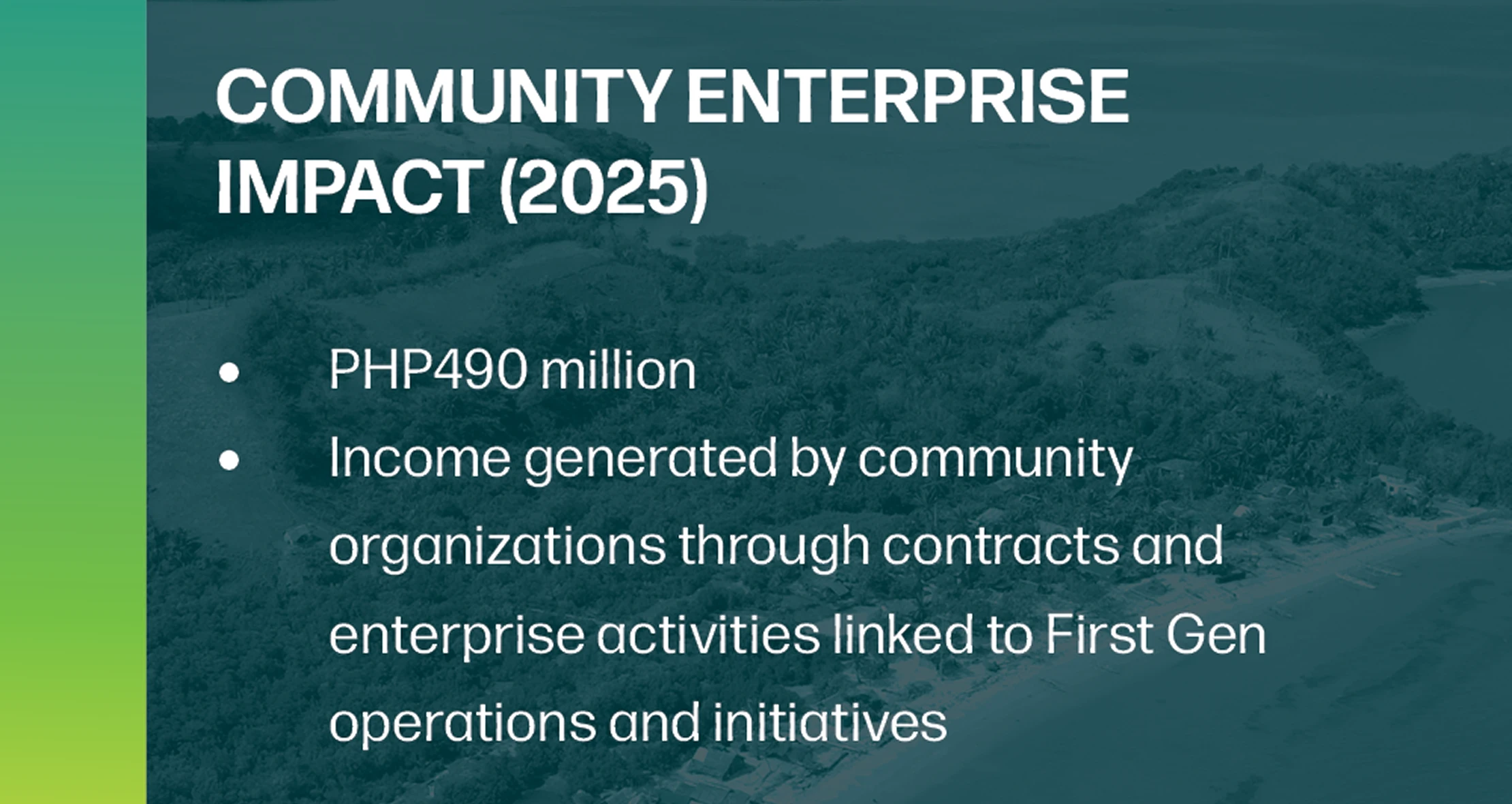
In 2025, community enterprises and organizations generated approximately PHP490 million in income through contracts, enterprise sales, and services associated with First Gen operations.
Capacity Building in Social Entrepreneurship
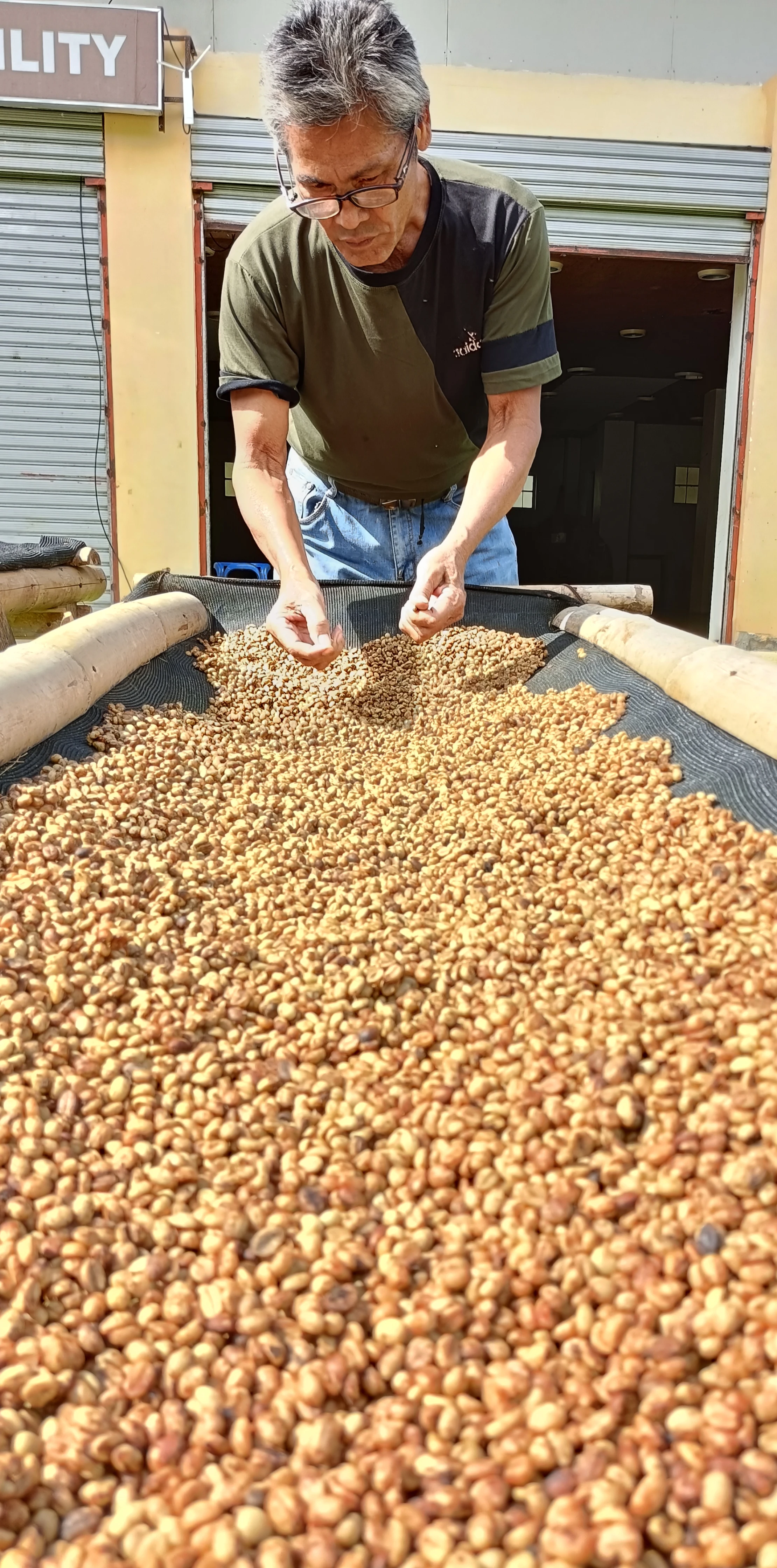
In Leyte, the Tongonan Farmers Association (TOFA), assisted by EDC, continued to expand its social enterprise activities in 2025. The 50-member association generated PHP213,000 from sales of coffee and cacao products and secured BINHI and social enterprise contracts valued at PHP1,260,931 during the year.
TOFA members also participated in Good Agricultural Practices training conducted by the Ormoc City Agriculture Office in collaboration with EDC. Other farmers’ associations in host communities in Ormoc City and Kananga likewise received Project Proposal Writing training from the Department of Labor and Employment (DOLE). These organizations included:
- Matin-ao Abucayan Farmers Association (MAFA)
- Lake Danao Farmers Association (LADFA)
- Tongonan Kananga Farmers Association (TOKAFA)
- Barangay Hiluctogan Community Association (BAHILCA)
- Lim-ao Integrated Farmers for Empowerment (LIFE)
- Partners Multi-Purpose Cooperative (PMPC)
- Lim-ao Farmers Association (LIFA)
- Tongonan Farmers Association (TOFA)
Additional capability-building initiatives were also conducted for partner organizations. Members of LIFE participated in a values formation seminar and a five-day Tailoring and Bag Making Refresher Workshop facilitated by external resource persons.
EDC also supported TOFA through its Open Innovation Program, implemented with the Asia Institute of Management’s Action Consulting Project (AIM ACP). The collaboration focused on strengthening community-based enterprises by enhancing CSR programs related to social entrepreneurship. In 2025, the initiative supported the scaling of Tongonan Upland Roast (ToUR), TOFA’s community coffee enterprise.
Another key community organization in Leyte is the Partners Multi-Purpose Cooperative (PMPC), which serves as the umbrella organization for 23 farmers’ and community associations across Leyte’s primary partner barangays. In 2025, PMPC secured PHP211 million in community contracts. From its 2024 net surplus, the cooperative distributed PHP2.3 million in dividends and patronage refunds to its 1,135 members during its Annual General Assembly in March 2025.
Supporting Indigenous and Local Enterprises
In Mt. Apo, EDC continued to support the Sondowa Coffee Farmers Association (SOCOFA), an organization of Obo-Monuvu coffee farmers managing a 30-hectare coffee plantation within the ancestral domain of MADADMA in Barangay Ilomavis, Kidapawan City, and the Municipality of Magpet.
SOCOFA members participated in training programs including Barista 101, 102, and 103, as well as Food Safety training, strengthening their skills in coffee preparation, equipment maintenance, and food handling. These initiatives support the planned expansion of a coffee shop and catering services at the EDC site facility in 2026.
Additional livelihood opportunities were also generated through cooperatives such as the Partnership of Accredited Contractors and Entrepreneurs Multipurpose Cooperative (PACE-MPC) and the Mt. Apo Ten Kilometer-Radius MPC (MATKR-MPC). Collectively, these cooperatives earned approximately PHP200 million from EDC contracts in 2025 for construction, building and maintenance, BINHI-related services, and transport.
More in Mindanao, First Gen supports a Mamanwa Indigenous Peoples community from Maraiging, Jabonga, Agusan del Norte. Formed as the MAMAFASWAS Weavers, they are reviving buri and abaca weaving, transforming a fading cultural tradition into a regenerative livelihood. Since 2022, they have generated an aggregate income of PHP371,350.00—empowering women, strengthening community resilience, and uplifting the community with confidence and renewed purpose.
Community Enterprises in Other Host Areas
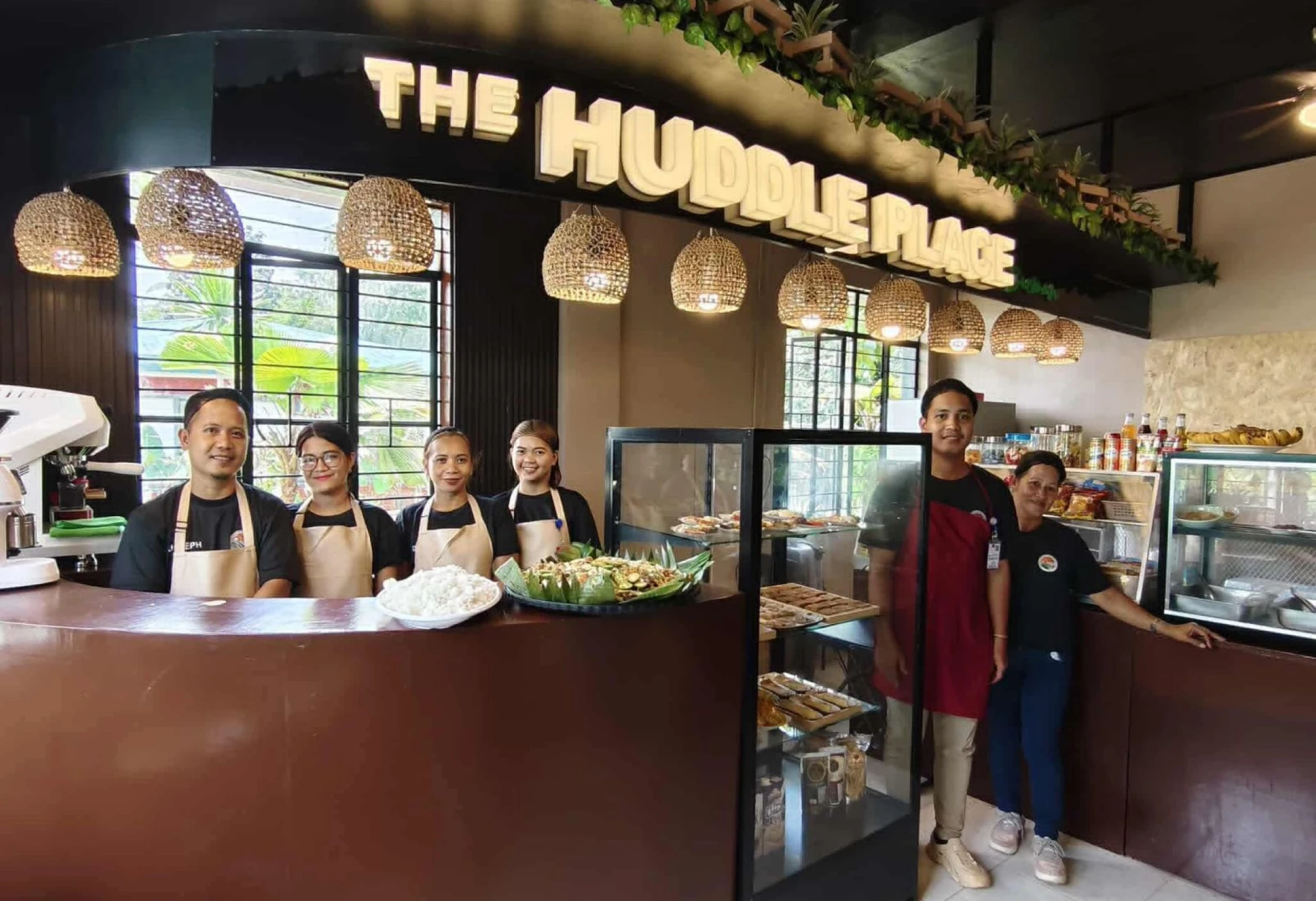
In the Bac-Man Geothermal Project (BMGP) area, the Alliance of Bacman Farmers Association Inc. Agriculture Cooperative (ALBAFAI) inaugurated the first on-site café within the BMGP facility in August 2025. The café offers beverages made from locally sourced coffee beans and serves employees, contractors, and visitors at the project site.
ALBAFAI also secured approximately PHP27.5 million in contracts from EDC for services, including BINHI activities, manpower support, geophysics and environmental compliance, and the provision of goods and supplies.
The Bacman Host Communities Multi-Purpose Cooperative (BMPC) also reported strong financial performance. In 2025, the cooperative declared an 84 percent return on members’ 2024 capital shares, resulting in PHP2.2 million in dividends distributed among 170 members. Members reinvested these earnings into livelihood activities such as tricycle operations, agricultural equipment, and poultry production.
BMPC also secured approximately PHP39 million in contracts from EDC in 2025 covering construction, well testing and monitoring services, and the supply of hardware, construction materials, groceries, and other goods.
In Negros Occidental, the Mailum Minoyan United Farmers Multipurpose Cooperative (MMUFAMPC) secured PHP5.5 million in contracts from EDC for forest protection and restoration activities under the BINHI program. In Valencia, Negros Oriental, the Makugihong Mag-uuma Sa Proper Dobdob Association (MMPDA) received PHP1.5 million for compliance planting services.
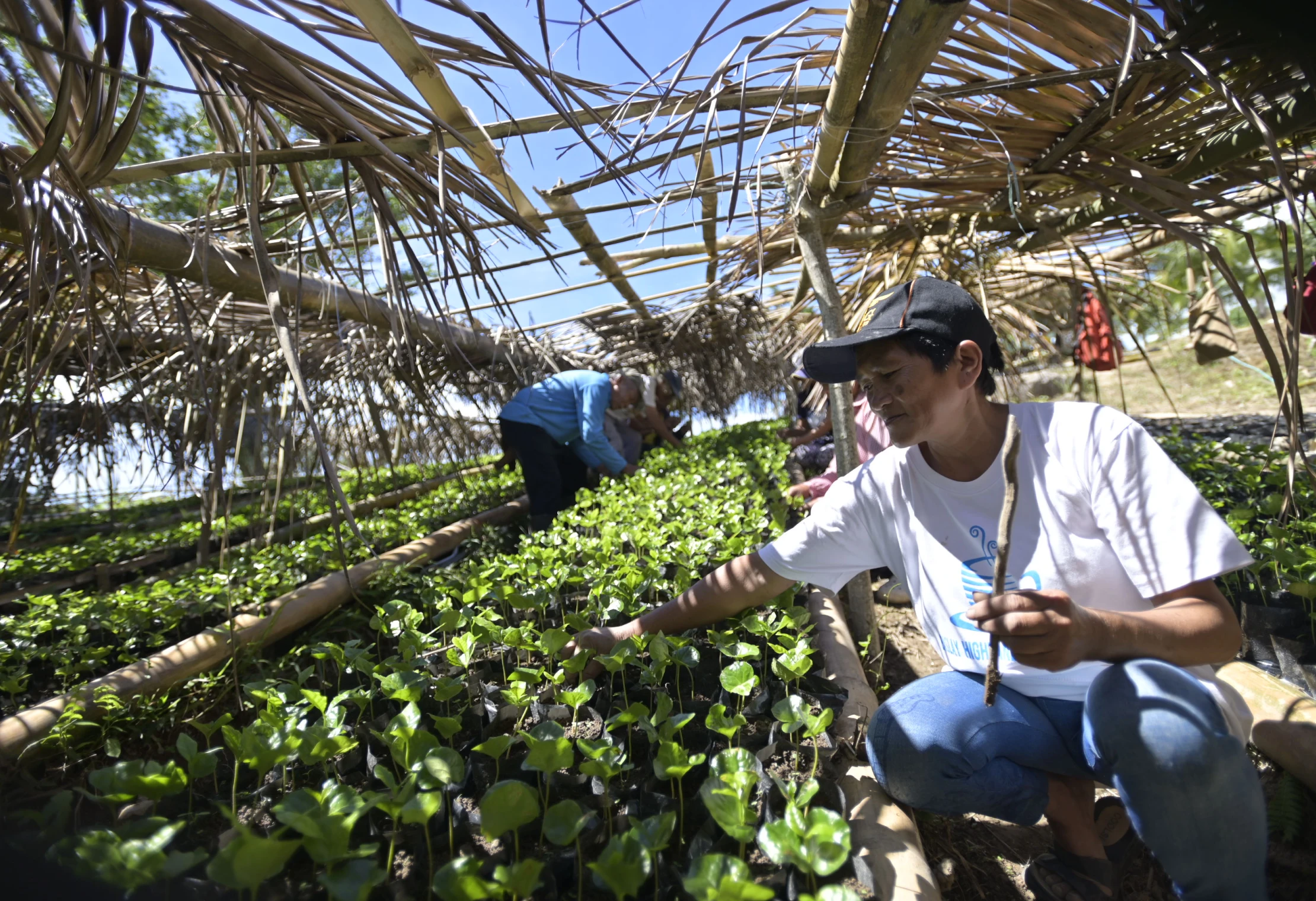
EDC also supported MMUFAMPC’s livelihood initiatives—including agricultural crop production, dairy livestock, poultry, and seedling nursery operations—by providing free access to two agricultural lots located in Bago City and the Municipality of Murcia.
In Burgos, Ilocos Norte, three community organizations—the Paddagan Upland Planters Association Inc. (PUPAI), Bacsil Upland Planters Association Inc. (BUFAI), and the Saguigui Tribal Council Association Inc. (STCI)—received PHP2.2 million in combined contracts for BINHI and compliance services.
Meanwhile, in Pantabangan, Nueva Ecija, First Gen supported four farmer associations, Cadaclan Farmers Association (CAFA), Liberty Fisherman and Farmers Association (LFFA), Maluyon Indigenous Christian Farmers Association (MICFA), and Villanueva Farmers Association (VIFA), by strengthening market access and enterprise capacity through BINHI contracts, community-based production, and targeted trainings, resulting in approximately PHP8.5 million in company investments from First Gen, which have enhanced their organizational capacity and increased incomes at both the association and household levels.
These partnerships illustrate how community capability building, combined with inclusive sourcing and service arrangements, can create sustained economic opportunities in areas where the Company operates.

Feature Story
Indigenous Weaving Enterprise Recognized for Community Partnership
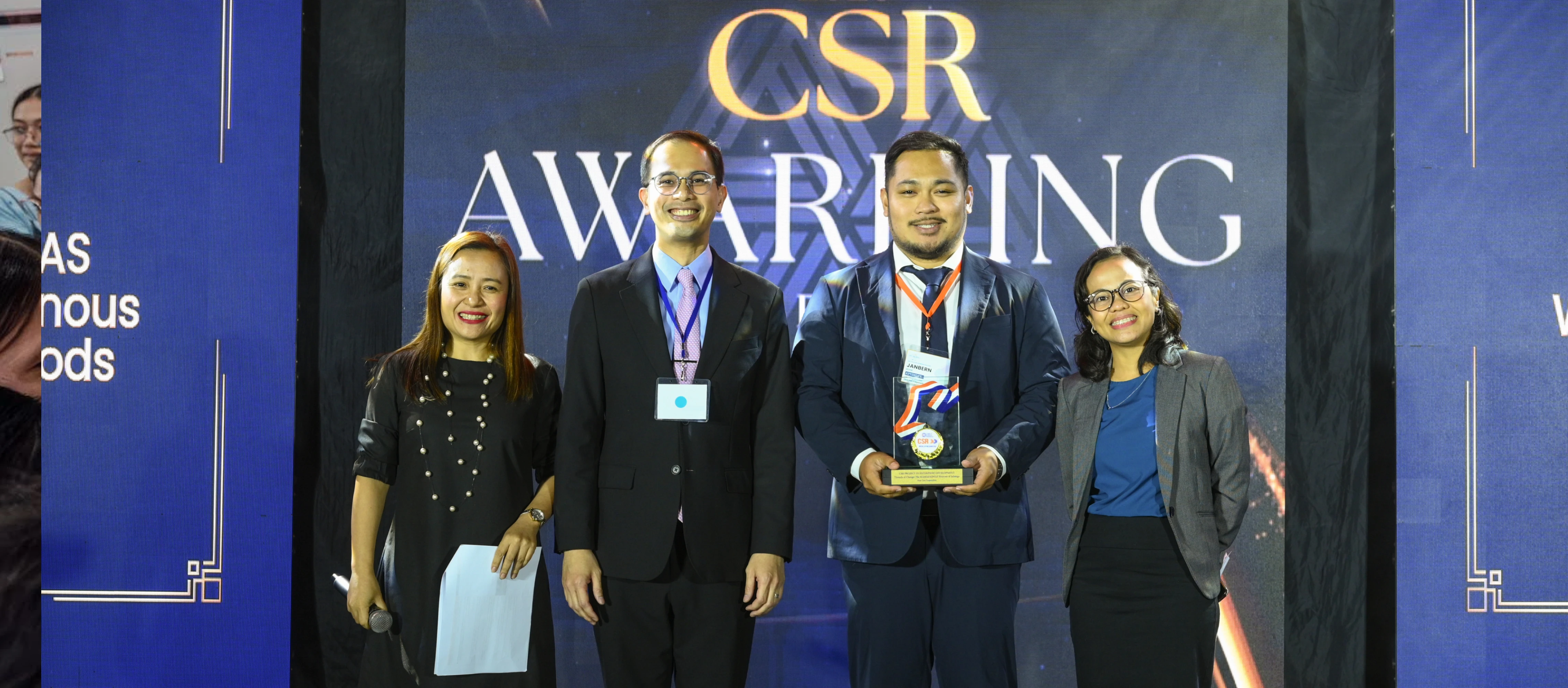
First Gen’s livelihood partnership with the Maraiging Mamanwa Farmers Skilled Workers Association (MAMAFASWAS) in Jabonga, Agusan del Norte received the 2025 Medal of Recognition for Enterprise Development. The award was presented at the League of Corporate Foundations’ (LCF) CSR Conference and Expo, held on July 1, 2025, in Makati City.
The award recognizes First Gen’s collaboration with MAMAFASWAS, a grassroots enterprise of Indigenous Mamanwa artisans that produces woven products using buri and abaca fibers. The initiative was launched in 2021 to help revive traditional weaving practices while creating livelihood opportunities within the Mamanwa ancestral domain.
Since its establishment, the weaving enterprise has expanded from 15 women weavers to 22 active members, including men and persons with disabilities. Between 2022 and 2024, the group recorded an 838 percent increase in aggregate income, supported by skills training, improved market access, and enterprise development assistance.
The initiative demonstrates how partnerships with Indigenous communities can support livelihood development while preserving traditional craftsmanship within local communities.
Program launched: 2021
Community: Mamanwa Indigenous community, Agusan del Norte
Members: 22 artisans (including PWDs)
Income growth: 838% increase (2022–2024)
Recognition: 2025 LCF Medal of Recognition for Enterprise Development
Disaster Preparedness and Community Resilience
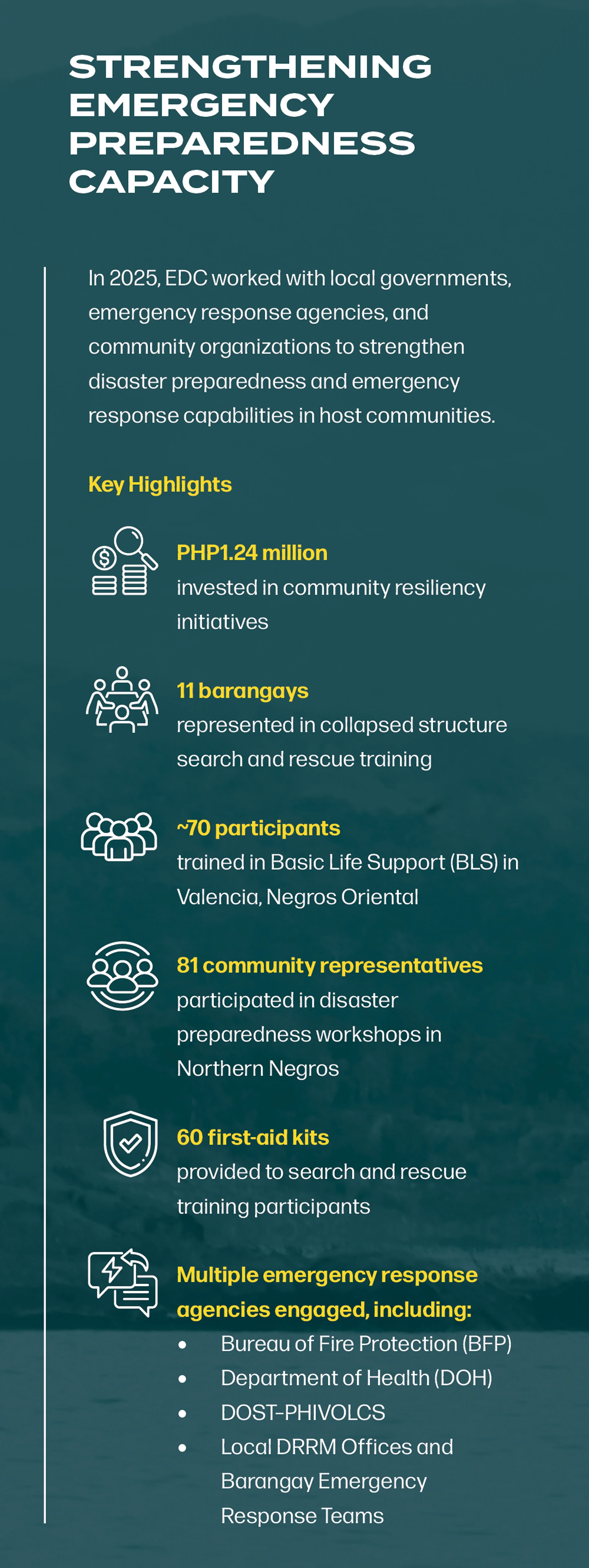
EDC supports disaster preparedness and emergency response initiatives in its host communities through training programs, equipment support, and relief assistance. In 2025, the Company invested PHP1.24 million in community resiliency initiatives aimed at strengthening the capacity of local responders and communities to prepare for and respond to emergencies. Through sustained investments in preparedness, the Company supports communities in building the knowledge, skills, and systems needed to respond to disasters—recognizing that resilience is strengthened over time through consistent and well-considered actions.
Strengthening Local Emergency Response
Several training and capability-building activities were conducted in partnership with local government units and emergency response agencies.
In Burgos, Ilocos Norte, EDC sponsored the Municipal Fire Olympics and Provincial Fire Olympics in March 2025 to promote community safety and strengthen local firefighting capabilities. The Company also donated fire rescue equipment to support emergency responders.
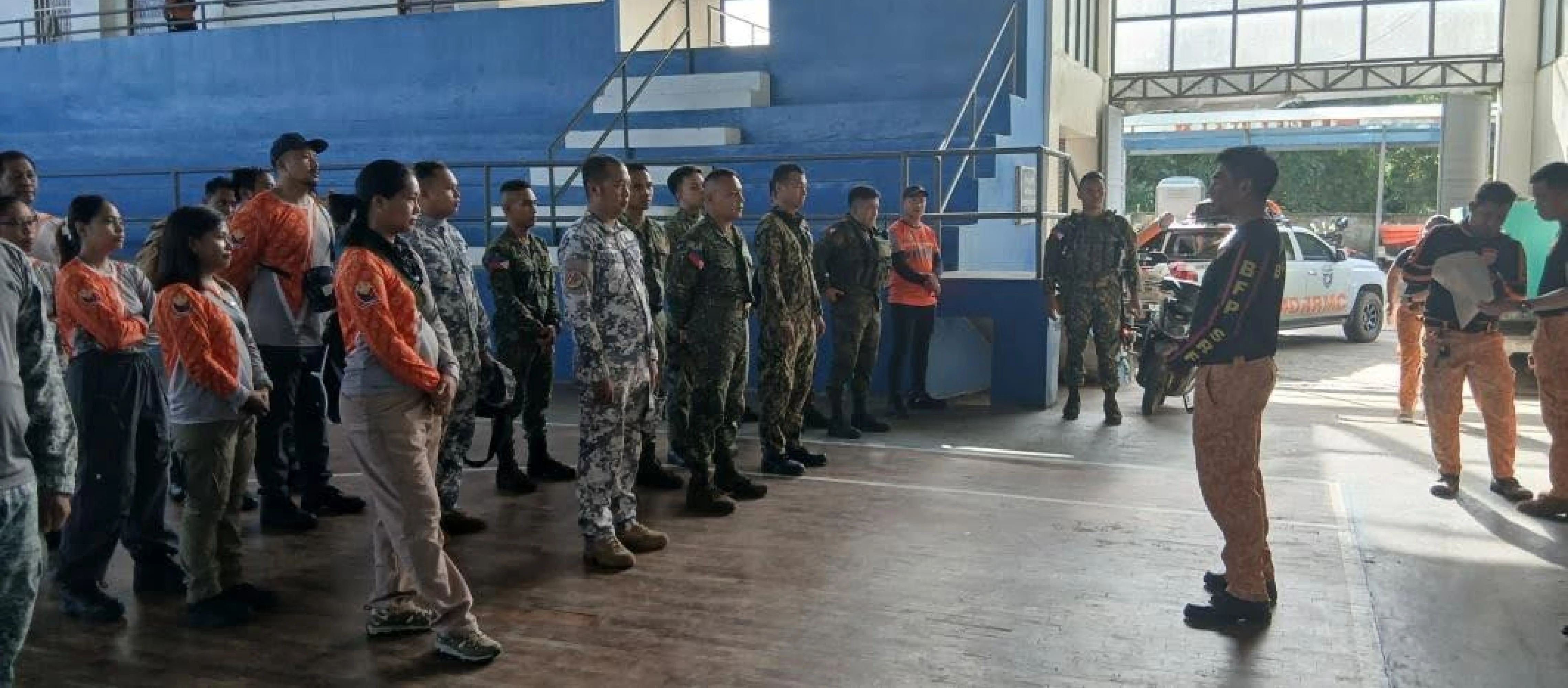
In November 2025, EDC supported a Collapsed Structure Search and Rescue Training conducted by the Bureau of Fire Protection (BFP) Special Rescue Force. The training was attended by Barangay Health and Emergency Response Teams (BHERTs) from 11 barangays, Municipal Disaster Risk Reduction and Management Offices (MDRRMOs) from Burgos, Dumalneg, Bangui, and Bacarra, personnel from BFP Burgos and Dumalneg, and representatives from First Balfour.
In addition, 60 first-aid kits were donated to participants of a Mountain Search and Rescue Training organized by the Pasuquin Disaster Risk Reduction and Management Office (DRRMO).
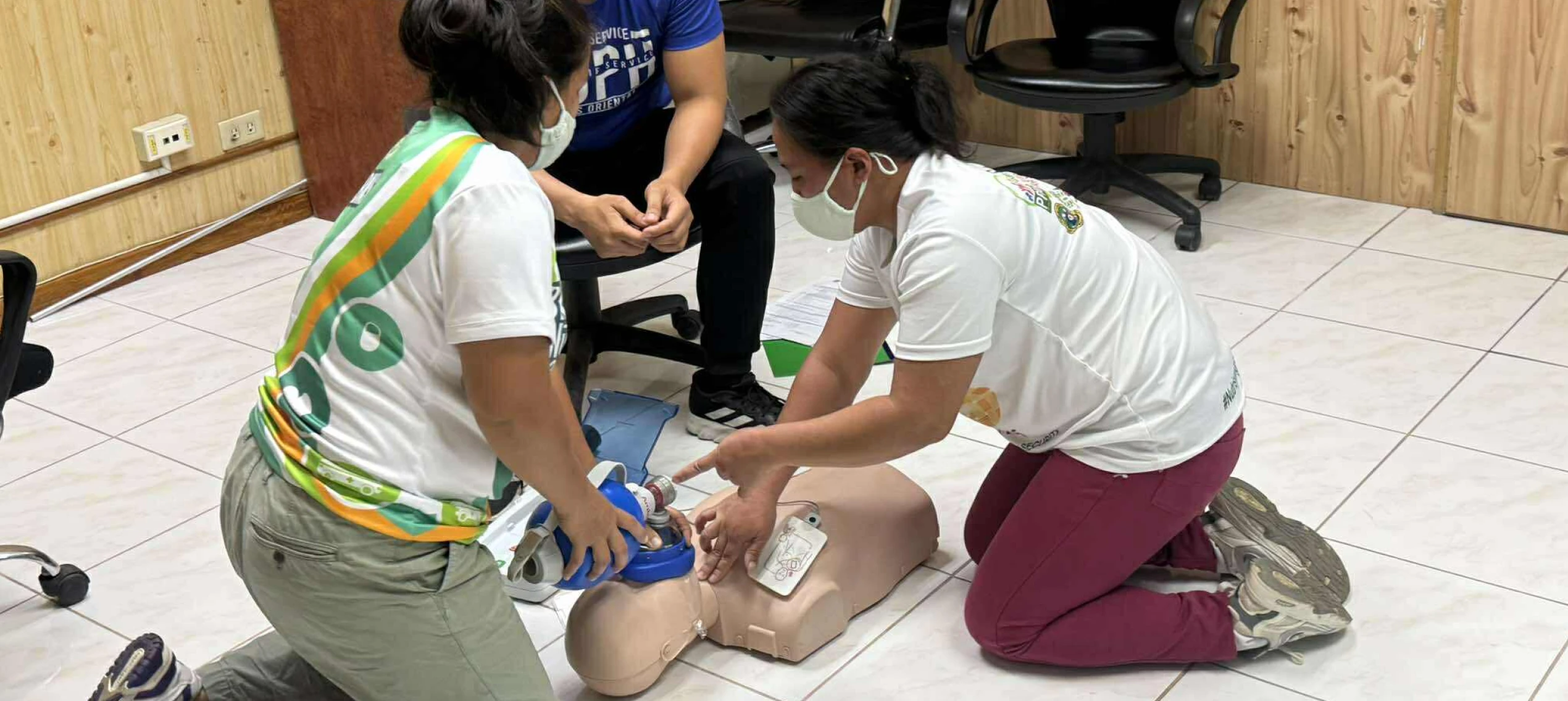
In Valencia, Negros Oriental, Basic Life Support (BLS) training was conducted in partnership with the Department of Health (DOH) for approximately 70 participants, including members of BHERTs, community residents, and local contractors from Barangays Puhagan, Malaunay, and Caidiocan.
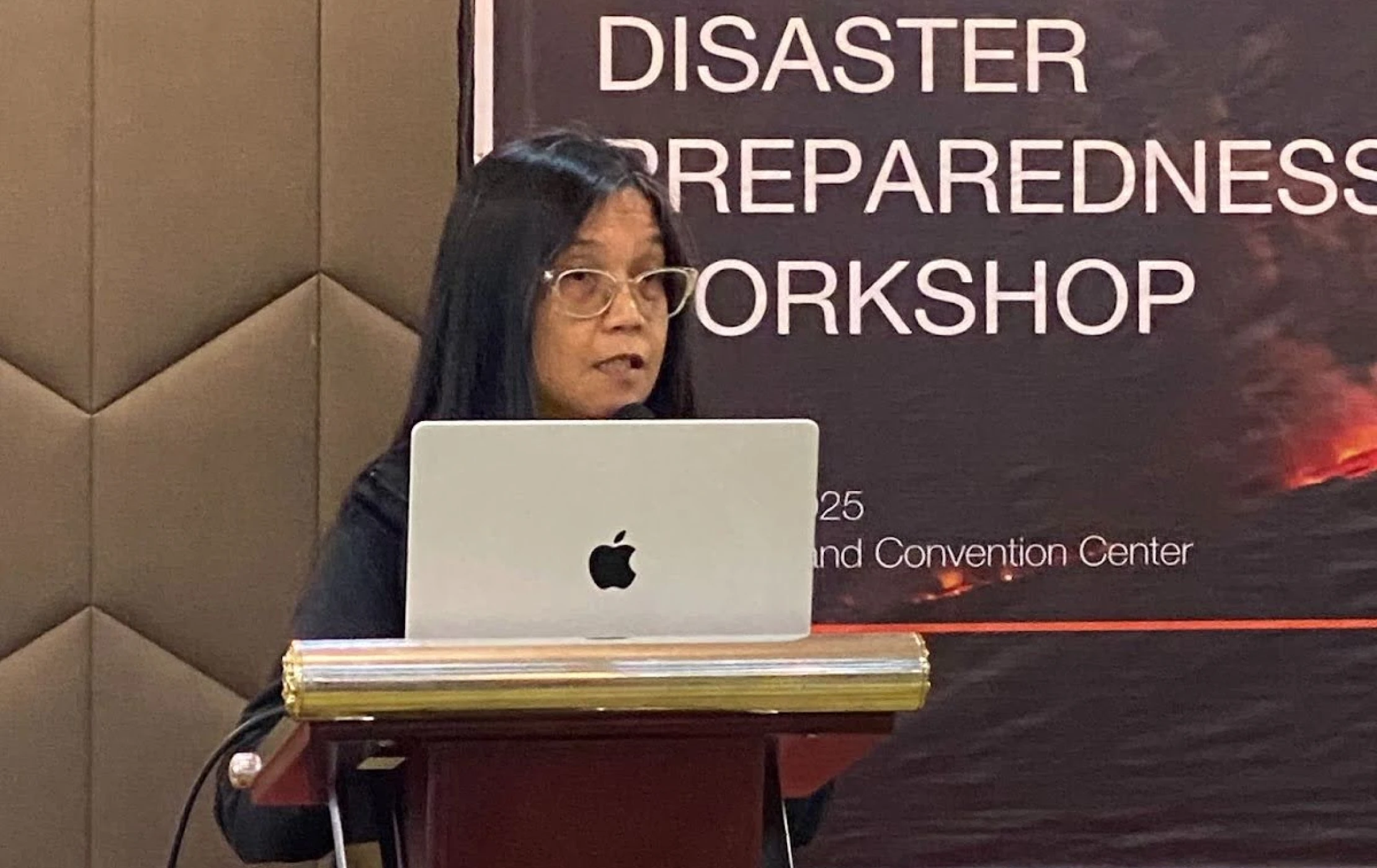
In Northern Negros, EDC conducted a two-day disaster preparedness workshop in June 2025 focusing on volcanism, with guidance from the Department of Science and Technology–Philippine Institute of Volcanology and Seismology (DOST-PHIVOLCS). The workshop engaged 81 representatives, including barangay officials, DepEd divisions, and school partners from host communities in Bago City and the Municipality of Murcia.
During the same period, personal protective equipment (PPE)—including safety pants, field shirts, safety shoes, safety goggles, and hard hats—was donated to members of the Barangay Mailum Emergency Response Team (BERT) in Bago City.
Disaster Response and Relief
We are acutely aware of the impact of extreme climate events on local communities, and we provide assistance to those affected by natural disasters.
In 2025, 2,744 households affected by natural disasters and extreme weather events received assistance from the Company.
During the eruption of Mt. Kanlaon in Negros in May 2025, EDC distributed 1,000 boxes of face masks to affected communities. Following Typhoon Tino in November 2025, the Company also distributed 300 food packs to host communities in Barangay Mailum, Bago City, and Barangay Minoyan, Murcia.
For these efforts, the Company received recognition from the local government unit (LGU) of Bago City, Negros Occidental for its support during the Kanlaon Volcano eruption response and related humanitarian efforts.
Infrastructure and Climate Preparedness Initiatives
In Bac-Man, EDC supported the Municipality of Manito in addressing landslide hazards in Barangays Nagotgot and Buyo. These hazards resulted from Typhoon Kristine in late 2024 and subsequent heavy rainfall in 2025.
Initial efforts focused on clearing operations to restore road access. To support longer-term safety, the Company began the construction of masonry walls and canals and the installation of coconets in high-risk areas in October 2025, with completion targeted for February 2026.
Engagement with Indigenous Peoples and Cultural Communities
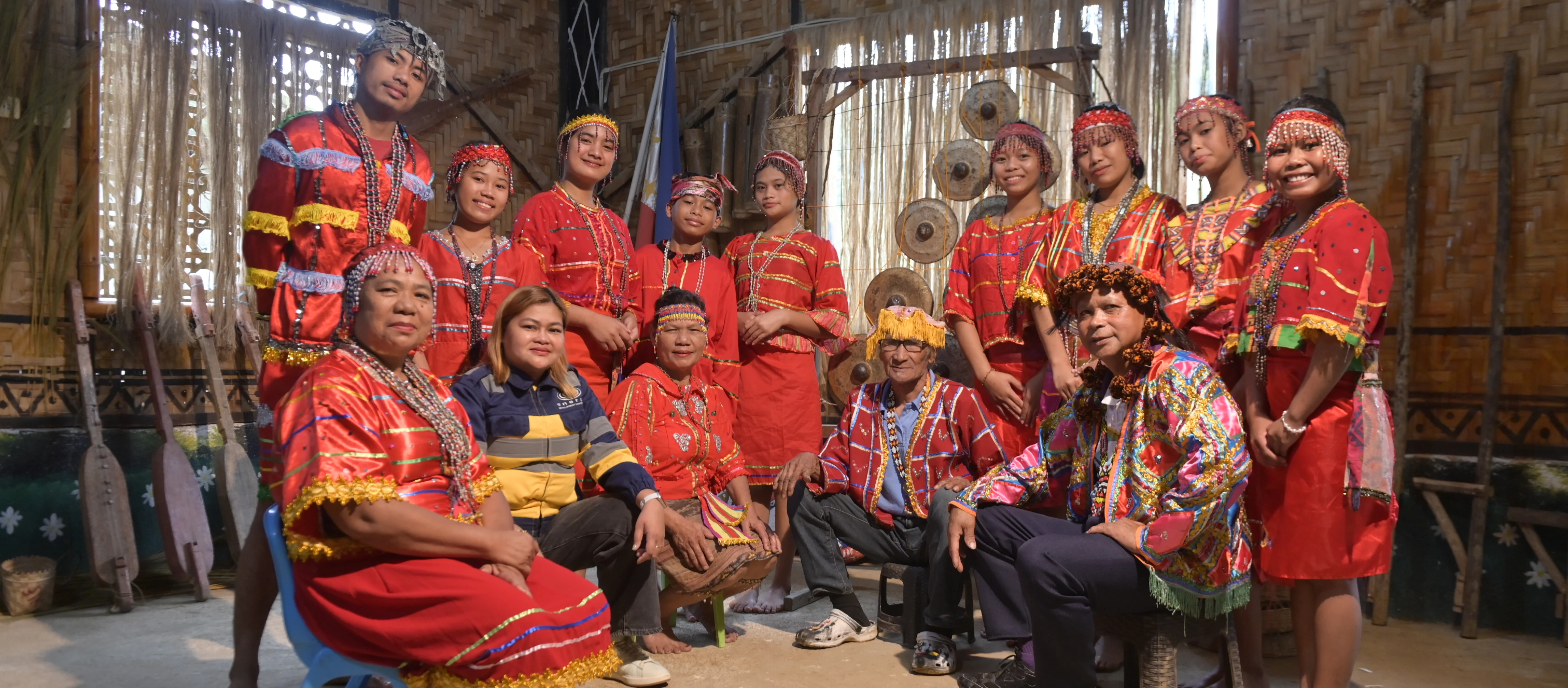
First Gen operates in areas where Indigenous Peoples and Indigenous Cultural Communities (IP/ICC) maintain deep cultural, social, and environmental ties to their ancestral domains. In several host communities, these groups form a significant portion of the local population and play an important role in shaping community life and local stewardship of natural resources. Recognizing this context, First Gen works with Indigenous communities to support cultural preservation, livelihood opportunities, and community well-being while respecting traditional knowledge systems and ancestral domains.
In the Mt. Apo area, Indigenous communities—including the Obo-Manobo and Bagobo-Tagabawa—comprise approximately 80 percent of the local population within the Company’s operational area, making sustained engagement an important component of EDC’s community partnerships.
Preserving Indigenous Knowledge
As part of its Cultural Heritage Program, EDC established two Schools of Indigenous Knowledge (SIK) to support the preservation and transmission of traditional knowledge. The schools were established in:
- Barangay Bongolanon, Municipality of Magpet (2022)
- Barangay Kisante, Municipality of Makilala (2023)
In 2025, structured session guides and learning modules were developed for the SIK program. These modules aim to formalize the teaching of Obo-Manobo and Bagobo-Tagabawa cultural knowledge, including indigenous language, art, and traditions. The modules are currently under review by the program’s Board of Directors and are expected to be finalized in 2026 for use in future cultural classes.
Livelihood Support for Indigenous Communities
EDC supports livelihood initiatives among these Indigenous communities in the Mt. Apo area.
In 2024, the company supported a Hog Raising Project by providing 12 piglets to the MADADMA 701 Relocatees and helped establish a sari-sari store for the MADADMA Pad RG Relocatee Payan Group.
By 2025, the initiative expanded as the initial livestock produced offspring, allowing 10 additional piglets to be distributed to other members of the community, increasing the number of household beneficiaries to 21.
The sari-sari store also grew in scale, with the value of its inventory increasing from an initial PHP150,000 investment to PHP220,000 by year-end.
Health Support for Indigenous Elders
EDC also provides health support to Indigenous elders and community leaders. Since 2024, this initiative has included annual physical examinations (APE) and medical assistance for 12 elders and leaders. In 2025, the program also supported six hospitalization cases among Indigenous elders and leaders.
Community Health and Well-Being
First Gen collaborates with local health offices, volunteer practitioners, and community organizations to support access to healthcare services in its host communities. These efforts contribute to community well-being while strengthening partnerships with local institutions.
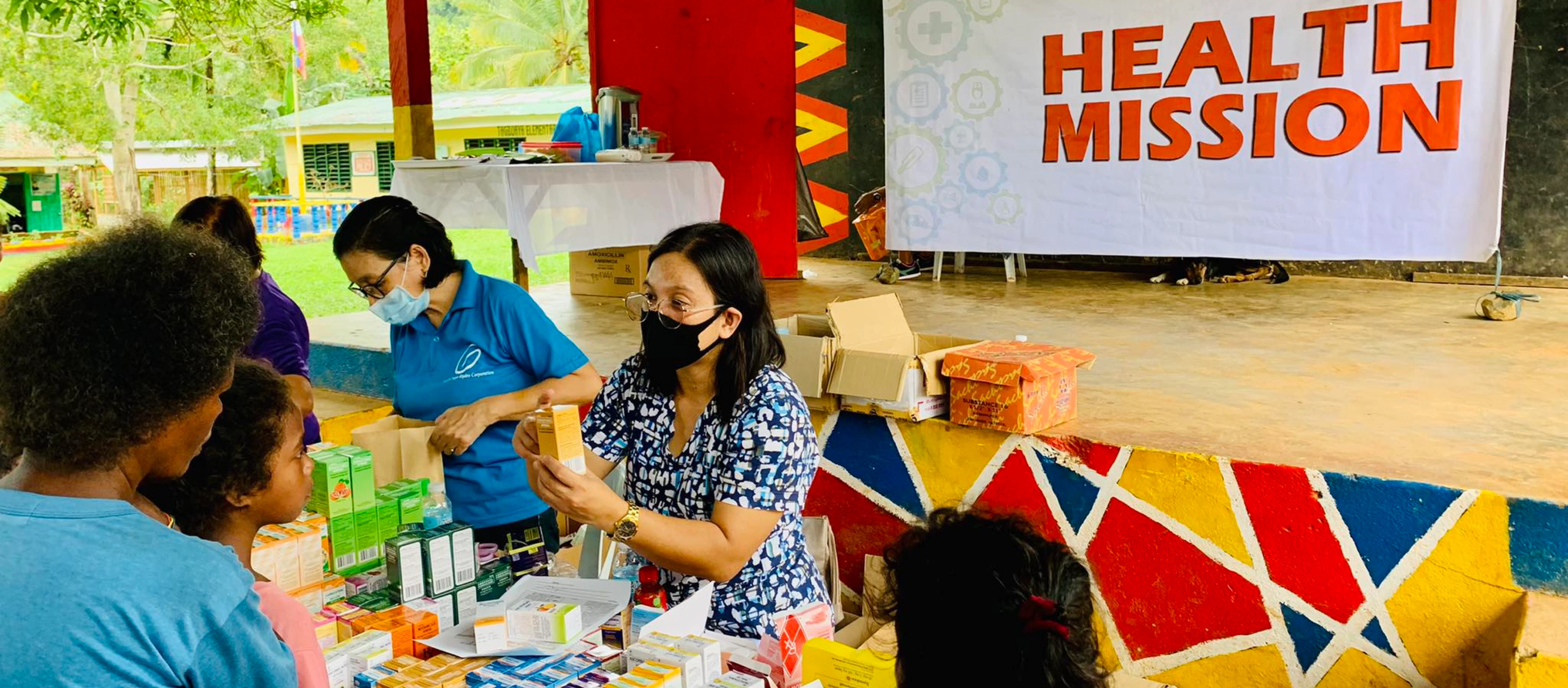
Through health missions and medical outreach programs, First Gen supported communities in Agusan del Norte, Pantabangan (Nueva Ecija), and Bukidnon, providing services such as dental care, eye consultations, and the distribution of medicines.
In 2025, health mission initiatives reached 12 municipalities, while training programs were conducted for barangay health workers across host municipalities and barangays in Nueva Ecija.
In the Bac-man Geothermal Project (BMGP) area, EDC also provided PHP434,200 worth of medicines and medical supplies to nine host barangays in Manito and Sorsogon City to support local healthcare services.
Responsible Supply Chain and Contractor Engagement
First Gen works with vendors and contractors as key partners in delivering its operations safely and responsibly. Through procurement practices, accreditation processes, and ongoing engagement, the Company seeks to promote responsible business conduct while maintaining safe and reliable operations across its facilities.
Strengthening Responsible Procurement
The Company prioritizes the procurement of goods and services from local providers, supporting economic participation in host regions while strengthening relationships with suppliers and contractors that contribute to its projects and operations.
In 2025, First Gen spent PHP24.5 billion with local suppliers and contractors, representing 74 percent of its total annual procurement expenditure.
Establishing ESG Baselines in the Supply Chain
In 2025, First Gen integrated a voluntary ESG survey into its Vendor Accreditation Process to establish a baseline understanding of the sustainability practices of its partners.
The survey uses a structured scoring system ranging from 0 to 100 percent, evaluating the presence of policies and systems across environmental, social, and governance dimensions.
Contractor Safety and Risk Management
First Gen maintains a zero-harm safety culture across its operations, including among contractors and service providers.
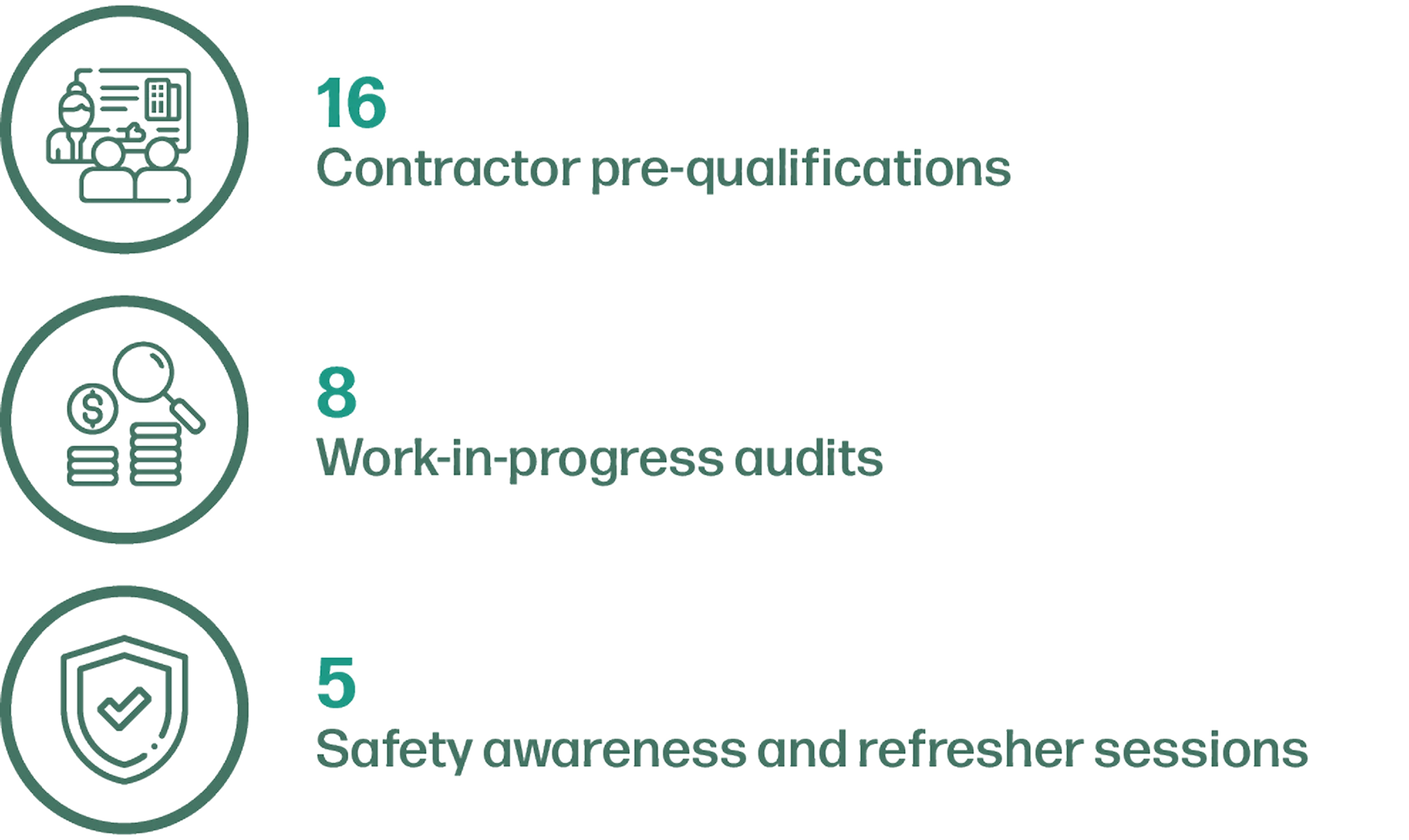
Contractor-related safety risks are managed through the Contractor Environment, Safety, and Health Management (CESHM) framework, which includes:
- Pre-qualification due diligence to confirm contractor compliance with environmental and safety regulations
- Work-in-progress audits conducted during project execution to verify the implementation of safety protocols
CONTRACTOR SAFETY OVERSIGHT: KEY 2025 METRICS
Vendor ESG Survey Results
Analysis indicated that lower scores were more common in the Environmental and Governance categories.
Data Privacy and Information Security
First Gen also prioritizes the protection of customer information as part of maintaining trusted relationships with its stakeholders.
The company implements data privacy notices whenever customer information is collected, outlining how personal data will be handled. Security measures are also in place to prevent unauthorized access and data breaches.
As of 2025, the Company recorded zero complaints related to customer data privacy or information theft.
Public and Private Sector Partnerships
First Gen engages with government institutions and partner organizations on policies and initiatives related to climate change and environmental management. While the Company does not maintain a formal policy or management system for lobbying or participating in trade association activities, it provides its views on public policies related to climate change in alignment with the goals of the Paris Agreement.
First Gen and its subsidiary, EDC, regularly participate in consultations on environmental protection and regulatory policies. Through these engagements, the Company shares operational and technical insights that may inform policy development. In addition, First Gen collaborates with various organizations to support initiatives related to climate action and sustainable development.
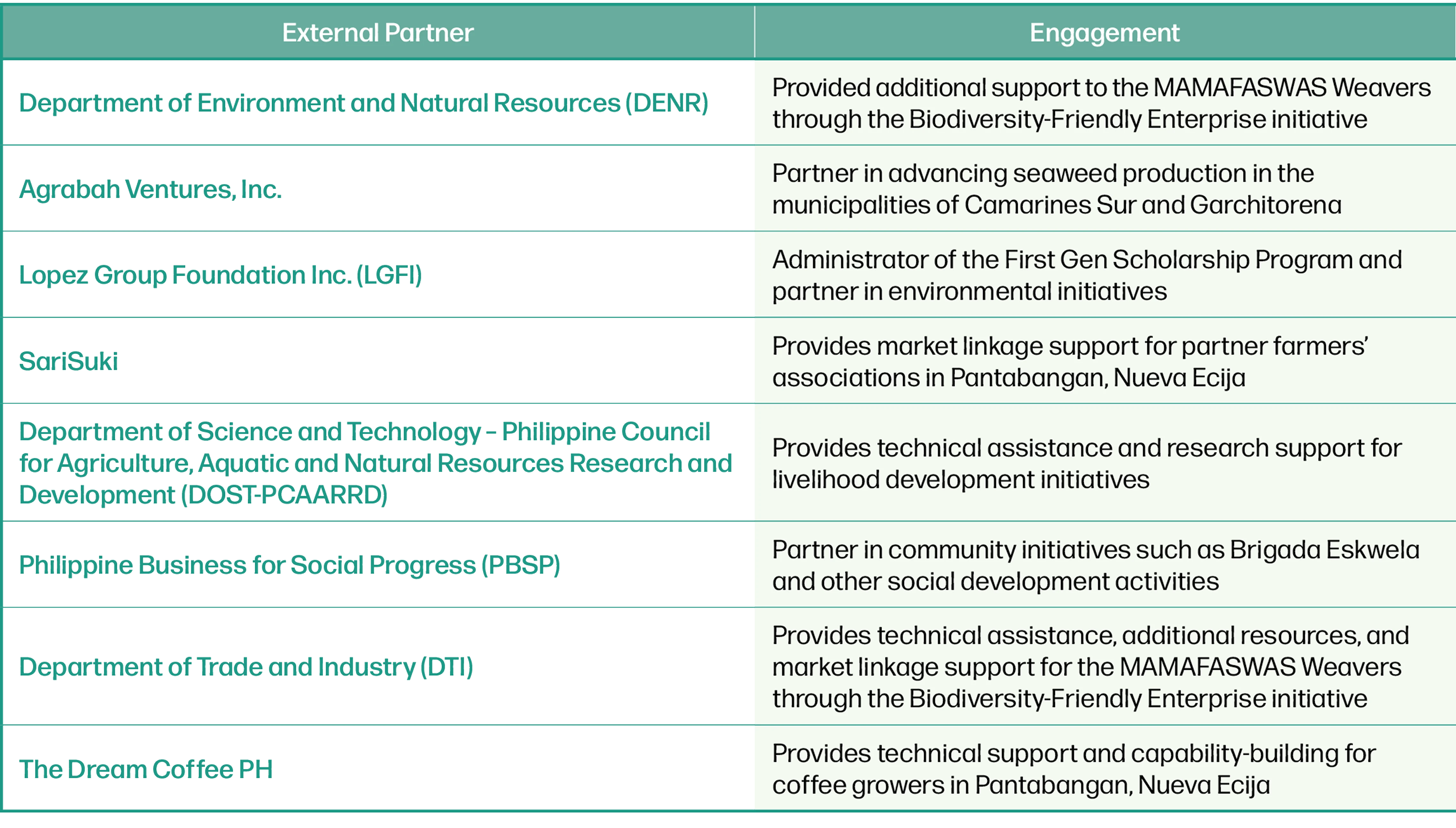
NETWORK OF EXTERNAL PARTNERS
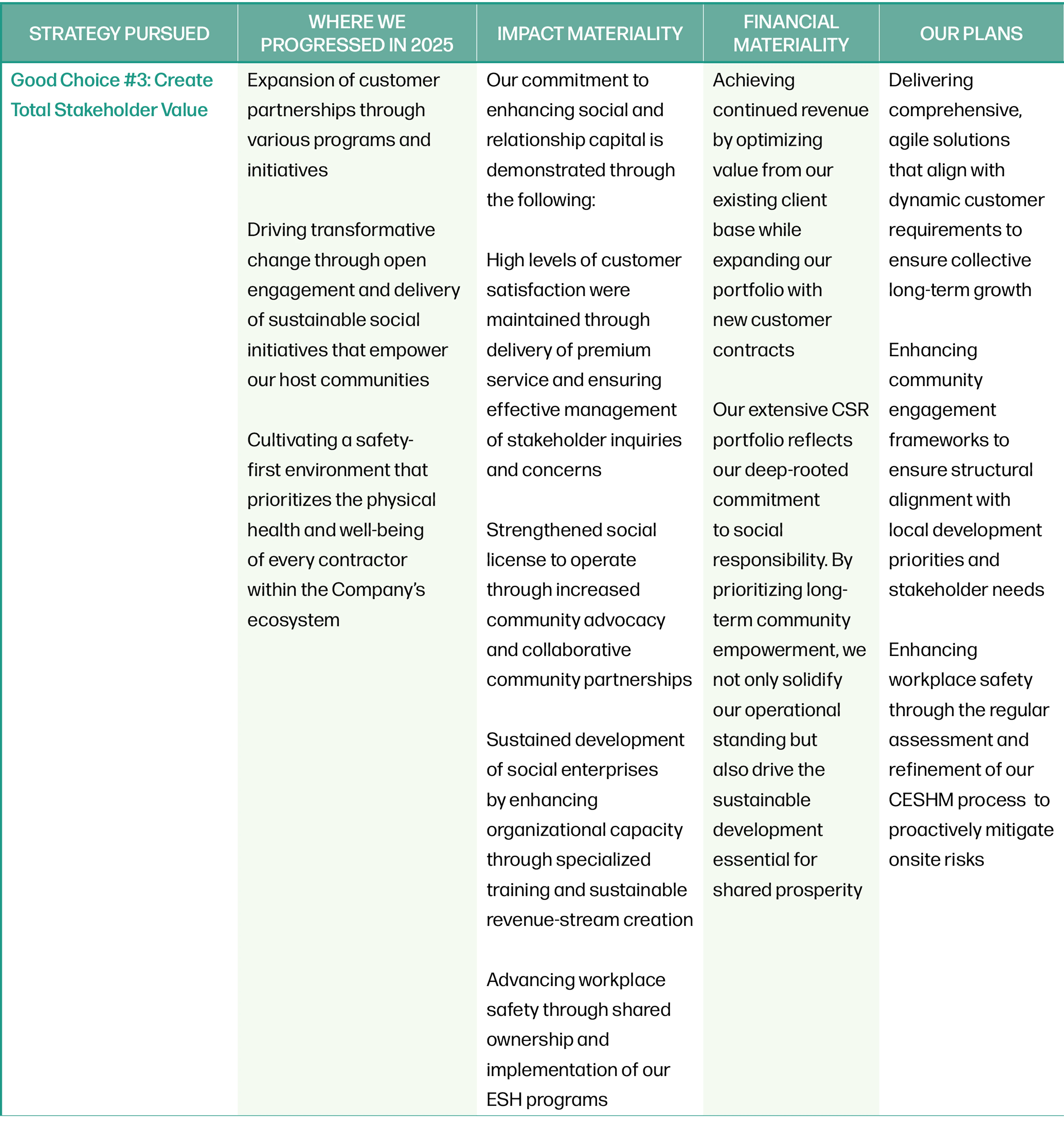
Summary of Our Social and Relationship Capital Performance, Impacts, and Plans
First Gen’s approach to Social and Relationship Capital focuses on maintaining strong partnerships with stakeholders who influence and are affected by the company’s operations. Through ongoing engagement with customers, host communities, Indigenous Peoples, suppliers, government institutions, and other partners, the Company works to support reliable operations while contributing to community development and stakeholder well-being. The following table summarizes key areas of performance, the outcomes observed from these engagements, and the initiatives planned to strengthen these relationships in the coming period.
Through these partnerships and engagement mechanisms, First Gen strengthens the relationships that enable the Company to operate responsibly and create shared value with its stakeholders. Sustained collaboration with customers, communities, institutions, and partners helps ensure that operational decisions are informed by stakeholder perspectives and evolving societal needs. These relationships—built through consistent engagement and responsible practices—form an important part of how First Gen creates and delivers value over time. The Value Creation Diagram on the following page illustrates how these relationships, together with the Company’s other capitals and business activities, contribute to First Gen’s overall value creation process.