
STRATEGY: AT A GLANCE
First Gen is building a renewable portfolio to lead the Philippine energy transition. Our approach is shaped by four elements: deliberate long-term choices, an ecosystem view of the business, a six-capital regenerative lens, and strategic ambitions that define where we are headed.
Four Good Choices.
Our strategy is founded on our choices to: (1) decarbonize our portfolio, (2) transform customers into regenerative partners, (3) create total stakeholder value, and (4) enable the organization to execute.
Ecosystem, Not Just Assets.
Our approach addresses technology, customers, communities, policy, and organizational capabilities as one system.
Regenerative Lens..
Our decisions are assessed against their impact on six capitals and on our ability to move from doing less harm to active restoration and regeneration.
Strategic Aspirations.
We aim to scale renewables, build a base of regenerative partners, improve resource and community outcomes, and strengthen organizational capabilities to bring value across capitals through this energy transition.
Choosing the Future Deliberately
The forces described in our Business Environment require a response—a deliberate set of choices about where capital flows, which capabilities to build, and how to measure success.
The Philippine grid needs renewable energy. Policy frameworks exist. Technology is proven. Yet the transition lags. The reason is not a single gap—it is several at once. The transition requires technology diversity, customer partnership, community co-creation, and organizational systems to execute at scale. A strategy that addresses only one of these dimensions will fail on the others.
Our strategy comprises four choices that work as a system. Choice 1 builds the portfolio the transition requires. Choice 2 builds customer relationships that make that portfolio commercially durable. Choice 3 commits us to creating value for all the stakeholders we affect—not just shareholders. Choice 4 builds the organizational capacity to execute the other three. Remove any one, and the strategy weakens.
The Power of Good Choices compounds over time. A quarter-century ago, First Gen pioneered natural gas in the Philippines, offering cleaner power when the country needed it the most. Then, in 2013, Typhoon Yolanda devastated EDC’s geothermal facilities in Leyte, and it took several months to restore operations. The conclusion: climate change is no longer a future risk; it is operational reality. In 2016, our Chairman declared First Gen would never build, develop, or invest in coal—ahead of the market and grounded in mission—before the economics made it easy. In 2025, we divested the majority of our natural gas business to free capital for renewables. Each decision was hard. Each one made the next possible.
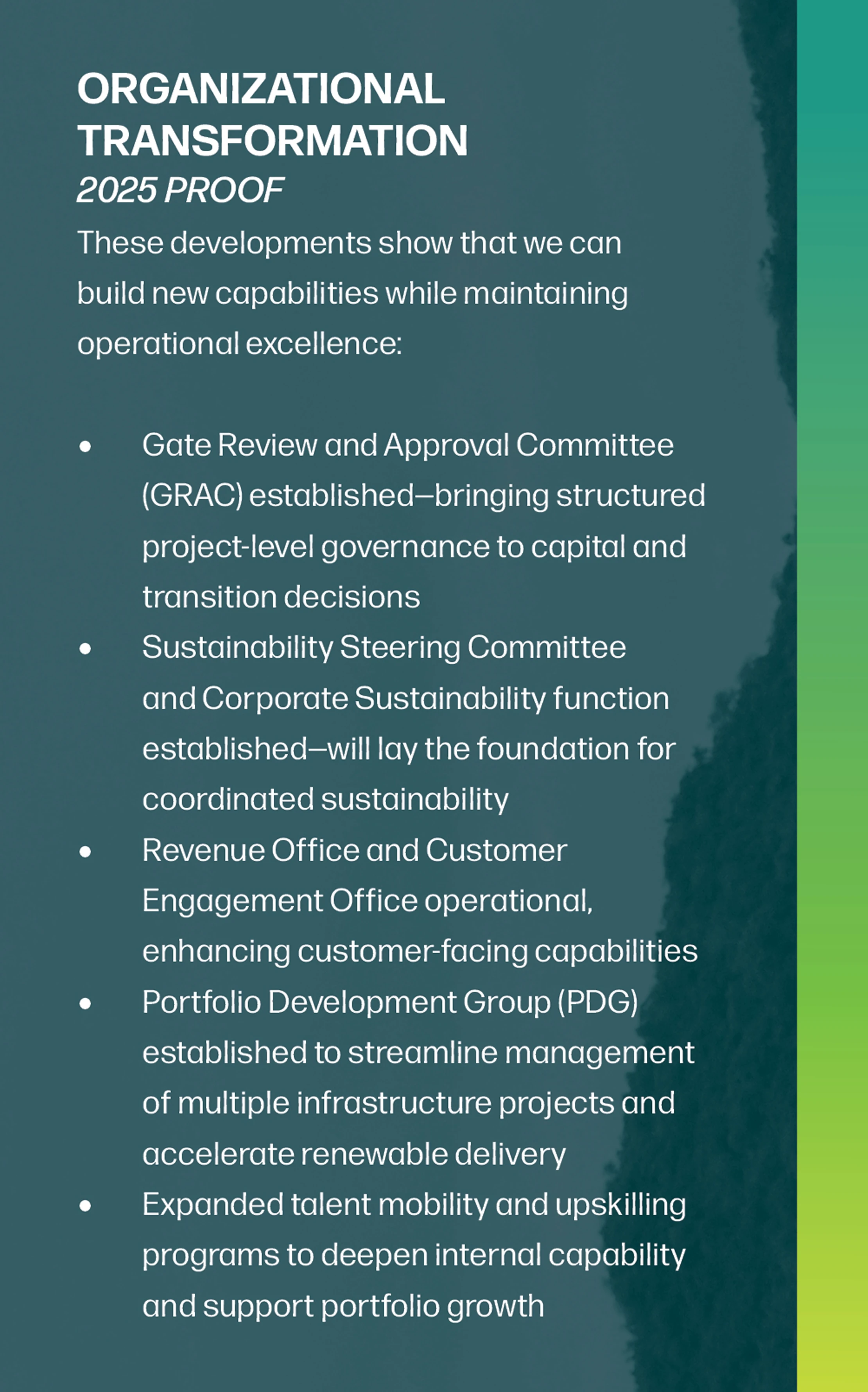
As our ambitions grow, so must the organizational structures that enable them.
Gate Review and Approval Committee (GRAC). GRAC evaluates every major project and capital commitment before receiving clearance to invest. Financial return is essential—it is not sufficient. Before any project proceeds, GRAC reviews capital efficiency, risk exposure, long-term asset durability, and stakeholder impact.
Sustainability Steering Committee (SteerCo). The SteerCo brings together strategy, finance, risk, environment, community relations, engineering, and human resources to set sustainability direction for the Power Group. This matters because sustainability means different things to different functions. The SteerCo aims to resolve that complexity—aligning the organization around a shared understanding of what it means to be regenerative, ensuring that sustainability is embedded in strategy and capital allocation as a planning input, not an afterthought.
Corporate Sustainability. The Corporate Sustainability team, under Strategy and Planning, connects sustainability direction to execution across the Power Group. A small central team owns the sustainability dimension in annual planning and target setting—ensuring the direction of the Sustainability SteerCo translates into coordinated action across the group.
Good choices made consistently over time are not accidental. They are intentionally orchestrated.
Good Choice #1: Decarbonize Our Portfolio
Decarbonizing our portfolio means more than exiting fossil fuels. It means expanding our renewable assets. In 2025, we divested 60 percent of our natural gas business—assets that generated approximately 65 percent of our revenue—to redeploy that capital into renewables. We retain a 40-percent stake, an honest acknowledgment that firm dispatchable power remains essential to grid reliability while renewable baseload scales up. The capital is already moving: our acquisition of a 40-percent stake in the Wawa and Pakil pumped-storage hydro projects is the first proof of that redeployment in action.
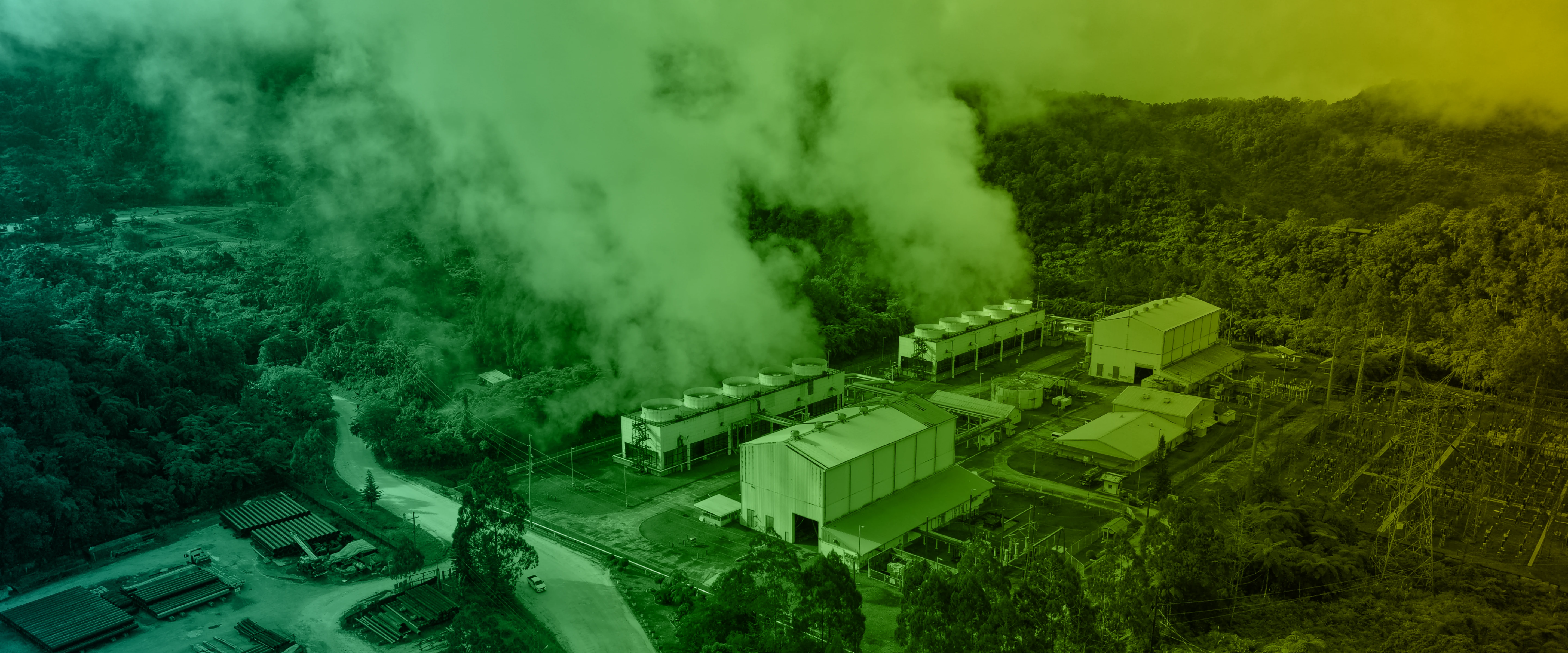
Protecting the renewable base we already operate is equally part of this choice. Our largest geothermal complex in Leyte faces evolving reservoir conditions; steam studies show changing field behavior—and therefore, declining resource availability. We have initiated a comprehensive feasibility study to determine the optimal path forward for the above ground assets, balancing reservoir sustainability, generation capacity, capital efficiency, and community considerations.
This choice responds directly to the risks named in our Business Environment section (see pages 48 to 53). Climate volatility reinforces why decarbonizing is not just optional, but is the strategic direction the transition demands. Transition risk is also present in the policy environment. Under current Renewable Portfolio Standards (RPS) implementation, compliance obligations can be met without adding new clean generation—making the economics of building renewable baseload harder to justify than intended. First Gen redeployed capital to accelerate renewable expansion regardless. We do not seek market validation for our choices. We advocate for a market architecture that does not impede the clean energy transition.
WHY BASELOAD RENEWABLES MATTER
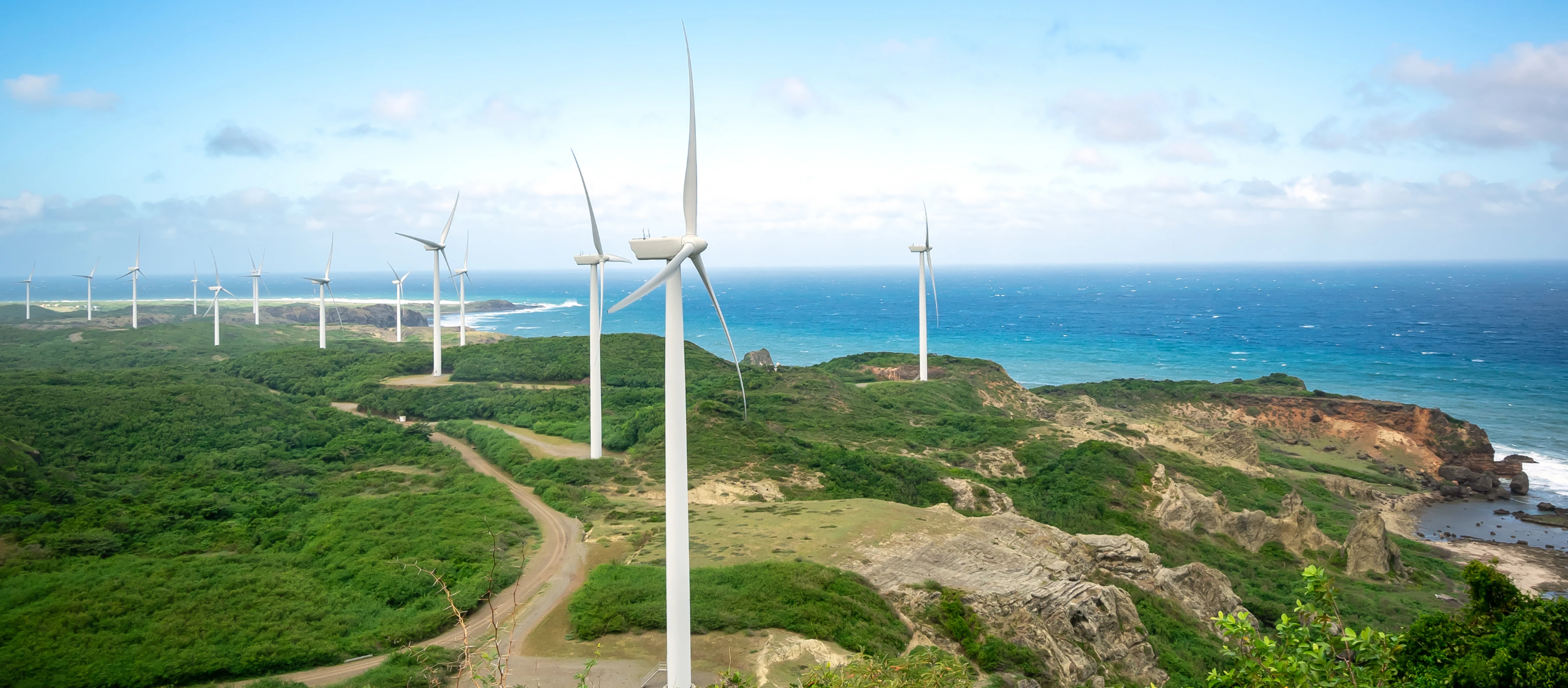
The Philippine power system requires technology diversity to decarbonize without compromising power supply reliability. Geothermal and hydro provide low-carbon renewable baseload power—supporting grid stability as fossil fuel capacity declines. Solar and wind accelerate renewable scaling, while distributed solutions enhance system flexibility.
Together, our geothermal and hydro assets represent a significant source of renewable baseload power in the Philippine grid. (See our Manufactured Capital section for more details)
A policy environment that recognizes the distinct role of each renewable technology will get to a stable, decarbonized grid faster.
Good Choice #2: Transform Customers into Regenerative Partners
The Philippine electricity market continues to evolve toward customer choice through Retail Competition and Open Access (RCOA). Progress has been gradual, but RCOA Phase 4—launching in June 2026—marks a significant shift: approximately 12,000 medium-sized enterprises will gain the right to choose their power supplier for the first time. For many of them, that choice will also be their first step toward managing their own carbon footprint—driven by emissions reporting expectations, the improving economics of clean energy.
In line with this, we have been evolving from being primarily a wholesale power producer to becoming a regenerative energy partner—one that helps customers pursue their own decarbonization goals, not just one that supplies them with power. As a retail energy supplier, we bring a renewable, low-carbon portfolio to the customer. We prioritize keeping their power supply stable above all else, sourcing from the market when our own supply is constrained, because keeping partners powered is how we all work towards a clean energy transition. Through Pi Energy, we go beyond power supply—offering solar installations, energy audits, energy efficiency upgrades, and real-time monitoring that help customers manage and reduce what they consume.
We did not wait for the market to fully open. We have been building the capability ahead of the demand.
The transition moves at the pace the country needs. When clean energy is the economically rewarding choice, customers adopt it. And when one customer takes it, the next finds it easier. A medium enterprise that switches to a renewable supplier reduces its emissions, proves the viability of the transition to peers, and may subsequently add rooftop solar and efficiency upgrades—each step made possible by the last. A distribution utility that exceeds its RPS obligation sends a market signal that clean power is commercially sound. Individual decisions, made consistently across segments and over time, converge into a grid that decarbonizes faster than any single actor could achieve. This is what collaborative pathways for a decarbonized future looks like—not a single company’s ambition, but the result of compounding choices across every segment of the market.
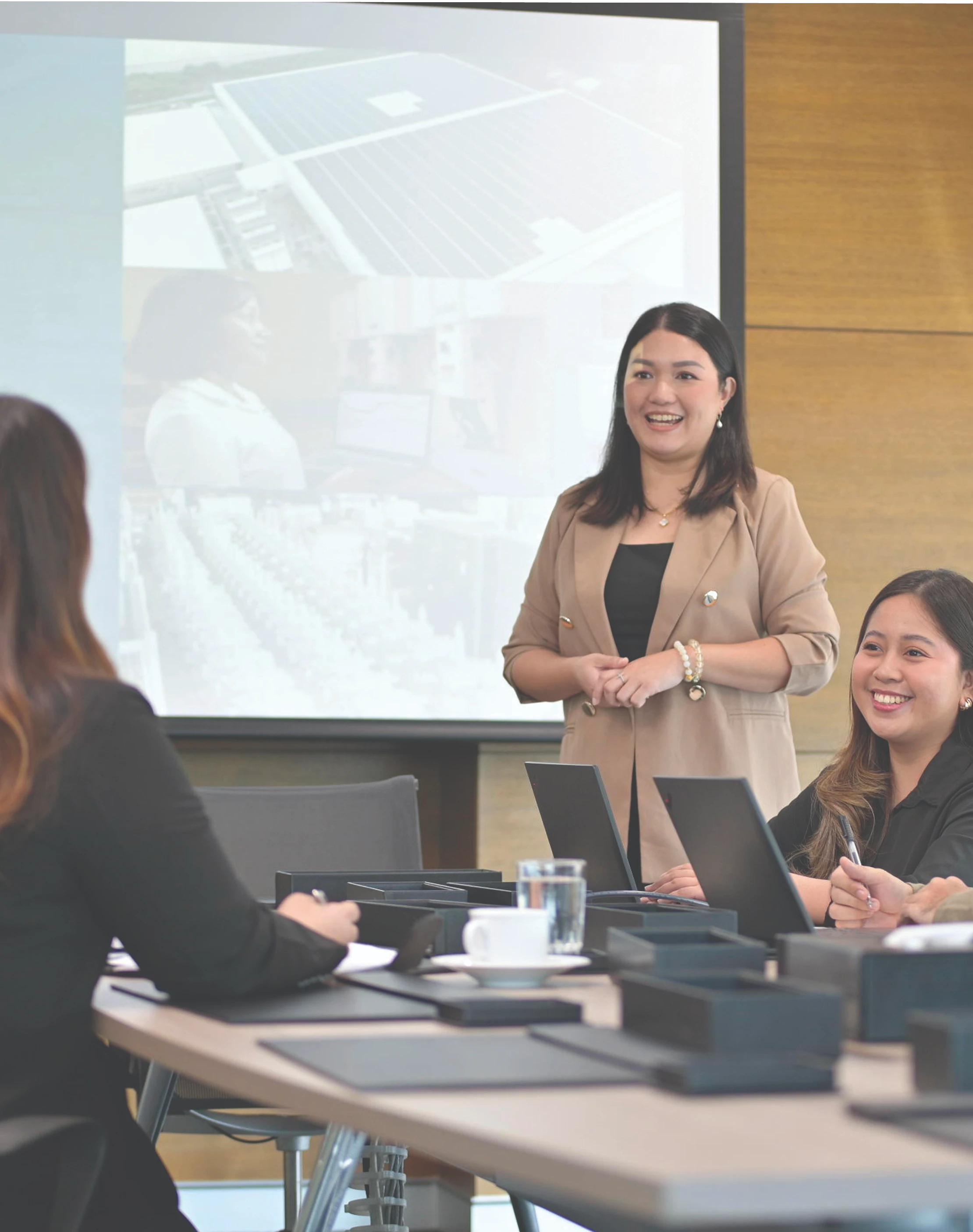
First Gen is the partner that makes this collaboration concrete. For distribution utilities and electric cooperatives, we enable them to meet and exceed their RPS compliance mandates. For contestable customers who need both clean energy and the tools to optimize use, we offer renewable energy and beyond-kWh solutions through Pi Energy—including solar installations, energy audits, efficiency upgrades, monitoring, and advisory services. The supply relationship and the solutions platform are mutually reinforcing.
Good Choice #3: Create Total Stakeholder Value, Not Just Shareholder Returns
Choosing to measure success across six capitals—and beyond financial returns—entails a rigorous commitment. The six capitals in the framework are the metrics we use to measure stakeholder value. Some metrics are well established; others are still evolving. We acknowledge that our journey toward these targets is ongoing. Ultimately, forging a decarbonized and regenerative future is defined not only by what we build for the power system or enable for customers, but by how we build and operate. (Learn more in the Value Creation section.)
A business that maximizes short-term returns at the expense of the natural systems and communities it depends on ultimately erodes value. Degraded watersheds reduce the water flow that drives hydropower and cools plants. Extreme weather events—intensifying climate changes—damage the infrastructure our generation portfolio depends on. And communities that bear the cost of development without sharing in its benefits do not remain partners. Geothermal takes decades to develop and decades more to operate. Rivers for hydropower run for generations. Solar and wind will generate for as long as the sun rises and the wind blows. The communities living alongside these assets share that same horizon; partnerships built to last that long must be built on more than consent.
Four Key Focus Areas (KFAs) translate this commitment to practice.
KFA 1: ENERGY SECURITY AND RESOURCE MANAGEMENT
Energy security—our commitment to decarbonize without compromising reliability—is in Choice 1.
Resource management is the second dimension: how we manage our own operational footprint. Our decarbonization journey is underway. Water and waste management are currently at compliance level (More details in the Natural Capital section. In 2026, Corporate Sustainability and the Sustainability Steering Committee will lead a planning cycle to develop coordinated targets and trajectories across the group.
KFA 2: ECOSYSTEMS AND BIODIVERSITY
Our assets operate across diverse ecosystems—geothermal and hydro within forests and watersheds, wind and solar across coastal areas and open land. Our presence disrupts them—we clear land, alter water flows, change landscapes. We are committed to moving beyond compliance toward restoration and regeneration, recognizing that ecosystem health underpins long-term asset performance.
KFA 3: CLIMATE-RESILIENT HOST COMMUNITIES
We view host communities as partners in resilience. Our assets are built into their landscapes. We are neighbors sharing the same watershed, the same weather, and the economic activity that energy development brings to us. As climate stress intensifies, shared resilience strengthens our operations and their ability to thrive.
KFA 4: REGENERATIVE BUSINESS MODEL
We are exploring ways to structure projects so that financial returns and ecosystem restoration reinforce one another. This is frontier work, testing whether capital deployment can simultaneously generate returns and strengthen natural and social systems.
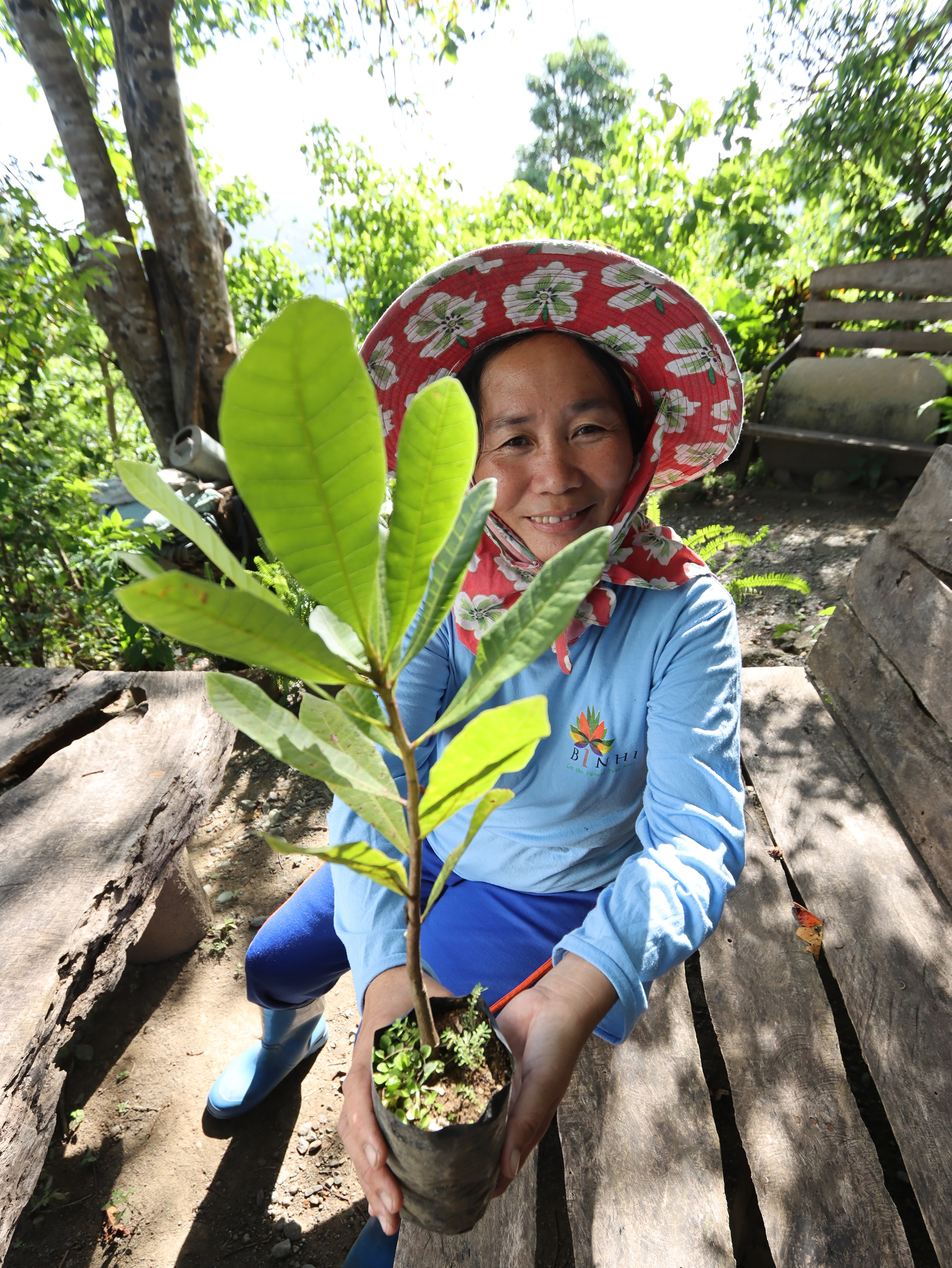
A near-term test of this is how we evolve our community and ecosystem programs. A reforestation program funded solely from the Company balance sheet stays within the lens of CSR. When such a program is designed to nature-based solution standards, with the academe bringing restoration expertise and partners providing land access, what was once just a philanthropic initiative becomes something more. EDC’s MOA with DENR is the starting point for piloting this approach—assessing candidate sites against commercial and carbon viability criteria alongside ecological ones. If successful, it becomes a regenerative business model that can scale. Forging collaborative pathways for a regenerative future is not only about the grid.
Good Choice #4: Build Capabilities to Execute at Scale
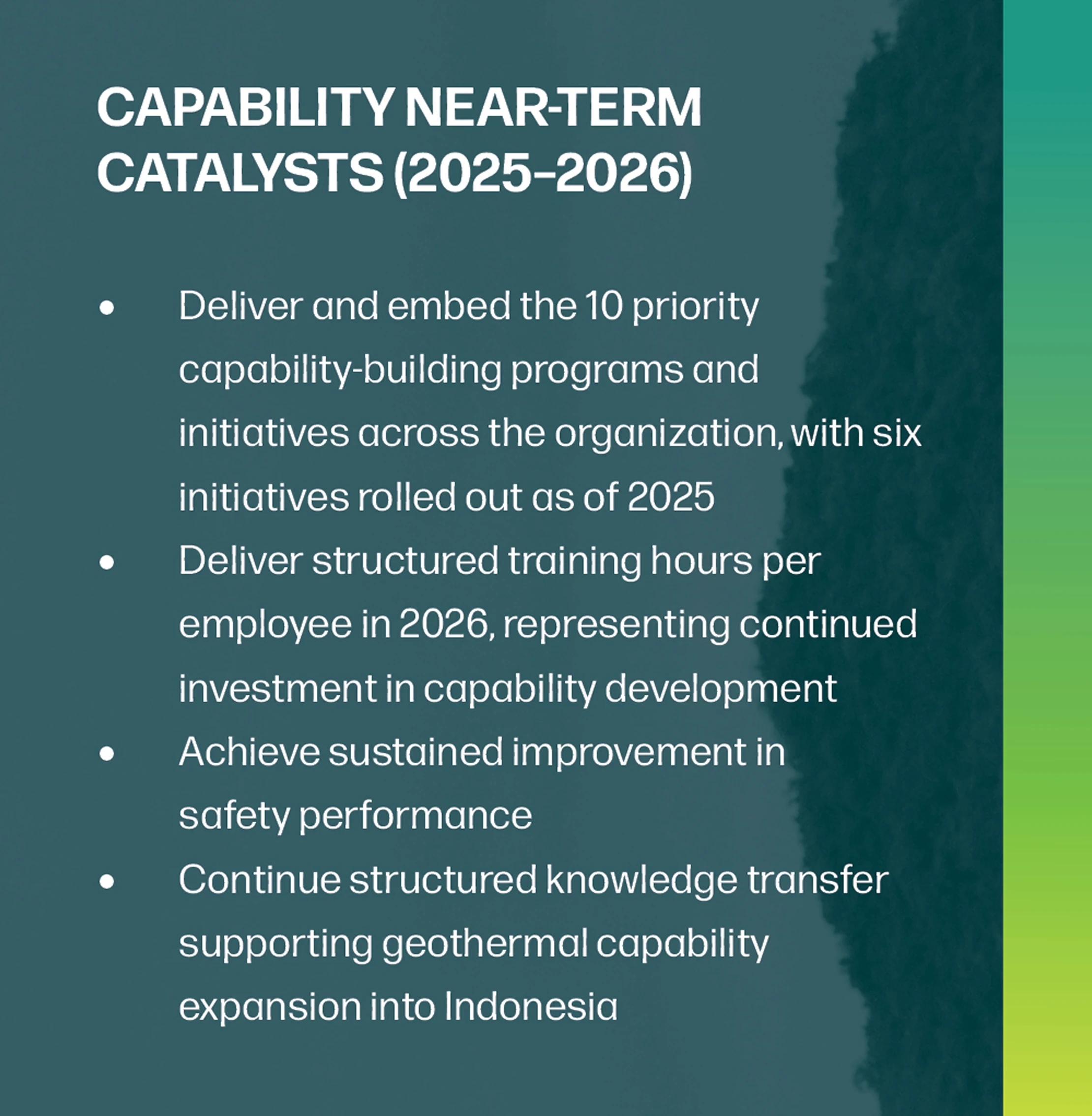
The Four Choices described in this strategy are only as good as our ability to execute them. Scaling a renewable portfolio, transforming customer relationships, and operating regeneratively—simultaneously—requires organizational capability. We are building it deliberately: five core capabilities and a culture that can hold the complexity of this transformation.
We are strengthening five core capabilities to ensure execution:
- Solutions-Based Customer Engagement (SBCE). Deepen customer relationships and deliver integrated offerings—moving beyond commodity power toward partnership-based solutions.
- Dynamic Adaptation of Regenerative Business Models (DARB). Build and scale regenerative business models that integrate financial performance with ecosystem restoration—partnering across functions to operationalize the regenerative focus.
- Agile Multi-Project Development (AMPD). Deliver multiple renewable projects simultaneously across geothermal, hydro, solar, and wind—coordinating resources and expertise to accelerate progress toward our growth aspirations.
- Resilient Asset Management (RAM). Ensure assets perform reliably under evolving business, regulatory, and climate conditions—protecting long-term value.
- Clean Energy Advocacy Leadership (CEAL). Build public understanding and support for a clean energy transition.
These capabilities determine whether we can execute the other three Choices at the pace the transition demands.

TRANSFORMATIVE ORGANIZATIONAL CULTURE
As we transform our operating philosophy, we also transform our Framework to bring out the “BEST” of the Power Group. Our culture framework—B.E.S.T. (Build Trust, Enable Change, Step Up Together, Thrive Together)—guides how we operate when conditions are uncertain. It reinforces trust in new partnerships, enables coordinated change, and sustains momentum across teams as projects scale.
Culture is not separate from strategy; it determines whether strategy can be executed consistently across a growing portfolio.