


GOVERNANCE: AT A GLANCE
First Gen’s governance framework provides the decision-making architecture that enables the Company to formulate and achieve strategic goals while ensuring effective business operations. This section describes how governance structures—from Board oversight to policy implementation—ensure that choices are evaluated across multiple criteria and aligned with long-term value creation across six capitals.
Multidisciplinary Strategic Leadership.
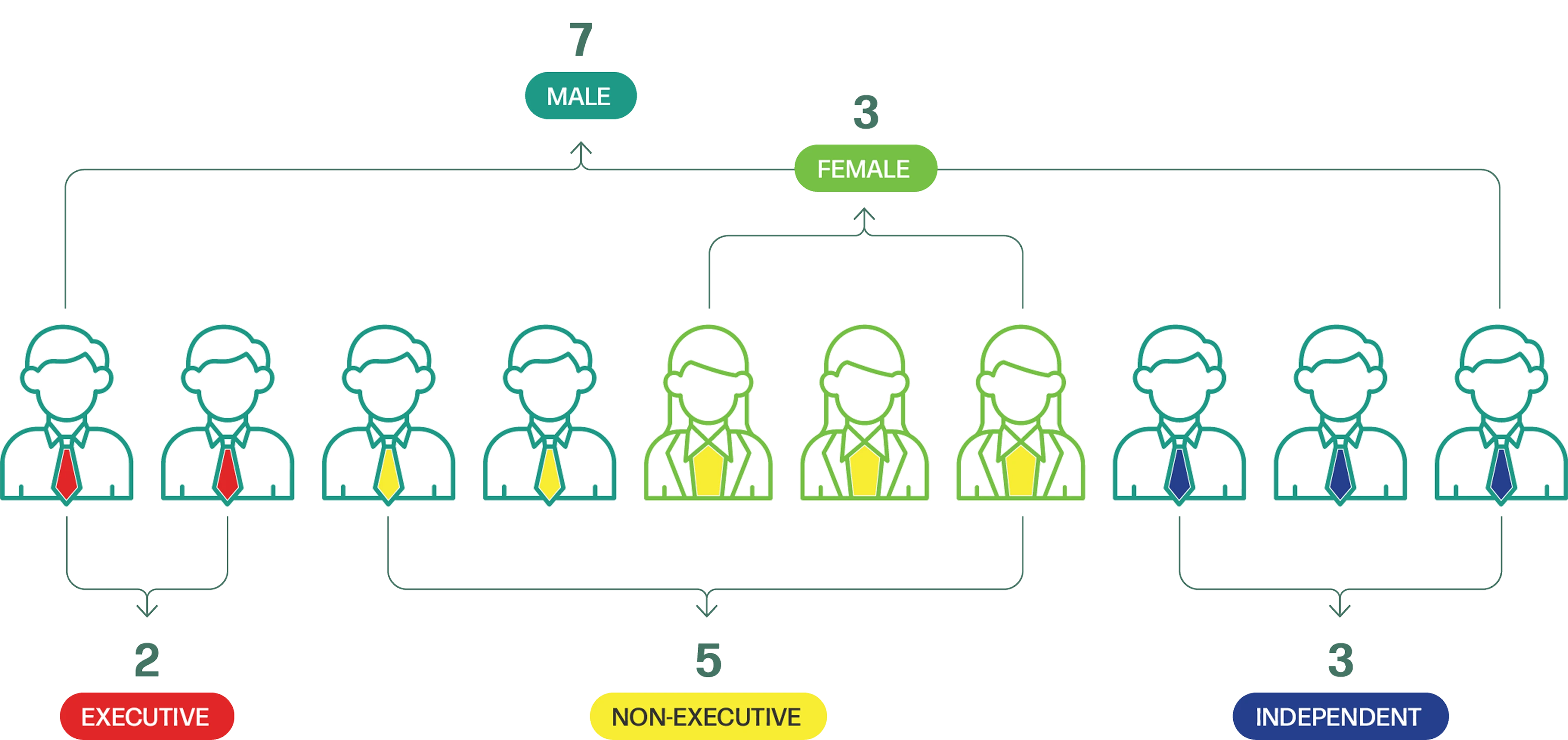
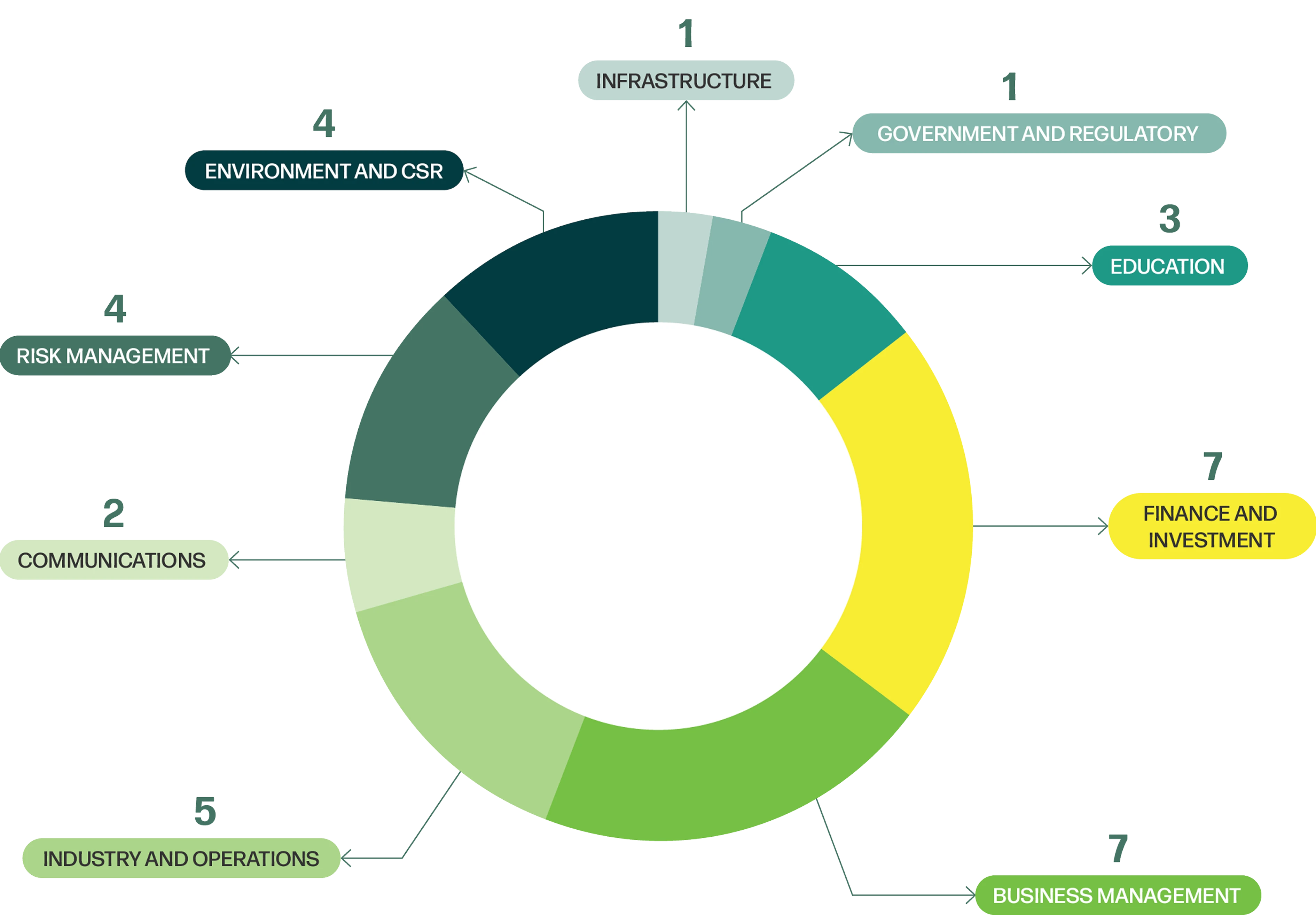
Our Board is composed of 10 seasoned leaders whose collective expertise spans high-level corporate governance, global finance, complex infrastructure development, and large-scale power operations. This wealth of experience provides the critical leadership required to oversee First Gen’s energy transition and ensure the rigorous execution of our regenerative mission.
Board Oversight.
Independent Directors work hand in hand with Executive and Non-Executive Directors to provide multiple perspectives on strategy, risks, and stakeholder expectations, ensuring objective governance oversight.
Decision Architecture.
Structured and regular planning sessions and board meetings evaluate strategic choices across financial, operational, stakeholder, and environmental dimensions.
Policy Framework.
Corporate policies linked to six capitals establish ethical standards and risk management protocols that support the integrated business model.
Strategic Focus.
Governance processes prioritize sustainability, regeneration, and decarbonization as strategic imperatives guiding long-term direction.
Stakeholder Alignment.
Decision-making structures balance short-term performance with long-term value creation across all stakeholder groups.
Transparency.
Comprehensive governance documentation is available on the Company website, including the Manual on Corporate Governance and Integrated Annual Corporate Governance Report.
The Management Approach on Governance
Our Governance Framework: Navigating Strategic Tensions
First Gen’s corporate governance framework supports long-term value creation by balancing competing imperatives: scaling renewable capacity while protecting existing assets, pursuing growth while maintaining capital discipline, transforming business models while preserving operational excellence. The governance framework guides strategic choices across multiple dimensions—financial, operational, stakeholder, environmental—ensuring that decisions create value across the Company’s six capitals.
The Company’s detailed governance structure is set out in its Manual on Corporate Governance, and comprehensive governance practices are documented in its Integrated Annual Corporate Governance Report. Both documents are available on the Company’s website and provide full disclosure of governance mechanisms, policies, and procedures that comply with Philippine regulatory requirements and align with international best practices.
First Gen’s approach to corporate governance is guided by the Lopez Values, adherence to the SEC’s issuances on governance, respect for human rights, and its commitment to ESG safeguard principles. The Company’s structure, policies, programs, and protocols ensure the following:
- Full compliance with local regulations and international conventions signed by the country and relevant to our operations;
- Balanced emphasis on financial and non-financial aspects of the Company’s business strategy, operations and performance to achieve short- and long-term goals;
- Creation of an environment that will protect the rights and allow equal treatment of all stakeholders;
- Sufficient controls that ensure effective management oversight within a culture of honesty and accountability throughout the organization; and
- Robust stakeholder engagement with timely disclosure of relevant information and the installation of necessary feedback mechanisms.
Creating Value Through Governance
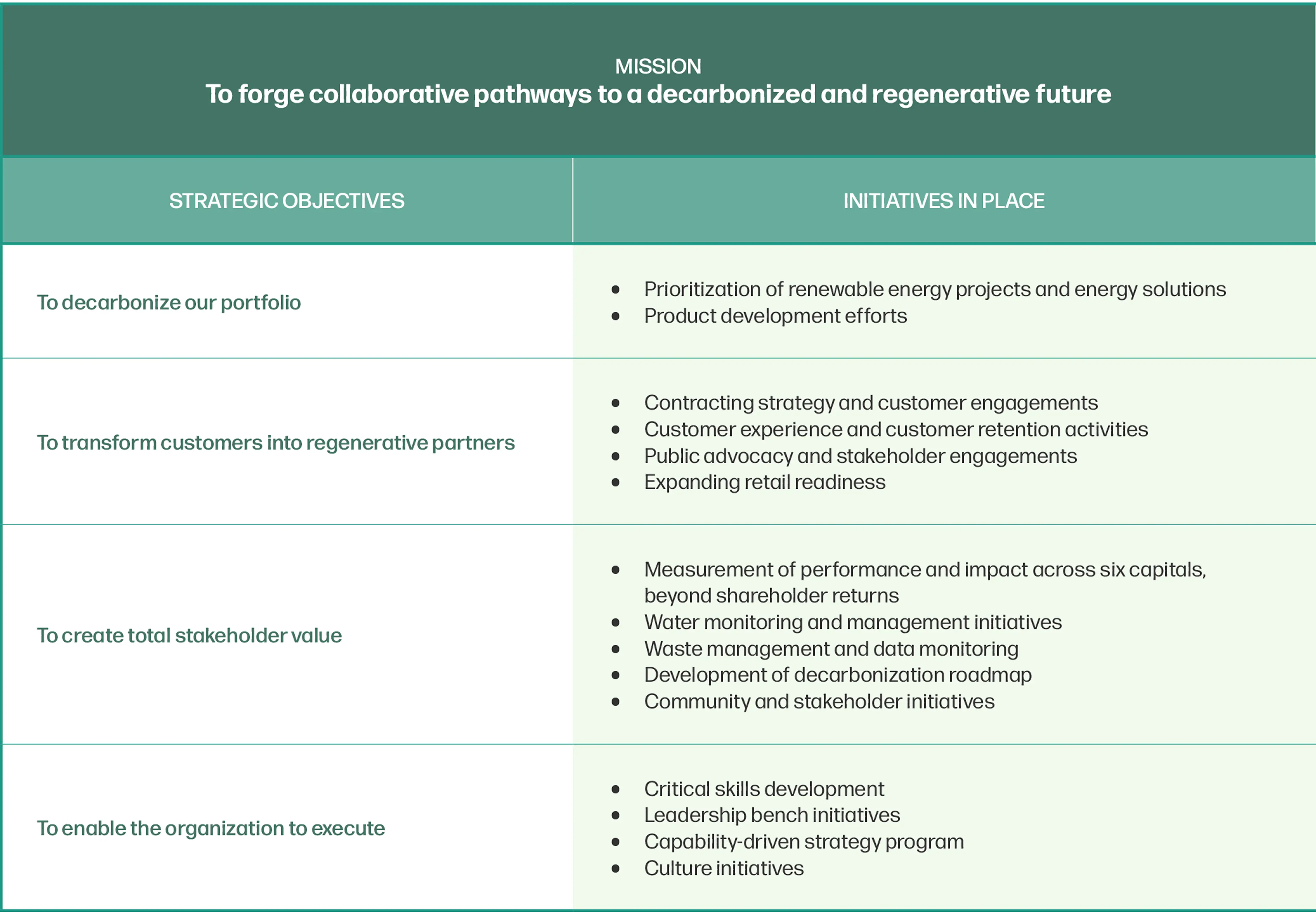
The following table shows how strategic objectives connect to specific initiatives across the organization, demonstrating the governance link between business aspirations and day-to-day execution. These strategic objectives and their outcomes are discussed in detail in the Strategy section.
Governance Structure
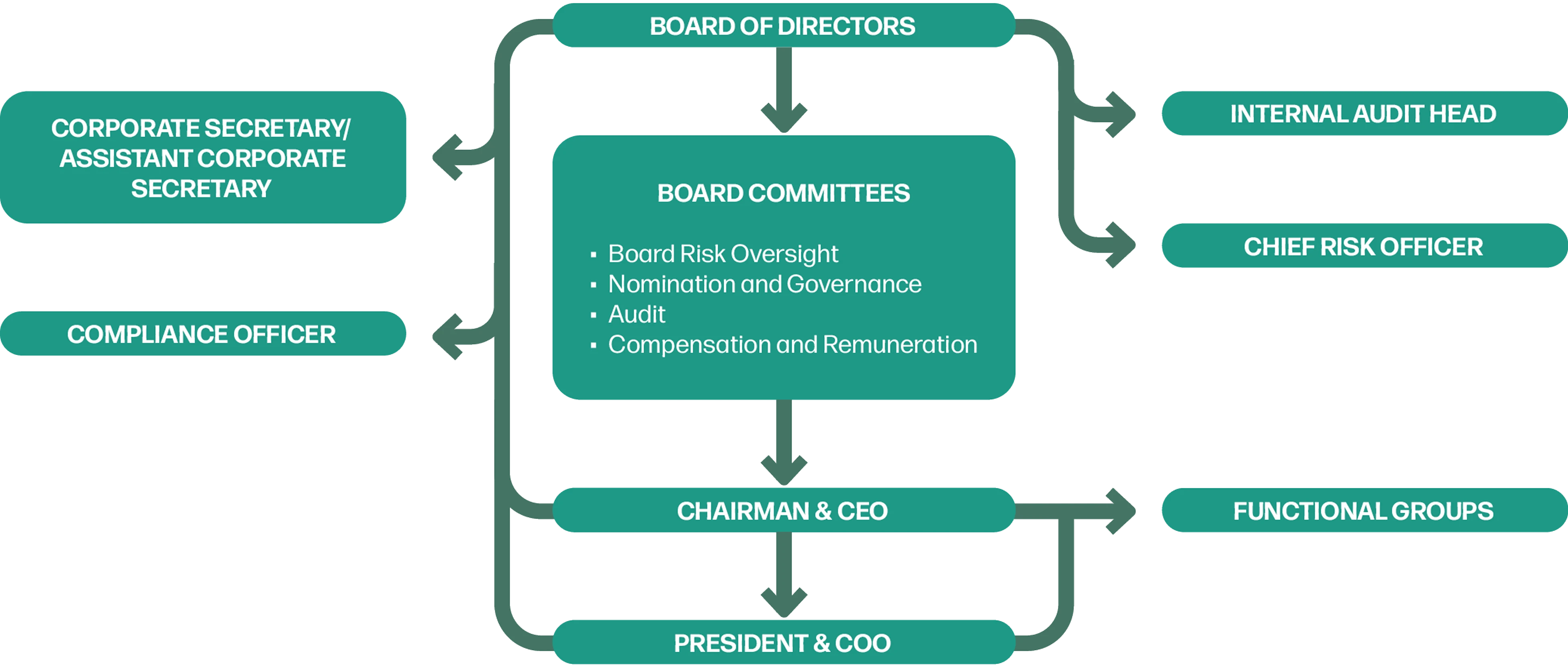
First Gen’s governance framework guides strategic direction through structured processes and protocols designed to identify material issues and ensure that decisions are evaluated across multiple dimensions. The Board of Directors and Senior Management conduct annual planning sessions to assess strategies, organizational capabilities, portfolio resilience, and long-term goals, with particular focus on sustainability, regeneration, and decarbonization pathways—the strategic priorities detailed in the Strategy section.
The governance structure includes decision-making bodies at both Board and management levels, tasked with mitigating risks, leveraging opportunities, and addressing material issues that may significantly impact value creation across the Company’s six capitals. This structure operates through a collaborative consultation process: operating groups identify emerging risks and opportunities and escalate material issues to decision-making bodies equipped to evaluate trade-offs and make informed choices in the fiduciary interest of the Company and its stakeholders.
The following diagram illustrates First Gen’s governance structure and the flow of information and decision-making authority from operating groups through management committees to the Board of Directors.
Corporate Policies
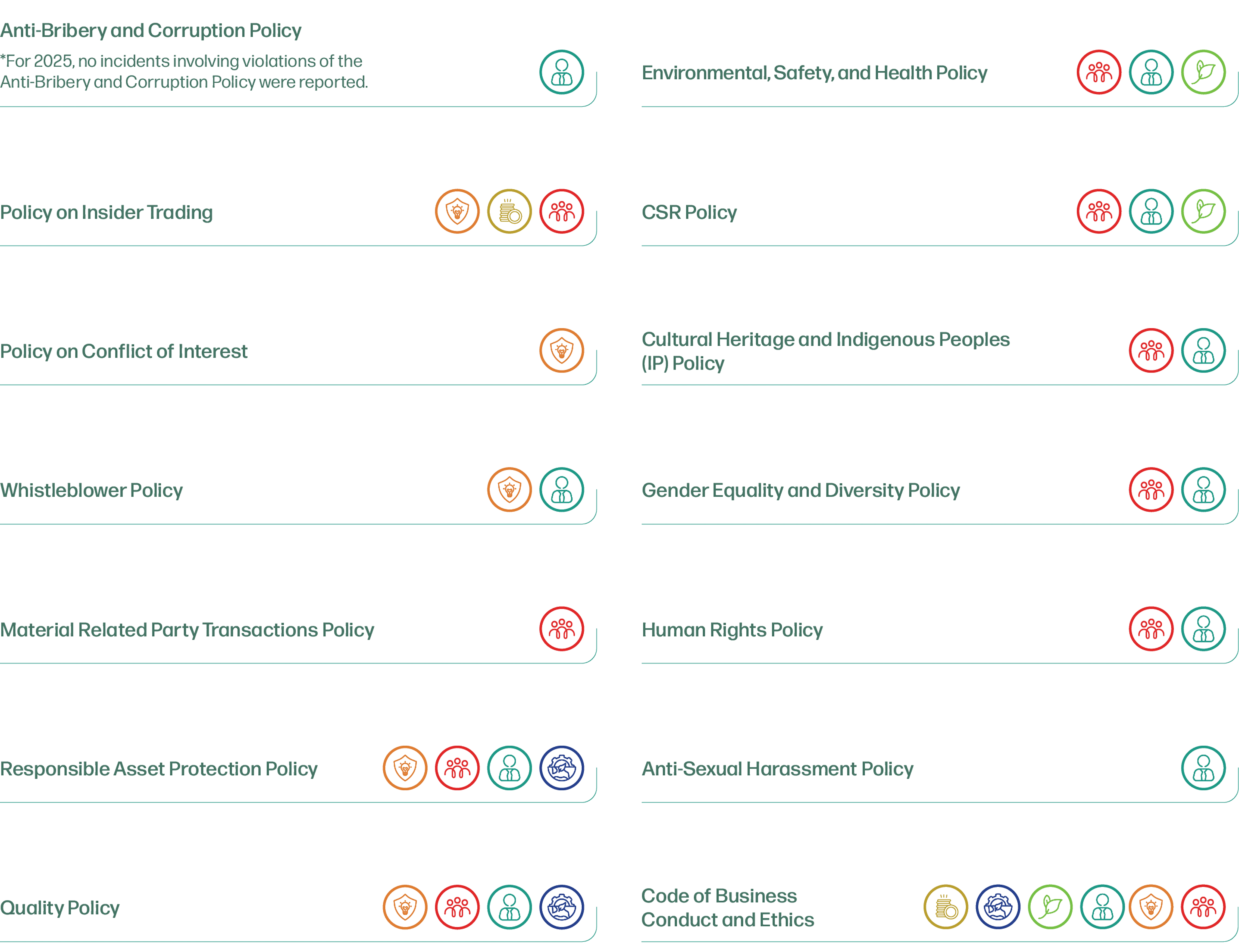
First Gen’s corporate policies establish the ethical and operational standards that guide business conduct across the organization. These policies function as governance instruments that protect stakeholder interests, manage material risks, and strengthen organizational culture.
The table below identifies key policies and their connection to First Gen’s capitals, showing how governance operates across financial, manufactured, natural, human, social and relationship, and intellectual capital dimensions. Complete policy documents are available on the Company’s website.

Policy Evolution
First Gen continuously reviews, updates, and develops policies to address evolving business complexities, regulatory requirements, and stakeholder priorities. As the Company’s business model evolves—expanding into retail energy services, pursuing international projects, and operationalizing regenerative principles—governance policies are updated to provide appropriate guidance and risk management frameworks. Complete details of all Company policies, including recent updates, are available on the First Gen website.
New Policies
As the Company grows and evolves in a dynamic business landscape, new practices and policies need to be instituted to ensure good governance and continued institutional integrity. The following policies were developed or updated in 2025. Please refer to the First Gen website for more information on Company policies.
SANCTIONS POLICY
The Sanctions Compliance Policy was adopted to provide guidance to determine what acts are considered prohibited deals and transactions and to ensure internal alignment with evolving international sanctions regimes and regulatory requirements. The Policy was also intended to facilitate the Company’s compliance with said sanctions laws and to mitigate potential legal, financial, and reputational risks arising from non-compliance.

Board of Directors
BOARD COMPOSITION
BOARD COMPOSITION
Board Committees
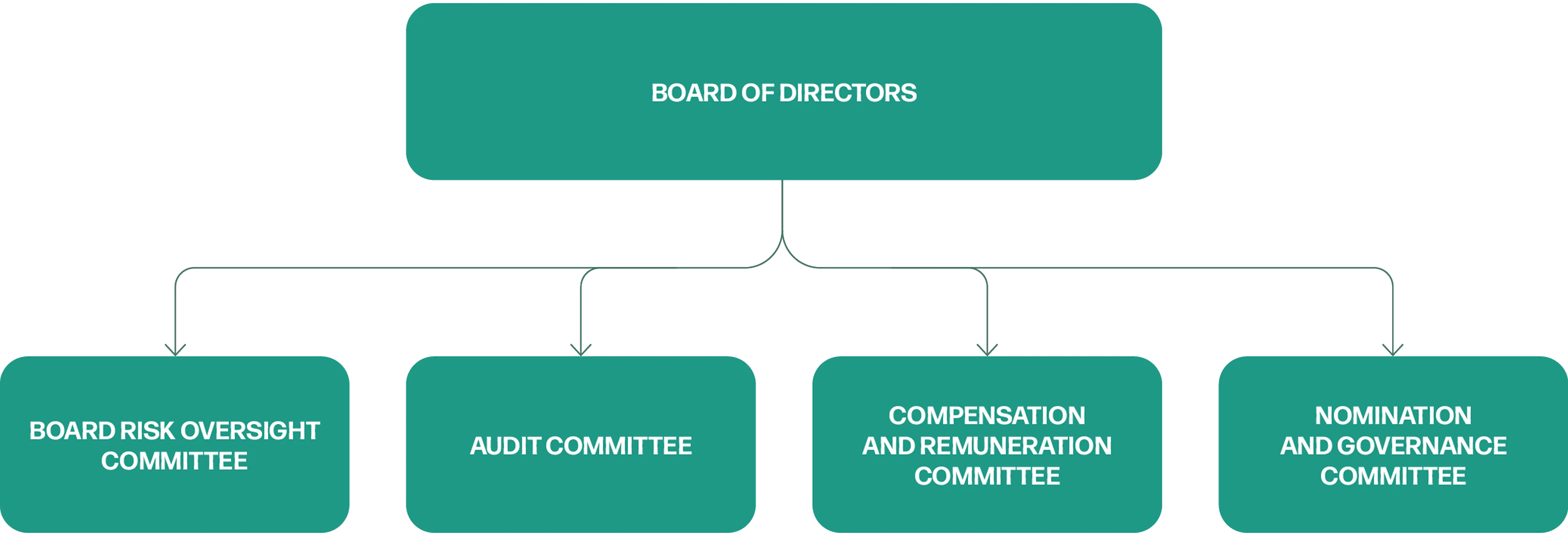
In compliance with the Company’s Manual on Corporate Governance, certain members of the Board of Directors (“the Board”) have been selected as members of the following standing committees: Nomination and Governance Committee, Compensation and Remuneration Committee, Audit Committee, and Board Risk Oversight Committee.
The Nomination and Governance Committee selects and evaluates directors. Qualifications for selection are consistent with the By-laws and Manual on Corporate Governance. The committee ensures that the Board election will result in a mix of proficient directors, each of whom will add value and bring prudent judgment to the Board.
The committee is also tasked with reviewing the structure, size, and composition of the Board and making appropriate recommendations thereto. Furthermore, the committee is tasked with reviewing the recommendations of the Compliance Officer in relation to the Manual on Corporate Governance, as well as other corporate governance rules and regulations, and endorsing the same to the Board for approval.
The Compensation and Remuneration Committee studies and recommends the appropriate compensation and reward system for corporate officers other than the Chairman. The Chairman’s compensation and remuneration shall be determined by the President and two directors, one of whom shall be an Independent Director. The committee shall establish a policy on the remuneration of directors and officers to ensure that their compensation is consistent with the Company’s culture, strategy, and the business environment in which it operates.
Furthermore, it is tasked with reviewing the Company’s human resources development or personnel handbook to strengthen provisions on conflict of interest, policies on salaries and benefits, and directives on promotion and career advancement.
The Audit Committee assists the Board in fulfilling its oversight responsibilities for financial reporting, internal control systems, internal audit activities, compliance with key regulatory requirements, and enforcement of the Corporate Code of Conduct.
The Board Risk Oversight Committee (BROC) assists the Board in overseeing management’s activities, including the risk management of the Company’s physical, financial, operational, labor, legal, security, environmental, and other aspects.
The committee plays a vital oversight role and serves as an important liaison to the Board. Under its charter, the committee is responsible for guiding the management by establishing the Company’s risk management philosophy and risk appetite. The committee likewise approves the Company’s risk management policy and processes and any revisions thereto. It also communicates to key stakeholders the status of strategic and critical risks. The committee additionally provides the necessary support and resources to help management address these risks. Periodic reports are required from management to confirm that the Company’s risk management system is operating correctly and consistently with its objectives.
Board Committee Charters may be viewed on the Company’s website.
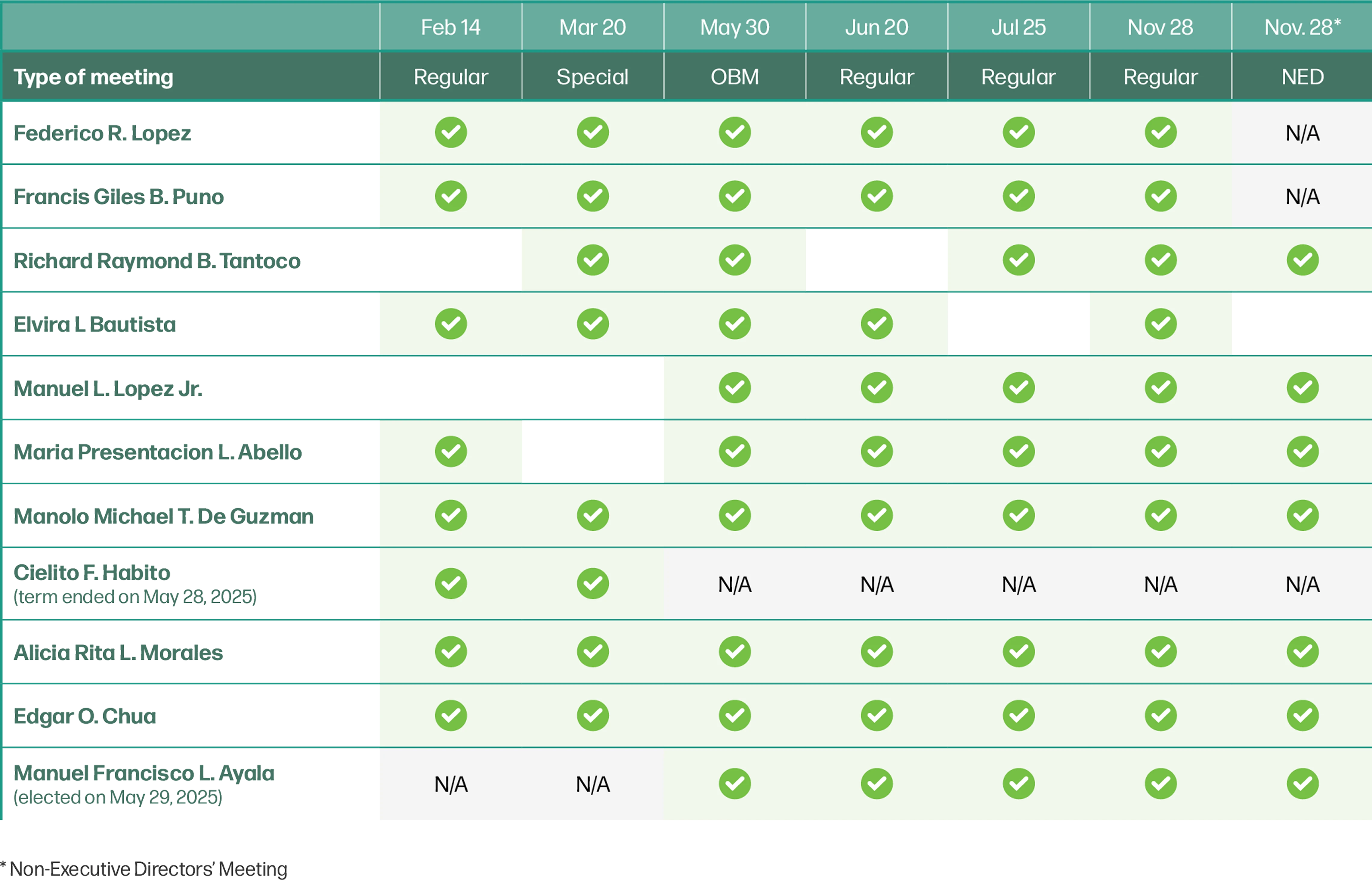
Board Attendance
Principal Activities of the Board
The Board of Directors guides First Gen toward strategic objectives while maintaining fiduciary oversight of material risks and opportunities. Board meetings address strategic agenda items, including asset performance and operation, regulatory and financial developments, project development progress, market dynamics, and emerging ESG and transition issues raised by directors and management. This structured oversight ensures strategic choices are data driven and aligned with the Company’s governance principles and long-term value creation goals.
The Board consists of 10 members, including three Independent Directors who provide external perspective and objective judgment. All directors were elected by qualified stockholders at the annual general meeting held on May 29, 2025. Independent Directors Alicia Rita L. Morales, Edgar O. Chua, and Manuel Francisco L. Ayala maintain independence from the Company and its management, ensuring that governance oversight remains objective and aligned with stakeholder interests. Individual Board member profiles, including qualifications and expertise, are provided in the Additional Information section.
Individual profiles of the members of the Board are provided in the Additional Information section.
Senior Management
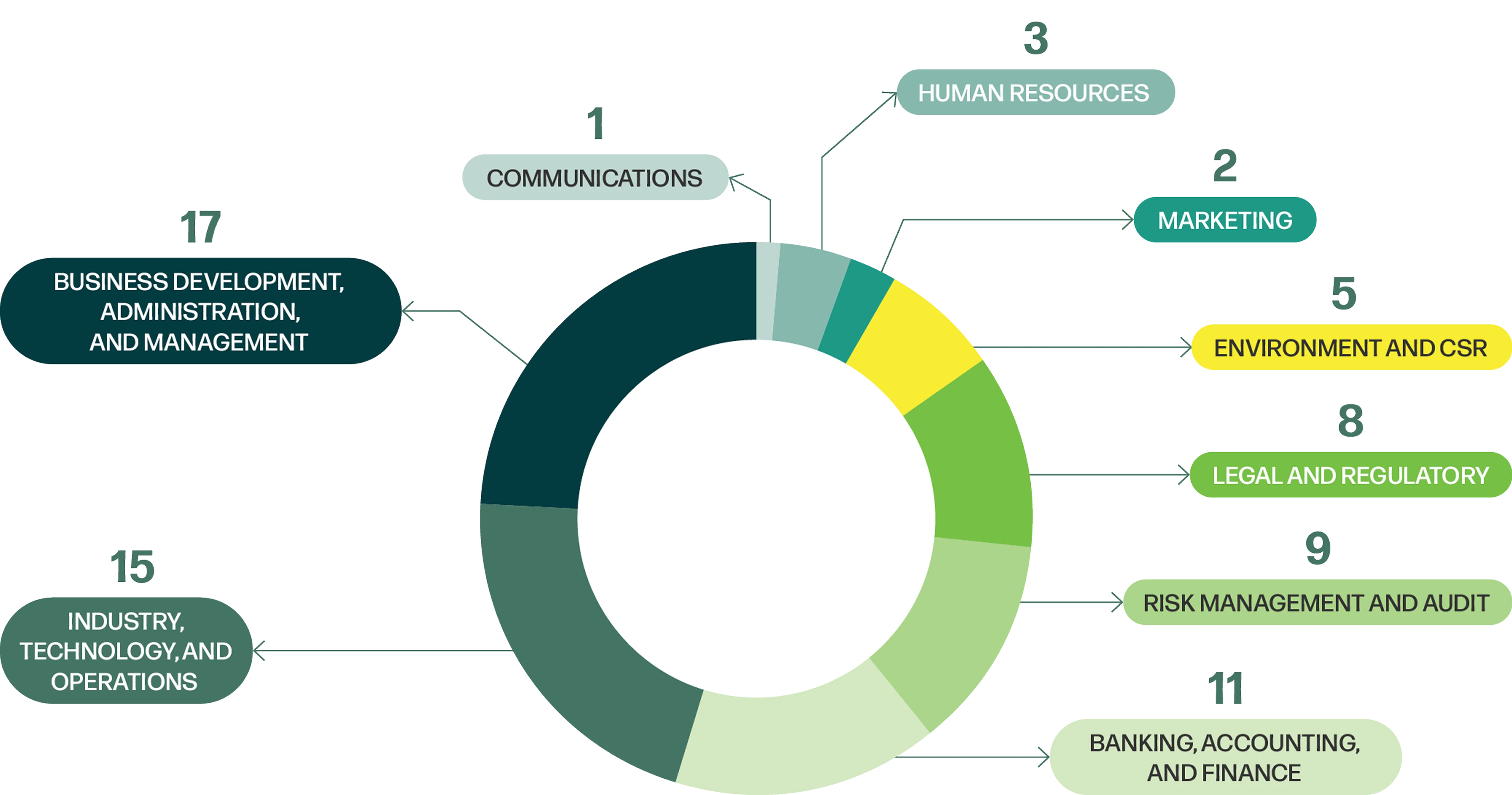
First Gen’s Senior Management provides the executive accountability required to translate Board-level mandates into operational results, ensuring that strategic decisions are systematically implemented while optimizing the Company’s six capitals. Working under Board guidance, Senior Management drives operational excellence, pursues innovation, and manages day-to-day priorities. The synergy between the Board and Senior Management creates governance processes that enable the Company to respond effectively to the rapidly evolving energy landscape.
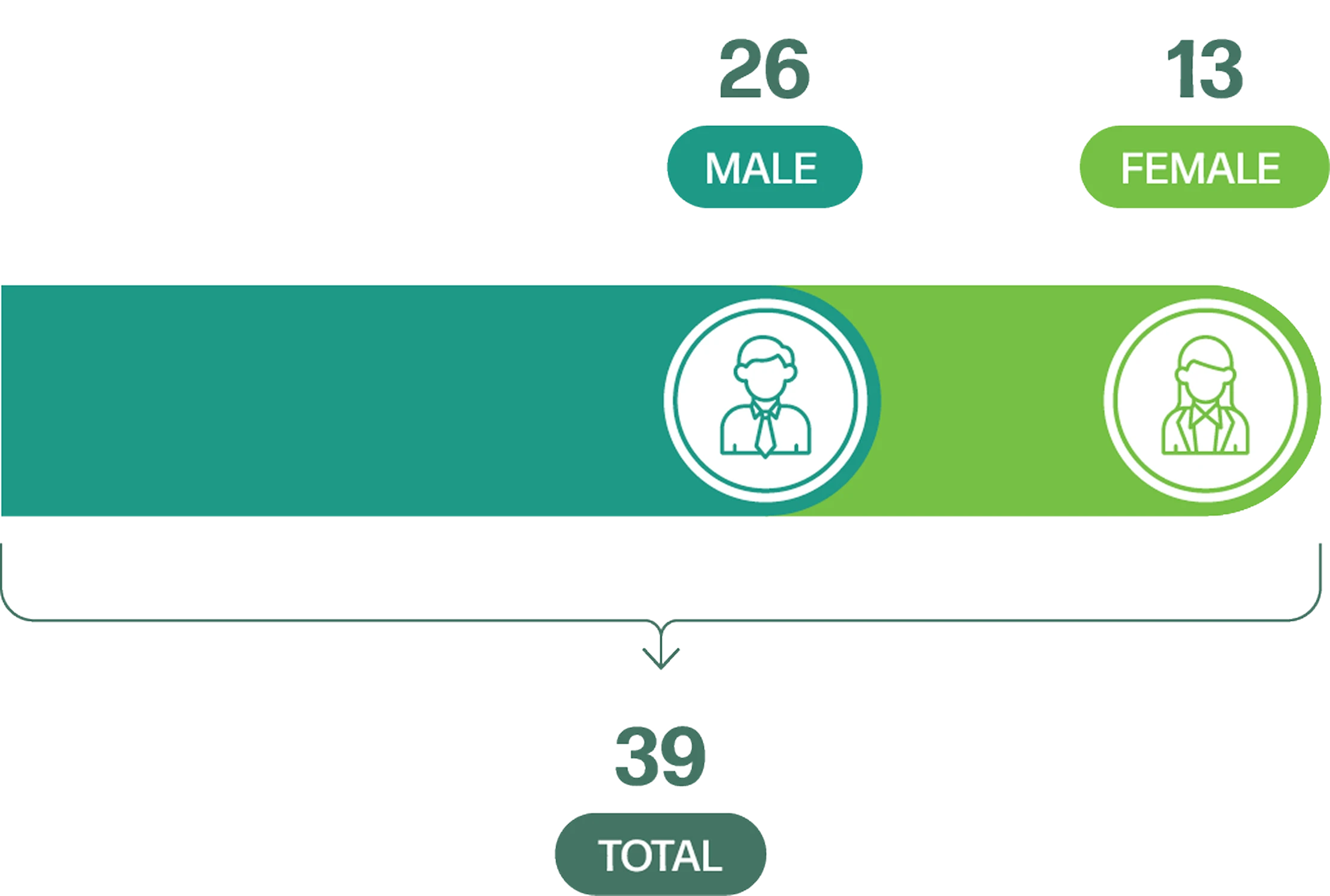
Senior Management composition and individual profiles, including expertise areas, are provided in the Additional Information section.
MANAGEMENT COMPOSITION

MANAGEMENT EXPERTISE
Governance as Foundation for Strategic Choice
First Gen’s governance framework—from Board oversight and committee structures to management execution and policy implementation—provides the foundation for disciplined strategic decision-making. This governance architecture ensures that decisions are evaluated across multiple criteria (financial, operational, stakeholder, environmental) and aligned with the Company’s mission to forge collaborative pathways for a decarbonized and regenerative future.
The Strategy section that follows demonstrates how this governance discipline enables what we call the Power of Good Choices—four strategic commitments designed to optimize value creation across all six capitals while navigating the inherent tensions of the energy transition.
1First Gen Corporation, Manual on Corporate Governance (May 2017), https://www.firstgen.com.ph/static-assets/assets/file-uploads/corporate-governance/manual-on-corporate-governance/Revised-Manual-on-CG_May-2017.pdf
2First Gen Corporation, “Annual Corporate Governance Reports,” accessed March 25, 2026, https://www.firstgen.com.ph/corporate-governance/annual-corporate-governance-report.