

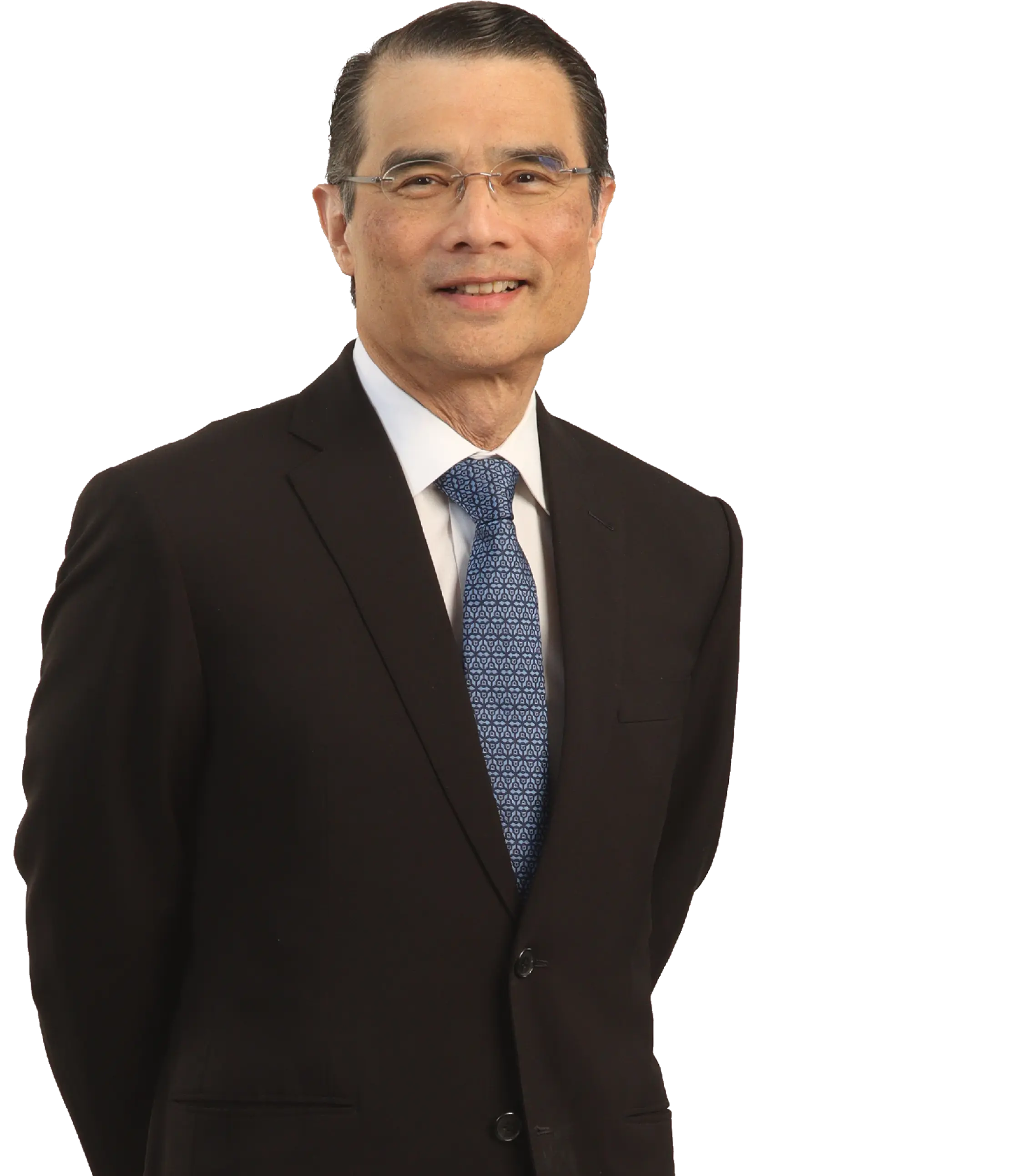
Our decision to remain coal free positioned the Group to participate in that transition with clarity of direction. Today, through First Gen, we are the largest producer of renewable energy in the Philippines.”
Our decision to remain coal free positioned the Group to participate in that transition with clarity of direction. Today, through First Gen, we are the largest producer of renewable energy in the Philippines.”
COMPOUNDING GOOD CHOICES
Dear valued stakeholders,
At first glance, 2025 appeared less turbulent than the year before it. The dramatic disruptions that defined much of 2024—from climate extremes to geopolitical flashpoints to market volatility—seemed, at least on the surface, to ease. Yet such impressions can be deceiving.
The forces shaping our operating environment did not disappear. In many cases, they continued to build quietly beneath the surface. Unlike sudden shocks that generate headlines, accumulation unfolds incrementally—often unnoticed until its consequences become unmistakable.
We are increasingly operating in a world where outcomes are not driven by single events but by forces that compound.
Across markets, institutions, and natural systems alike, change rarely arrives in a linear fashion or in a single dramatic moment. It builds gradually. Increment by increment, pressures gather strength until their effects become visible—sometimes abruptly.
Albert Einstein is often credited with describing compound interest as “the eighth wonder of the world. He who understands it, earns it…he who doesn’t…pays it.” Whether or not the attribution is exact, the insight captures an enduring truth: small forces, sustained over time, reshape entire systems.
In finance, compounding transforms modest returns into significant capital. In knowledge, it deepens understanding as each insight builds upon the last. In institutions, it reflects the power of consistent decisions carried forward over time. And in stewardship, it reminds us that the choices we make—sustained across the years—ultimately shape the resilience of the systems entrusted to us.
Yet compounding is not inherently benevolent. It amplifies direction—whatever that direction may be.
Misaligned incentives compound into systemic fragility. Deferred maintenance compounds into infrastructure risk. Emissions layered year after year compound into atmospheric change. Small errors, repeated often enough, eventually reshape entire systems and destroy companies, ecosystems and entire nations.
Over time, compounding magnifies direction.
Yet the same principle, applied with discipline, can strengthen resilience. Capabilities accumulate. Partnerships deepen. Strategic flexibility expands. Small decisions, consistently aligned, alter the trajectory of institutions. Disciplined choices strengthen resilience. Repeated misjudgments deepen vulnerability.
Across the FPH Group, we experience this dynamic directly. The businesses we build operate on long time horizons. Power plants generate for decades. Industrial estates evolve and residential communities shape urban life across generations. Investments in healthcare, education, and skills development strengthen the human capacity upon which resilient societies depend.
In all these investments that unfold across decades—those that develop energy systems, infrastructure networks, residential communities, industrial ecosystems, and human capability—the effects of compounding are particularly visible. In such systems, direction matters more than speed.
Direction and the Power of Early Choices
This principle is not theoretical for our Group. This year marks ten years since we made one of the most consequential strategic decisions in our history: the commitment that we would not build, own, or operate coal-fired power plants.
At the time, coal remained the lowest-cost source of baseload generation in many markets. Renewable technologies had not yet achieved their present scale or competitiveness. The decision therefore required accepting immediate constraints in favor of longer-term alignment with emerging structural realities. It was not a decision made in response to prevailing sentiment. It was made in recognition of trajectory.
Compounding works in both directions. It can strengthen resilience or deepen vulnerability. When institutions align early with structural change, what initially appears as constraint can, over time, become advantageous.
Over the past decade, the global energy landscape has evolved rapidly. Renewable technologies have scaled. Capital markets increasingly price carbon risk. Energy security concerns have renewed attention to indigenous and diversified energy systems. In this evolving context, the long-term implications of remaining coal-free have become increasingly visible.
Our decision to remain coal free positioned the Group to participate in that transition with clarity of direction. Today, through First Gen, we are the largest producer of renewable energy in the Philippines, with a portfolio spanning geothermal, hydro, wind, and solar resources built through decades of sustained investment. What began as a difficult choice became the foundation upon which further good choices could compound.
Compounding Across Our Energy Portfolio
The same compounding principle continues to guide the evolution of our energy portfolio.
At First Gen, we have sustained the deliberate shift toward lower-carbon generation. The expansion of geothermal, hydro, wind, and solar capacity reflects a long-term commitment to indigenous renewable resources that strengthen both decarbonization and domestic energy security.
At the same time, the divestment of a majority stake in our natural gas assets reflects disciplined portfolio recalibration. Natural gas continues to play an important role as a stabilizing bridge within the national grid—helping ensure reliability as renewable energy penetration increases. Reliability, affordability, and decarbonization must advance together. But over time, portfolio composition shapes emissions intensity, fuel dependence, regulatory exposure, and resilience to geopolitical volatility.
Clarity of direction compounds advantage.
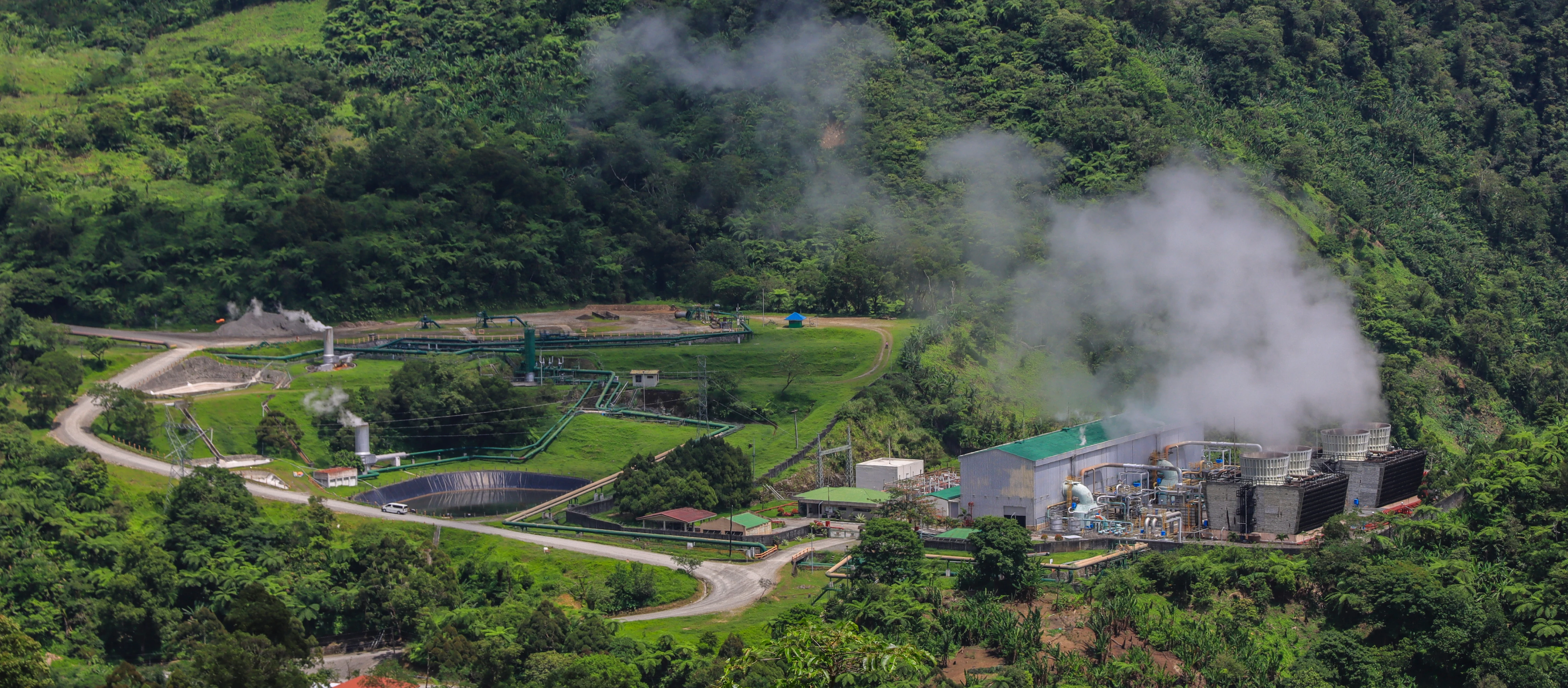
In geothermal, long a cornerstone of our renewable platform, we continue to strengthen capacity through rehabilitation and expansion. The One Leyte Redevelopment Project represents a major reinvestment in one of the country’s most significant geothermal fields, modernizing aging facilities and restoring capacity through improved technology and operational efficiency.
We are also expanding our geothermal footprint beyond our existing fields. Through a joint venture with Sinar Mas in Indonesia, we are pursuing the development of new geothermal capacity in one of the world’s most resource-rich geothermal regions.
In hydropower, the integrated operations of our Pantabangan-Masiway and Casecnan facilities are providing the required flexibility to balance the grid and to support downstream agriculture with their irrigation requirements. We are also advancing our initiatives for pumped storage with Project Aya to further enhance flexibility.
At First Gen, we have sustained the deliberate shift toward lower-carbon generation. The expansion of geothermal, hydro, wind, and solar capacity reflects a long-term commitment to indigenous renewable resources that strengthen both decarbonization and domestic energy security.”
Our collaboration with Prime Energy to pursue large-scale pumped storage hydro development reflects the same compounding advantage. Targeting approximately 2,000 megawatts of energy storage capacity, this partnership allows us to scale storage capabilities far more rapidly than either party could independently.
Compounding, in this instance, is not only technological or financial—it is relational. Direction sustained builds credibility. Credibility builds trust. Trust, and the partnerships it enables, multiply capacity.
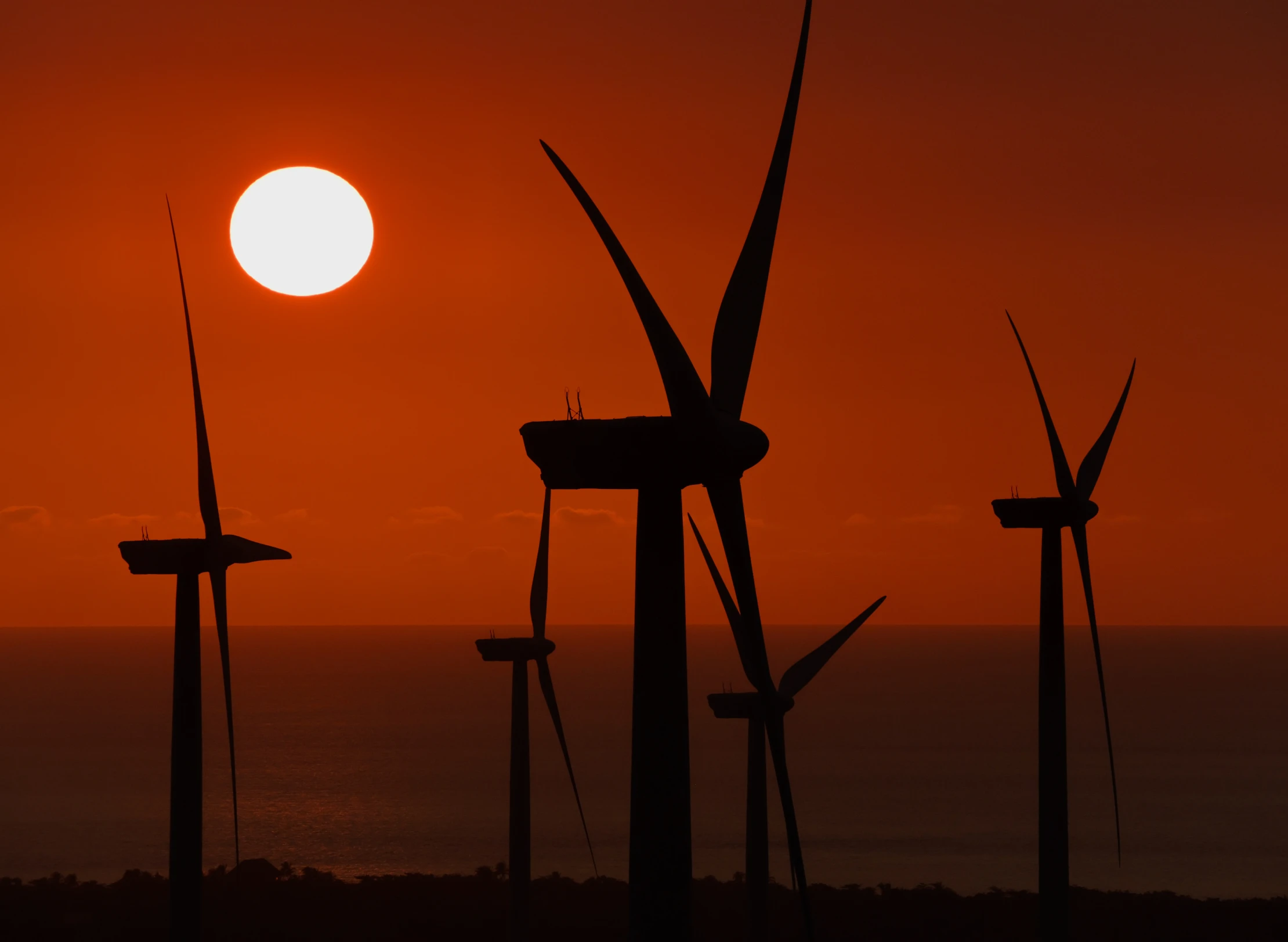
Alongside these baseload and storage platforms, wind and solar continue expanding within our portfolio, strengthening the diversity and resilience of our renewable energy system. Ongoing upgrades to our wind facilities and the development of new solar capacity reflect a disciplined approach to scaling intermittent resources in balance with geothermal and hydro. As these platforms grow, emerging battery storage solutions further enhance system flexibility and integration. Together, these investments reflect a portfolio approach in which resource diversity and system balance compound to strengthen long-term reliability.
Beyond the hard assets, resilience ultimately depends on people. Together with our employees, we have partnered with our other stakeholders—our customers, our suppliers, and our communities in taking concrete action to help care and even regenerate the environment.
Taken together, our portfolio and our people form a coherent response to constraint. Energy transition, grid integrity, resilient development, disciplined engineering, and human capability are interdependent components of long-term stability.
The compounding of good choices is therefore not a slogan. It is a framework for stewardship.
Energy transition, grid integrity, resilient development, disciplined engineering, and human capability are interdependent components of long-term stability.”
The Baseline, Quantified
Yet the mathematics of compounding extends far beyond institutions. It is increasingly visible in the physical systems of the planet itself.
In early 2026, global monitoring agencies—the World Meteorological Organization and the Copernicus Climate Change Service—confirmed that 2025 ranked among the three warmest years ever recorded, with global average temperatures approaching 1.5°C above pre-industrial levels. The past eleven years are now the eleven warmest on record.
These are not projections. They are recorded observations.
Atmospheric carbon dioxide concentration was estimated to reach 425.7 parts per million in 2025, rising to more than 50 percent above pre-industrial levels—reflecting the accumulated result of decades of industrial activity.
The oceans, which absorb heat, now store approximately ninety percent of the heat trapped by greenhouse gases—amplifying storms, disrupting rainfall patterns, and accelerating sea-level rise.
The Intergovernmental Panel on Climate Change has made clear that temperature outcomes are governed by cumulative emissions. As of early 2025, the remaining global carbon budget consistent with a 50 percent probability of limiting warming to 1.5°C is estimated at approximately 130 to 150 billion tonnes of CO₂, down sharply from roughly 500 billion tonnes estimated at the start of this decade. At current global carbon emission levels of approximately 40 billion tonnes of CO₂ per year (within the total greenhouse gas emissions of approximately 59 billion tonnes of CO₂-equivalent), that remaining margin could be exhausted within the next few years if the current emission levels persist.
This is not a forecast. It is a balance sheet.

Together with our employees, we have partnered with our other stakeholders—our customers, our suppliers, and our communities in taking concrete action to help care and even regenerate the environment.”
Systemic Implications
Global trends do not remain abstract. They register locally—in landfall, in loss, and in rebuilding.
The Philippines experienced more than twenty tropical cyclones in 2025. Yet it is no longer the number of storms that defines the risk, but their intensity and their interaction with broader weather systems. Extended rainfall, flooding, and cascading impacts drove significant losses across communities—underscoring how climate-related disruptions are becoming more complex, more persistent, and more costly.
At the same time, parts of Luzon recorded heat index values exceeding 50°C. At these levels, prolonged exposure begins to exceed the limits of human tolerance as sweat glands can no longer function safely. This will magnify pressure on public health systems, labor productivity, and electricity demand.
Sea-level rise compounds these pressures further. In various areas of the Philippine archipelago, observed rates of sea-level rise exceed the global average, increasing exposure for coastal communities, ports, and critical infrastructure.
When recurrence intervals shorten and intensity increases, what was once considered extreme begins to resemble baseline operating conditions. Climate risk is no longer peripheral to economic stability—it has become a fundamental determinant of it.

Stewardship in a Century of Constraint
The signals described in this report point to a century increasingly defined by constraint—carbon constraint, resource constraint, and time constraint. For countries such as ours, exposed to both physical climate risk and energy import volatility, the direction of transition will determine our long-term stability and competitiveness. Institutions that operate across generations therefore carry responsibility.
Across FPH, our portfolio has evolved with this reality in mind. Energy transition, resilient infrastructure, sustainable land development, and human capability are not separate pursuits. They form an integrated response to the conditions shaping the century ahead.
Energy transition, resilient infrastructure, sustainable land development, and human capability are not separate pursuits. They form an integrated response to the conditions shaping the century ahead.”
Through First Gen, we continue expanding renewable energy platforms that strengthen both decarbonization and domestic energy security. Through First Philec, we support the electrical backbone required for large-scale electrification. Through Rockwell Land and First Philippine Industrial Park, we develop communities and industrial ecosystems designed for long-term resilience. Through First Balfour and our infrastructure businesses, we translate strategic intent into physical systems capable of enduring the stresses of a changing climate.
Taken together, these platforms represent more than a portfolio of businesses. They are collaborative pathways through which institutions, industries, and communities can navigate the transition now underway.
This remains the enduring mission of the Group: to forge collaborative pathways toward a decarbonized and regenerative future.
Einstein’s observation about compounding was originally framed in the language of finance. Yet the principle applies far more broadly—to individuals, to institutions, to nations, and increasingly to the planetary systems that sustain them.
In a century defined by constraint, the arithmetic of compounding will shape outcomes in ways both visible and unseen. The responsibility before us is therefore clear. To ensure that what compounds—year after year, decision after decision—is resilience rather than fragility.
That is the responsibility we have accepted—and the responsibility we intend to uphold. Thank you for your continued trust and support.